Winter stable maintenance decides how much of your galvanised stable’s protective coating is still there when spring arrives. In Australia and New Zealand, winter rarely means snow at most horse properties — it means rain, mud, and weeks where steel never fully dries. That moisture, not the cold, is what shortens coating life, blocks drains, and turns small scratches into rust points.
DB Stable has manufactured and exported flat-pack portable stables for the Australian and New Zealand market since 2013. The frames are Q235 steel, hot-dip galvanised to a factory specification of at least 42 microns with the galvanising process run to AS/NZS 4680, and the infill is 10mm HDPE board that needs no painting at all. Even so, a scheduled walk-through beats an emergency repair every time. This guide sets out a 12-month rolling checklist built around a southern-hemisphere winter.
Key Takeaways
- Winter in AU/NZ is a moisture problem: mud packed against panel bases and pooled water do more damage to a stable than cold ever will.
- Hot-dip galvanised frames leave the factory at a coating thickness of at least 42 microns, with the galvanising process run to AS/NZS 4680 — winter’s job is protecting that coating, not repainting it.
- Any scratch that reaches bare steel gets zinc-rich touch-up paint promptly; ordinary enamel seals the moisture in rather than protecting the steel.
- 10mm HDPE infill boards never need paint or timber treatment — winter care for panels is washdowns and drainage.
- A 15-minute monthly walk-through plus a check after every major storm catches nearly every winter problem while it is still cheap to fix.
- A single panel with frame weighs roughly 200kg, so plan lifting machinery before relocating stables on soft winter ground.
Why Winter Hits Galvanised Stables Hardest
Hot-dip galvanising protects steel two ways: the zinc layer forms a physical barrier, and where that barrier is broken the zinc corrodes in preference to the steel underneath. That second mechanism is the reason a galvanised frame tolerates scratches far better than painted steel — but it is also the reason winter matters. Zinc is consumed slowly whenever it stays wet, and chlorides and acids in the environment speed that consumption up.
A stable standing on well-drained ground cycles wet and dry. A stable standing in a winter mud bog stays damp for weeks, with organic acids from manure and urine pressed directly against the coating at panel bases. The frame does not fail overnight. The coating simply thins fastest exactly where moisture sits longest, which is why every serious winter maintenance schedule starts at ground level, not at roof height.
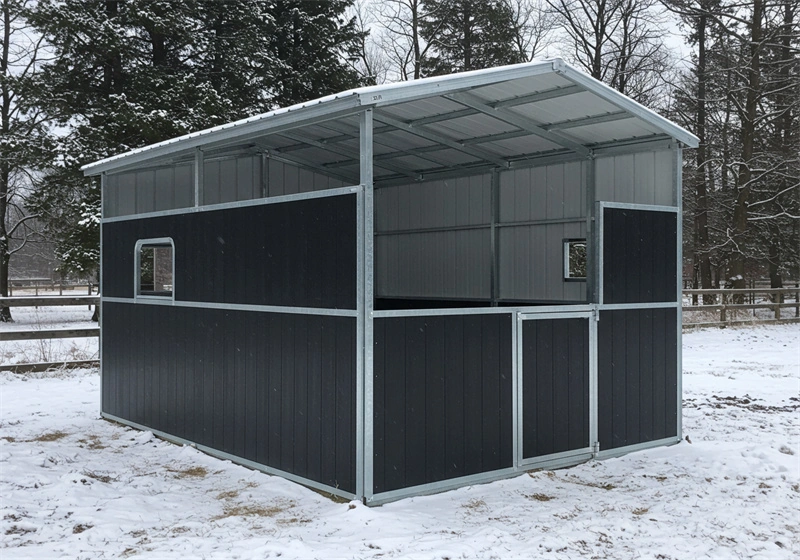
For owners of modern portable stables, most of the vulnerable surface area has already been engineered out. The infill on DB Stable panels is 10mm HDPE — a plastic that cannot rust, rots never, and sheds moisture — so the steel requiring attention is limited to the 50×50×2.0mm square-tube frames, corner pins, gate tracks and hardware.
The 12-Month Winter Stable Maintenance Schedule
The schedule below assumes a southern-hemisphere year: winter is June to August, and the critical preparation window is late autumn. Treat it as a minimum standard for commercial yards and agistment properties; a racing or training facility with daily washdowns will run parts of it more often.
| Period | Tasks | Why it matters |
|---|---|---|
| Late autumn (April–May) | Clear drainage paths, re-level footing, cut back grass around the block, stock a zinc-rich touch-up kit | Fixing drainage before the rain costs far less than repairing corrosion after it |
| Winter (June–August) | Monthly walk-through; wash HDPE panels at horse turnover; keep mud from packing against panel bases; clear gate tracks | Constant damp plus organics is the fastest way to consume zinc at ground level |
| After each major storm | Check corner-pin seating, roof fixings and any shifted panels; reseat and retension | Movement in wind loosens connections and creates new coating damage |
| Quarterly | Full frame inspection: scratches, weld points, hardware; touch up any coating breaks | The sacrificial zinc only protects adjacent steel; an untouched break rusts |
| Spring (September–October) | Annual detailed inspection, complete all touch-ups, plan relocations or expansions | Dry ground is the right time to move panels and reconfigure the block |
| Summer (November–March) | Washdown of UV-exposed HDPE, check shade and airflow, order next winter’s consumables | The quiet season is when winter preparation is actually done |
Two numbers anchor the schedule in factory reality rather than folklore. First, the panels themselves: a 2844×1194×10mm HDPE panel in its 50×50×2.0mm frame weighs roughly 200kg, which means no winter task on this list involves manhandling panels by hand — you plan a machine or you wait for dry ground. Second, assembly: the corner-pin design needs no tools and two to three people assemble one stable in around 30 minutes, so reseating a storm-loosened panel is a half-hour job, not a project.
Frame and Coating Checks That Matter
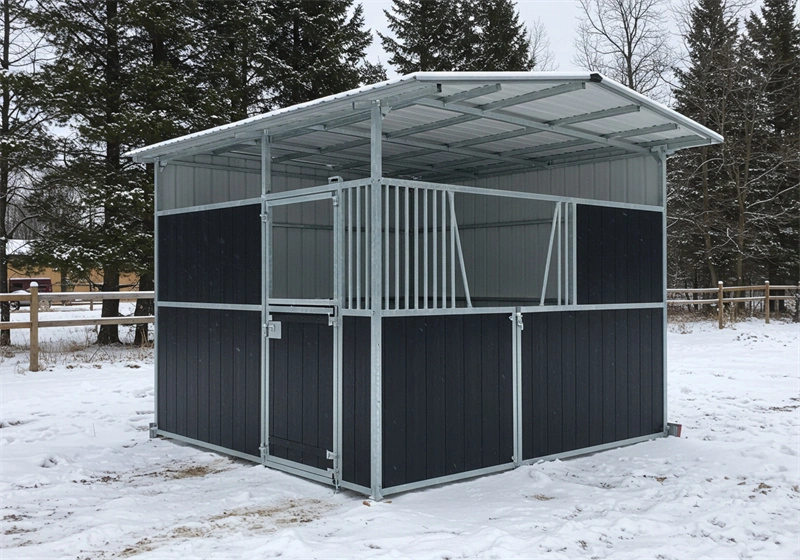
Your frames arrived with a hot-dip galvanised coating of at least 42 microns, applied under a process run to AS/NZS 4680 — the joint Australian and New Zealand standard for hot-dip galvanising of structural steel. Be precise about how those two figures relate: 42 microns is the factory’s coating commitment on this product line, while the standard’s own minimum coating for steel in this thickness range is 45 microns local and 55 microns average — the standard’s process floor, distinct from the factory’s product specification. Quote both on your order so nothing is left implicit, and hold the winter routine to protecting what was actually delivered.
Inspect in this order, because it follows how damage actually occurs:
- Panel bases and ground contact: the bottom rail where mud packs against it. Scrape back mud rather than letting it hold moisture against the zinc.
- Handling damage: corner-pin holes, lifting points and panel edges take the knocks during unloading and relocation. These are the most common places the coating breaks.
- Weld points and cut ends: welds and any field-cut steel are where coating continuity is weakest. Look for white oxidation products or early rust staining.
- Hardware: stainless steel door latches and aluminium swivel feeders shrug off winter; check that fixings have not loosened rather than corroded.
Any break that reaches bare steel gets zinc-rich touch-up paint — the repair method that restores sacrificial protection, unlike enamel paint which only hides the problem. Do this in dry weather if you can, but do it promptly; a winter scratch left until spring has already started consuming surrounding zinc.
Panels, Doors and Hardware in Wet Weather
The HDPE infill is the low-maintenance half of the system. It is UV-stabilised, antibacterial and washable, so winter care is a hose at horse turnover — the material itself asks nothing of you. The drainage under and around the panels is a different story. Water that pools against a stall row soaks bedding, and constantly wet ground is where hoof problems and coating consumption both start. If your site slopes or drains badly, the anchoring and levelling methods in our guide to anchoring portable stables on slopes are worth reading before winter, not after.
Doors deserve five of your fifteen walk-through minutes. The sliding gate runs on a 2950mm track with double wheels, and winter mud is the natural enemy of any track: grit grinds, and packed mud derails. A stiff sliding door in June becomes a jammed one by August, so clear the track and check the wheel set whenever you notice resistance. Hinged fronts are simpler — a stainless steel latch does not rust, but its screws can loosen with daily slamming, and a loose latch on a 1150mm or 1300mm gate is how a horse learns to let itself out.
One opinion, earned the boring way: the yards whose stables still look new after a decade fixed drainage once, properly, and then ran a short monthly list — moisture drives nearly every other task here.

The 15-Minute Winter Walk-Through
Once a month in winter, walk the block with this list. It is deliberately short, because a list you actually run beats a long one you skip:
- Ground: is water pooling anywhere it did not pool last month? Is mud built up against panel bases?
- Frames: any new scratches, chips or rust staining — especially at corner-pin holes and bottom rails?
- Connections: are corner pins fully seated? Any panel sitting proud of its neighbours after wind?
- Doors: do sliding gates run their full track without grinding? Do latches close with firm contact?
- Roof (if fitted): any lifted fixings or debris holding water against the structure?
- Horses: any chewing or rubbing damage on HDPE edges that needs a wash and a check?
Anything you find goes on one of two lists: touch-up paint, or drainage. Almost everything else on a well-built portable stable simply does not break in winter.
Frequently Asked Questions
How often should I inspect a galvanised stable in winter?
A 15-minute walk-through once a month through winter, plus a check after any major storm. Commercial yards with daily horse traffic often run a faster weekly glance at drains and door tracks.
Does a hot-dip galvanised frame need repainting for winter?
No. The zinc coating is the protection — repainting over intact galvanising adds nothing. Only scratches that expose bare steel need attention, and those take zinc-rich touch-up paint rather than ordinary paint.
How do I stop mud building up against the panels?
Fix it at ground level: clear drainage paths in late autumn, keep grass cut back around the block, and fill or grade any area where water stands. Scraping mud away beats letting it stay packed against the base rail.
Can I relocate portable stables during winter?
Yes — the corner-pin design disassembles without tools and two to three people rebuild one stable in around 30 minutes. Plan for the panel weight though: at roughly 200kg per panel, soft winter ground means machinery, not muscle.
Conclusion
Winter stable maintenance for a galvanised portable stable is a short list done reliably: drainage fixed once in autumn, mud kept off the panel bases, a monthly walk-through, storm checks on corner pins, and zinc-rich paint on any scratch that reaches steel. The coating specification — at least 42 microns of hot-dip galvanising under a process run to AS/NZS 4680 — does the heavy lifting; your job is to stop moisture sitting against it for months on end.
Run the schedule for one full year and you will know your site’s weak points better than any article can tell you. If this winter is the one where you add stalls or replace an ageing timber yard, review the portable stable specifications and start the next winter with less wood and less painting in your life.