Ask any Chinese fabricator what their horse stable frames are made from and the answer comes back in four characters: Q235. Q235 steel horse stables are the norm across the export market — the grade is welded into square, oval and round tube, hot-dip galvanised, and flat-packed into containers bound for Australia and New Zealand. Buyers who understand what the grade is, and what it is not, read supplier quotes very differently from buyers who do not.
DB Stable frames its stables in Q235 — 50×50×2.0mm square tube at the core, supported by 60×30mm oval tube and 32mm round tube, with secondary framing in 25×25×1.6mm tube. Every one of those profiles starts life as flat Q235 strip at a tube mill, and every specification on that list is a deliberate choice that this article will unpack.
Key Takeaways
- Q235 is a plain-carbon structural steel grade designated under China’s GB standard — the number 235 is its minimum yield strength in megapascals.
- The grade is drawn into the stable frame’s tube profiles: 50×50×2.0mm square, 60×30mm oval, 32mm round, and 25×25×1.6mm for secondary framing.
- Its weldability is the practical reason fabricators choose it: a stable frame is dozens of joints, and Q235 welds without preheat or post-weld treatment in routine shop conditions.
- Q235 and hot-dip galvanising are a proven pairing — DB Stable galvanises to a process run to AS/NZS 4680 with a factory-specified coating of 42 microns or more.
- Grade alone is not a specification: wall thickness, tube size and the galvanising standard must all appear on the quote, or the frame can be quietly downgraded.
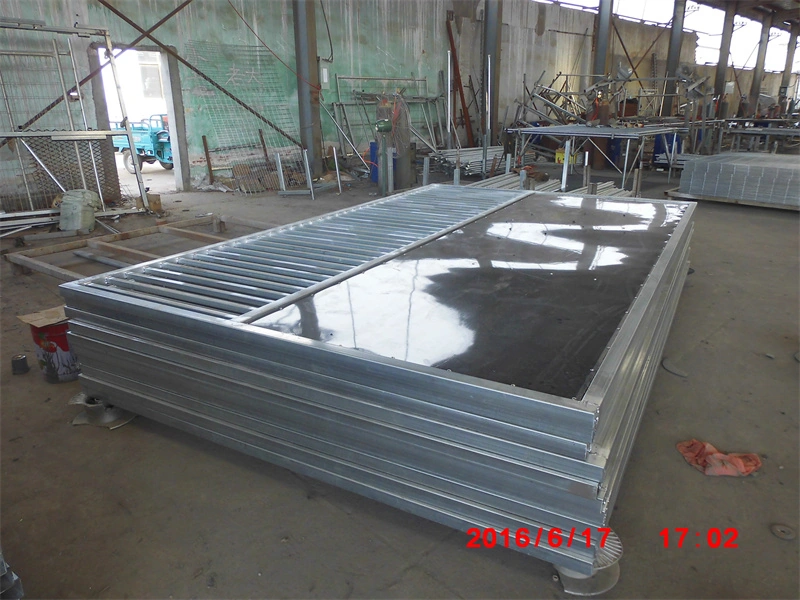
- A single panel with frame lands at roughly 200kg — the mass of steel in each set is why the grade and wall matter for shipping and handling too.
What Q235 Actually Is
Q235 is a plain-carbon structural steel designated under China’s national standard for carbon structural steels (the GB standard series). The naming convention is readable once you know it: “Q” stands for yield strength, and “235” is the minimum yield strength in megapascals — the stress at which the steel begins to deform permanently instead of springing back. The grade name is its own spec sheet for the single most important property in a frame member.
Beyond yield strength, what defines the grade for practical purposes is what it does not contain. Q235 is not an alloy steel — no deliberate chromium, molybdenum or nickel. It is iron, carbon at a low level, manganese, and trace elements held within standard limits. That simplicity is a feature in fabrication: predictable behaviour at the weld, consistent forming in the tube mill, and a cost that tracks the plain steel market rather than an alloy premium.
Why Fabricators Draw Stable Tube From It
A portable stable frame is mostly welds. A panel is a rectangle of tube joined at the corners; a front wall adds a gate frame; the roof structure adds trusses and posts. Weldability is the first requirement, and this is where Q235 earns its place: it welds readily in routine shop conditions without the preheat and post-weld treatment that higher-carbon or alloy grades can demand. For a factory running production batches, that difference is measured in hours per batch — and hours per batch end up in your quote.
The second requirement is formability. The tube that reaches the fabrication shop starts as flat strip, and Q235 takes the roll-forming and welding stages at the tube mill without cracking or splitting. The profiles the stable system uses are all drawn from it:
- 50×50×2.0mm square tube: the primary frame member for panels and partitions.
- 60×30mm oval tube: used alongside the square tube in frame construction.
- 32mm round tube: rails and gate framing.
- 25×25×1.6mm tube: secondary framing where loads are lighter.
The third requirement is honest load capacity for the job. A stable frame carries horse weight, feed, water, wind and the occasional kick — it is not a bridge truss. A 235MPa minimum yield grade, sized at a proper 2.0mm wall in a 50×50mm section, has ample margin for that duty. Specifying a higher-strength grade for this application mostly buys the supplier the option to thin the wall — a trade you never see on the invoice.
Q235 in the Galvanising Kettle
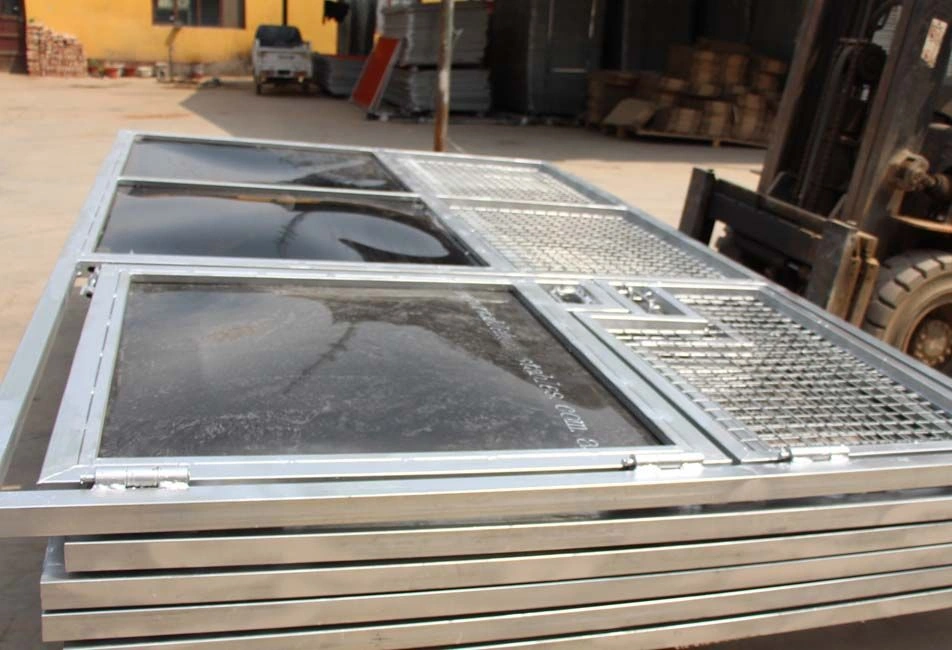
The frame’s corrosion protection comes after the welding: hot-dip galvanising, in which the finished frame is dipped in molten zinc and the coating forms as a metallurgical bond between zinc and steel. Plain-carbon structural steel like Q235 is the classic kettle material — the process was developed around steels of exactly this composition, and the coating that forms on it is the well-understood result a century of galvanising practice is built on.
The specification that matters to an AU/NZ buyer is the standard the process runs to. DB Stable galvanises on a process run to AS/NZS 4680 — the Australian and New Zealand standard for hot-dip galvanising of structural steel — and commits in writing to a coating of 42 microns or more. That thickness is the figure standing between the welds and coastal salt air. Because the coating is metallurgically bonded rather than painted on, it does not peel at a scratch; the zinc also protects exposed steel galvanically, which is why a cut end or a transport scrape stays rust-free far longer than bare steel has any right to.
For scratches that do occur in transit and handling, the repair is zinc-rich touch-up paint — see our guide to galvanising touch-up after transport scratches. And because zinc is billed by area and thickness, the galvanising line on your quote moves with the zinc market — our piece on steel price cycles and stable quoting traces that path.
Grade Versus Wall Thickness: Where Frames Get Downgraded
Here is the part of the Q235 story that suppliers rarely volunteer. When a buyer asks for a cheaper frame, or when steel prices rise mid-negotiation, the honest response is a re-quote. The dishonest one keeps the price and changes the steel — and the change can hide in only a few places: the grade itself (an unnamed substitute), the wall thickness (2.0mm becomes 1.8mm or 1.5mm), or the tube section (a smaller profile in non-critical-looking positions).
The higher-grade trap deserves a specific warning. A supplier can switch to a higher-yield grade and thin the wall at the same time, then market the grade name as an upgrade. The frame may still pass a static load, but a thinner wall dents easier at kick height and flexes more between anchors. For stables, wall thickness at a modest grade is the better engineering trade than a premium grade starved of metal.
A quoted frame without a named grade, tube size and wall thickness is not a specification — it is a placeholder waiting to be filled with whatever steel is cheapest that week.
| Frame element | Q235 profile | Where it appears |
|---|---|---|
| Primary square tube | 50×50×2.0mm | Panel and partition frames |
| Oval tube | 60×30mm | Frame construction alongside square tube |
| Round tube | 32mm | Rails and gate framing |
| Secondary tube | 25×25×1.6mm | Lower-load framing positions |
| Panel infill | 10mm HDPE board | Wall cladding, washable and kick-resistant |
| Finish | HDG, 42 microns or more | Process run to AS/NZS 4680 |
The Spec Lines to Demand in Writing
The buyer’s defence against every downgrade route is the same: a quote that names the steel. Four lines do the work — grade (Q235), primary tube profile (50×50×2.0mm), galvanising standard (process to AS/NZS 4680) and coating thickness (the figure the supplier commits to; we specify a minimum of 42 microns). Any supplier can write those lines; the ones who resist are telling you where their next price cut will come from.
Two process checks are worth adding. First, ask how the fabricator handles QC — third-party inspection before shipment is a standard offering in this trade, and a supplier with an existing third-party QC routine has nothing to hide when you commission your own. Second, if you want the grade claim verified rather than just stated, a material certificate from the tube mill traces the batch back to its melt.
Scale and responsiveness round out the picture. The MOQ for this line is 10 sets, the factory runs up to 20 sets per week, and drawings are quoted within 24 hours. Our walkthrough of what to verify during a factory video audit shows where on the production line those claims become visible.

Frequently Asked Questions
What does the 235 in Q235 mean?
It is the minimum yield strength in megapascals — the stress at which the steel starts to deform permanently. The Q stands for yield strength in the Chinese designation system.
Is Q235 good enough for horse stable frames?
Yes — at the correct tube size and wall. A 235MPa yield grade in 50×50×2.0mm square tube has ample margin for horse weight, wind loading and kicks; the specification that gets cut when prices rise is usually the wall thickness, not the grade.
Why not specify a higher-strength steel?
Higher grades mainly buy the option to thin the wall. For stables, a modest grade at a full 2.0mm wall resists dents and kicks better than a premium grade starved of metal — and costs less.
How does Q235 work with hot-dip galvanising?
Plain-carbon structural steel is the classic galvanising material — the coating forms as a metallurgical bond in the kettle. DB Stable galvanises to a process run to AS/NZS 4680 with a factory-specified coating of 42 microns or more.
How can I verify a supplier’s Q235 claim?
Ask for the tube mill’s material certificate for the batch, and use third-party QC before shipment — both are routine offerings, and a supplier who resists either one is answering a different question.
Conclusion
Q235 is the industry standard for stable frames for unglamorous reasons: it welds without ceremony, forms into every tube profile the design needs, galvanises predictably, and costs what plain structural steel costs. The grade is not where frames fail — unnamed grades, thinned walls and missing standards are. A buyer who demands the four spec lines in writing has closed off every downgrade route that matters.
Before your next order, compare the frame specification line by line against what you now know to ask for — and send your drawings for a fully specified quote within 24 hours.