The GST imported stables question is really two questions: what rate applies, and which door the tax is collected through. Australia charges 10%, New Zealand 15%, and both assess a commercial consignment at the border while collecting low-value parcels at the point of sale instead. For a GST-registered importer buying stable kits for business use, both charges are usually recoverable as input tax credits — which makes GST a cash-flow question far more than a cost question.
This guide sets out how each regime works, where a commercial stable consignment actually lands in each one, and what to confirm with your accountant or customs broker before you set dealer pricing. The mechanics apply to any imported goods; the working examples are the flat-pack stable kits DB Stable has manufactured since 2013 and exported to Australia and New Zealand.
Key Takeaways
- Australia’s GST rate is 10% (ATO); New Zealand’s is 15% (NZ IRD).
- In Australia, imported goods valued at AUD 1,000 or less have carried GST at the point of sale since July 2018; commercial consignments above that value pay GST at the border on the import declaration.
- New Zealand charges 15% with the same split: overseas sellers collect on parcels of NZ$1,000 or less, and Customs assesses larger consignments at the border.
- GST-registered businesses importing goods for business use can generally claim the GST back as an input tax credit, under ATO and NZ IRD general rules.
- A stable kit consignment at the typical minimum order of 10 sets will, in practice, sit in the border-paid stream in Australia.
- GST is one planning input among several — confirm the current position with your accountant or customs broker before committing to a pricing structure.
The Baseline: 10% in Australia, 15% in New Zealand
The headline difference is the rate. The Australian Taxation Office administers GST at 10%; the New Zealand Inland Revenue administers it at 15%. On a hypothetical AUD 50,000 stable kit invoice, that arithmetic is AUD 5,000 of GST in Australia against AUD 7,500 in New Zealand — the same consignment, a 50% larger tax cheque on one side of the Tasman than the other.
| Question | Australia | New Zealand |
|---|---|---|
| GST rate | 10% (ATO) | 15% (NZ IRD) |
| Low-value imports | Goods at or below AUD 1,000 taxed at the point of sale since July 2018 | Overseas sellers collect on parcels of NZ$1,000 or less since December 2019; larger consignments assessed at the border |
| Commercial consignments | GST paid at the border on the import declaration (above AUD 1,000) | 15% GST assessed at the border on consignments above NZ$1,000 |
| Recovery for registered businesses | Input tax credit where goods are for business use | Input tax credit where goods are for business use |
The rate gap matters less than importers assume and more than accountants advertise. Less, because a registered business importing for business use generally claims the GST back either way. More, because the cash leaves your account at clearance and comes back only through your regular GST reporting cycle — so in New Zealand you are financing a larger amount, for longer, on every container. How and when credits are claimed depends on your reporting cycle — a question for your accountant, not a supplier article.
Australia: Two Import Streams and Where Your Consignment Lands
Australia runs two GST streams for imported goods, and the dividing line is AUD 1,000. Since July 2018, low-value imported goods — anything at or below AUD 1,000 — have been taxed at the point of sale, with the GST collected from the seller rather than at the border. Consignments above AUD 1,000 take the other stream: GST is paid at the border, at the time the import declaration is lodged, before the goods are released.
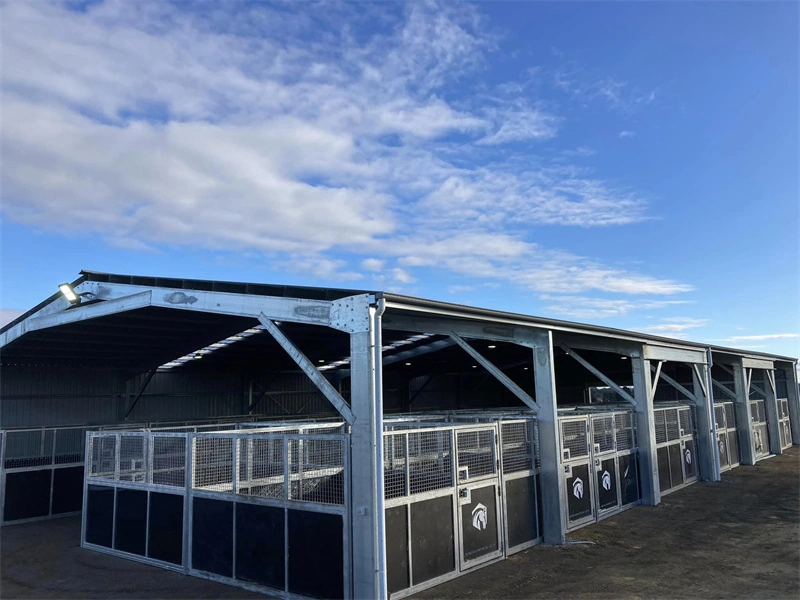
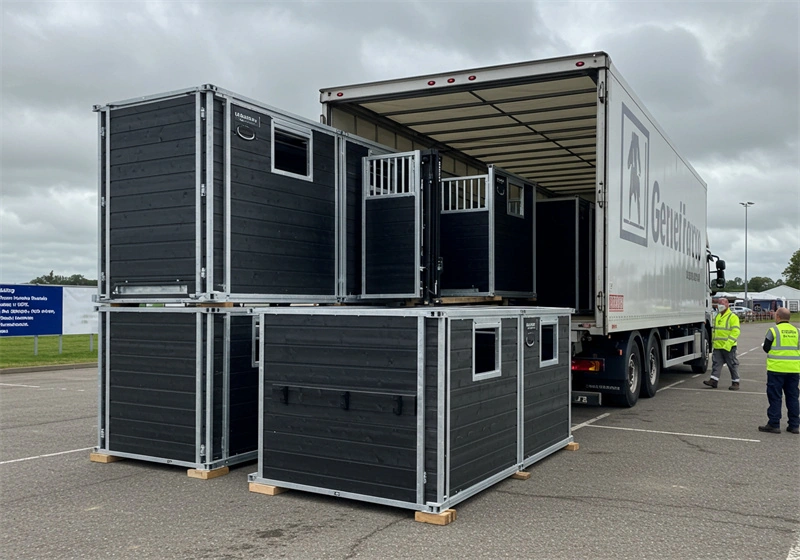
Commercial stable buyers live entirely in the second stream. DB Stable’s flat-pack kits carry a minimum order of 10 sets — complete stalls of Q235 steel frames and 10mm HDPE panels, produced at up to 20 sets per week — so a real consignment sits an order of magnitude past the threshold. The GST therefore lands at clearance alongside the rest of the import paperwork, and must be funded then. How a consignment’s value is established for the declaration is a question for your customs broker.
The point-of-sale stream still matters if you retail small accessories. A dealership that imports containers and also brings in individual gates or fittings below the threshold runs two GST treatments side by side — border-paid on the containers, point-of-sale on the small goods — and should keep the records for each separate. For the container side of that business, plan around border-paid GST from the first quote.
New Zealand: Where GST Imported Stables Are Collected
New Zealand’s December 2019 change is routinely misdescribed as removing the threshold. It did not; it changed who collects. Overseas sellers sending parcels of NZ$1,000 or less now charge 15% GST at the point of sale, while larger consignments are still assessed by New Zealand Customs at the border alongside duty. The boundary survives and only the door moves — which rarely bites a stable importer, since a commercial consignment sits far above NZ$1,000. Confirm the treatment for your own consignment with your broker.
The trade-off is the cash-flow weight. At 15% rather than 10%, a New Zealand dealer finances a materially larger tax payment per container than an Australian counterpart on the same invoice value, and carries it until the input tax credit comes through. Dealers pricing a New Zealand market entry should build that timing into their working-capital plan rather than their margin — the credit recovers the amount, but nothing recovers the interval.
Input Tax Credits: The GST Question Is Mostly Cash Flow
The recovery mechanism is the same on both sides: a business registered for GST that imports goods for business use can claim the GST paid on those imports as an input tax credit, under the ATO’s and NZ IRD’s general rules. A dealer importing stable kits for resale, an equestrian centre buying them for its agistment operation, and a builder fitting them out for clients all fit that pattern — the goods are acquired in the course of the enterprise, not for private consumption.
That is why we treat the Australia-versus-New Zealand GST difference as a working-capital line, not a cost line. For a registered importer, the 10%-versus-15% gap does not change what the stables finally cost the business; it changes how much of your money sits with the tax office and for how long. That is our position, and it is the one number-driven question worth asking before you commit — anything else in the GST column is timing.
Two conditions decide whether that position holds for you. First, registration: an unregistered buyer — a private owner, or a business under the registration threshold — does not claim credits and genuinely absorbs the GST as a cost. Second, business use: goods acquired for private use do not qualify. If either condition is in doubt, the rate gap is a real cost difference — price accordingly.
GST also interacts with the wider tax picture of a stable purchase. Depreciation and write-off treatment of portable stables is a separate question from GST recovery, and our write-ups on the instant asset write-off for portable stables and the income mathematics of an agistment stable programme cover those mechanics — none of it substitutes for advice from your own accountant on your own numbers.
Budgeting GST Into a Stable Import Programme
Practical GST planning happens at quote stage, not at clearance. When you request a factory quote — DB Stable returns drawings-based quotes within 24 hours — apply the destination rate to the invoice value immediately: 10% for Australia, 15% for New Zealand. Hold that amount in cash, not in margin, and expect to release it when the import declaration is lodged. Treat the input tax credit as a receivable, not a discount, so your margin maths never depends on how quickly the credit clears.
Programme structure changes the exposure. A dealer importing ten sets per order and turning stock quickly cycles smaller GST amounts more often; an equestrian centre importing a full stable row in one consignment funds one larger payment up front. Neither structure changes the rate, but both change the size of the cheque you write at the border. Bring the destination rate, the order size and your GST registration status to your accountant before the first deposit, not after the first clearance.
Frequently Asked Questions
Do I pay GST when importing horse stables into Australia?
Yes — commercial consignments above AUD 1,000 pay 10% GST at the border on the import declaration. Goods at or below AUD 1,000 have been taxed at the point of sale since July 2018, but a commercial stable consignment will normally exceed that threshold.
How much GST applies to horse stables imported into New Zealand?
15%. Overseas sellers collect it at the point of sale on parcels of NZ$1,000 or less; larger consignments are assessed by New Zealand Customs at the border. A commercial stable consignment normally exceeds that threshold and is taxed at clearance.
Can I claim back GST paid on imported stables?
Generally yes, if you are registered for GST and the goods are for business use — the GST paid on imports can be claimed as an input tax credit under ATO and NZ IRD general rules. Confirm the timing with your accountant, as it depends on your reporting cycle.
Is GST the same as customs duty on imported stables?
No — they are separate charges. GST is the 10% or 15% tax described in this article; any duty depends on how the goods are classified and valued, which is a question for your customs broker at declaration stage.
Conclusion
Australia and New Zealand tax imported horse stables at 10% and 15% respectively, and both assess a commercial consignment at the border — so for a GST-registered buyer the difference is mostly about how long your working capital sits with the tax office. The planning sequence is short: know which stream your consignment falls in, apply the destination rate to the quote before you commit, fund the GST as cash rather than margin, and claim the credit through your normal reporting cycle with your accountant’s sign-off.
When you are ready to put numbers against a specific stable configuration, request a quote from the DB Stable factory and run the GST arithmetic on the invoice value for your destination market before the first deposit.