HDPE panel cleaning is the quiet advantage of plastic infill in shared equine facilities. Where agistment yards, equestrian centres and event stables rotate horses through the same stalls, the wall surface is the one item every new occupant inherits — and a 10mm high-density polyethylene board can be hosed, scrubbed and disinfected between turnovers in a way timber never tolerates. The material does not rot, and it is not prone to the swelling and splitting that repeated washing causes in timber.
This guide sets out a practical cleaning routine for shared portable stabling, anchored in DB Stable’s factory specification. The company has supplied portable stables to Australia and New Zealand since 2013, and its panel design — HDPE boards in hot-dip galvanised steel frames — was chosen for exactly this wash-down duty cycle. Every figure below comes from that specification sheet.
Key Takeaways
- The infill board is 10mm HDPE, specified as washable, antibacterial, UV-resistant and non-rotting — a surface you can hose and scrub between every horse without damaging the panel.
- Stable panels come in two sizes — 2844×1194mm and 3494×1194mm — in 50×50×2.0mm square tube frames, so cleaning routines must reach the frame joints, not just the flat board.
- Doors use the same material logic: the door infill is a 1024×1054×10mm HDPE board, one of the highest-touch surfaces in a shared stall.
- The frame is hot-dip galvanised to a factory specification of 42 microns or more, with the process run to AS/NZS 4680 — washing should preserve the coating, not abrade it.
- Boards come in black, white and green; a shared-facility cleaning schedule should also cover the accessories horses share — feeders, water bowls and wash bays.
Why Panel Material Decides the Cleaning Routine
Shared facilities live or die on turnover speed. A stall that takes half a day to sanitise is a stall that is not earning, and the wall material sets that time budget. The specification sheet lists the HDPE board’s properties plainly: UV-resistant, antibacterial, washable, non-rotting, chew-resistant, with kick cushioning for hooves. Washable is the operative word for this article — the surface is designed to be cleaned with water, and being plastic, it does not absorb moisture the way painted timber or porous boards do.
Contrast that with the maintenance a timber-lined stall demands in a wet cleaning regime: swelling, joint gaps and rot are constant risks once boards are hosed regularly. HDPE removes that trade-off. The colour options — black, white and green — are a single-material choice, so a yard can standardise on one finish and one cleaning routine across every stall. Buyers weighing recycled against virgin board stock can take the hygiene comparison further in our panel material guide.
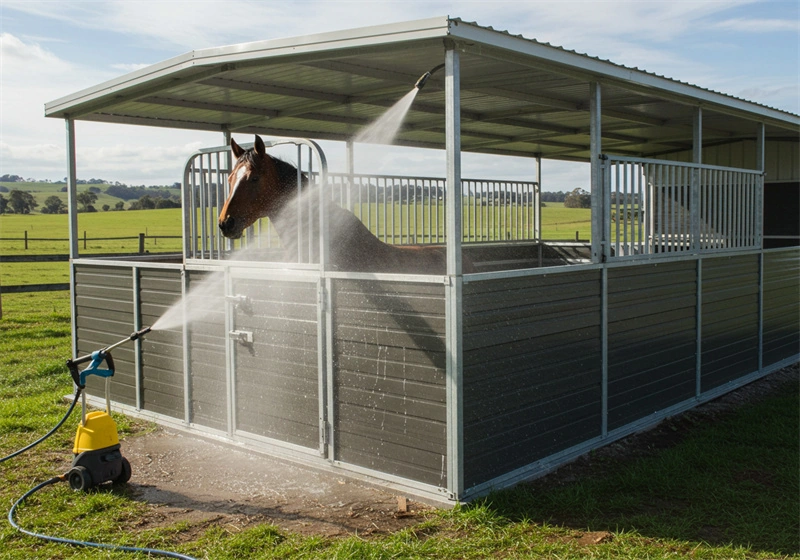
The Between-Turnover Clean
The routine that follows is written for the panel system as specified: HDPE infill boards in galvanised steel frames, joined by tool-free corner pins. Strip the stall, remove bedding, then work top to bottom — dry matter first, then washing. Because the board is a closed plastic surface, organic matter sits on top of it rather than soaking in, which is what makes a hose-down effective as the first pass.
- Remove and discard bedding: start from a bare floor so wash water carries debris out rather than into the bedding.
- Hose from the top down: the panel faces, then the door, then lower boards — gravity does the transport.
- Scrub contact zones: door edge, latch, feeder and any surface a horse chews or rubs; the board is chew-resistant, but chew marks hold grime.
- Disinfect to your vet’s protocol: choose a product appropriate for plastics and apply to the dry, cleaned surface; the factory specification covers washability, so confirm any specialist disinfectant with the supplier before first use.
- Rinse and dry before rebedding: trapped rinse water under panels is a moisture problem you just cleaned away.
Work the joints as deliberately as the flats. The 50×50×2.0mm square tube frame meets the board along a seam on all four sides, and corner pins join panels to posts. These seams collect wash-off debris; a stiff brush along the frame line, not just the board centre, is what separates a clean stall from a stall that looks clean. The same logic applies to the mesh option on front walls — the 50×50mm apertures with 4.0mm wire need a brush pass of their own, a point we expand on in the mesh versus pipe comparison.
Reading the Spec Sheet for Hygiene-Critical Items
A cleaning routine is only as good as the components it is applied to, so it pays to know which specification items carry the hygiene load. The table below pulls the hygiene-relevant items from the factory specification in one place.
| Item | Specification | Why it matters for cleaning |
|---|---|---|
| Stable panel infill | 10mm HDPE, washable, antibacterial, non-rotting | Closed plastic surface; tolerates hose-down and scrubbing between every horse |
| Panel sizes | 2844×1194mm or 3494×1194mm | Sets the reach and brush work needed per panel face |
| Door infill | 1024×1054×10mm HDPE | Highest-touch surface in a shared stall; same wash routine as walls |
| Frame | Q235 steel, 50×50×2.0mm square tube, fully welded | Seams at the board edge collect wash-off; brush the frame line, not just the flats |
| Frame coating | Hot-dip galvanised, factory spec 42 microns or more, process to AS/NZS 4680 | Wash and brush — do not abrade or scrape the zinc coating |
The galvanising row in that table is where cleaning routines go wrong. The zinc layer is the frame’s corrosion protection; stiff nylon brushes and water are fine, steel scrapers and aggressive pads are not. If the coating is damaged, touch it up with zinc-rich paint rather than leaving bare steel in a wet environment.
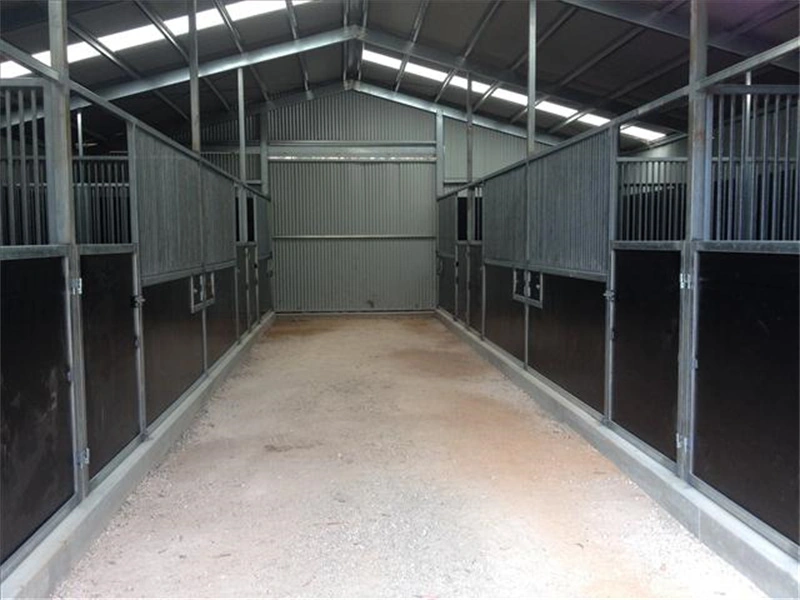
Feeders, Water Bowls and Wash Bays
Wall panels are the largest hygiene surface, but they are not the ones a horse’s mouth touches most. The accessory list for this stable system includes a rotary feeder in rust-proof aluminium, water bowls, hay racks and wash bay fittings. In a shared facility, these deserve the same between-turnover discipline as the walls: feeder and bowl come out, get scrubbed and disinfected, and go back dry.
The wash bay deserves particular attention, because it is the one area that is wet by design. A horse that is hosed down in a shared wash bay stands where every other horse has stood, so the bay floor and lower panels need the same turnover clean as a stall — and the drain needs to actually drain. Our position is blunt: a shared facility that cleans stalls but not its wash bay has cleaned half its disease surface. The same aluminium-feeder logic applies to tie-up points and rug rails; the full accessory set is listed on the portable horse stable overview page.
Frequently Asked Questions
Can HDPE stable panels be hosed down with water regularly?
Yes. The 10mm HDPE infill board is specified as washable and non-rotting, so routine hosing and scrubbing between turnovers is part of the design intent, not a risk to the panel.
What disinfectants are safe on HDPE panels?
The specification covers washability with water; it does not name disinfectant brands or chemicals. Choose a product suitable for plastics, follow your veterinarian’s disease protocol, and confirm any specialist chemical with the supplier before first use.
Does pressure washing damage the galvanised frame?
Water pressure against the frame is fine; abrasion is not. The coating is hot-dip galvanised to a factory specification of 42 microns or more with the process run to AS/NZS 4680, and it should be brushed, not scraped. Damage spots get zinc-rich paint touch-ups.
Which parts of a shared stall need cleaning most often?
The highest-touch surfaces: the HDPE door infill (1024×1054×10mm), the latch, the feeder, the water bowl and any chew or rub marks on the boards. Walls and floors get the full clean at turnover; touch points may need attention daily in busy yards.
Conclusion
Hygiene in shared stabling is a materials decision before it is a labour decision. The 10mm HDPE infill — washable, antibacterial, non-rotting — makes a full hose-and-scrub turnover possible at every change of horse, while the galvanised frame holds up to the same routine as long as the coating is brushed rather than abraded.
If you run a shared facility, write the turnover clean into your stable policy now: strip, hose top-down, scrub the joints and touch points, disinfect to your vet’s protocol, and dry. Then check your feeders, bowls and wash bay against the same standard — the panels will take it, and so will your horse-health record.