Most council resource consent New Zealand questions get asked after the container is booked. That is the wrong order. A flat-pack kit rarely arrives within a week of order — confirm the current production and transit window before you commit to a consent date — but the conversation with a district council can start the day a buyer enquires, on nothing more than a site address and a proposed layout. Buyers who do that get a shipment landing on an approved pad, or on a consent pathway that has been costed, rather than in a paddock where a neighbour has just objected.
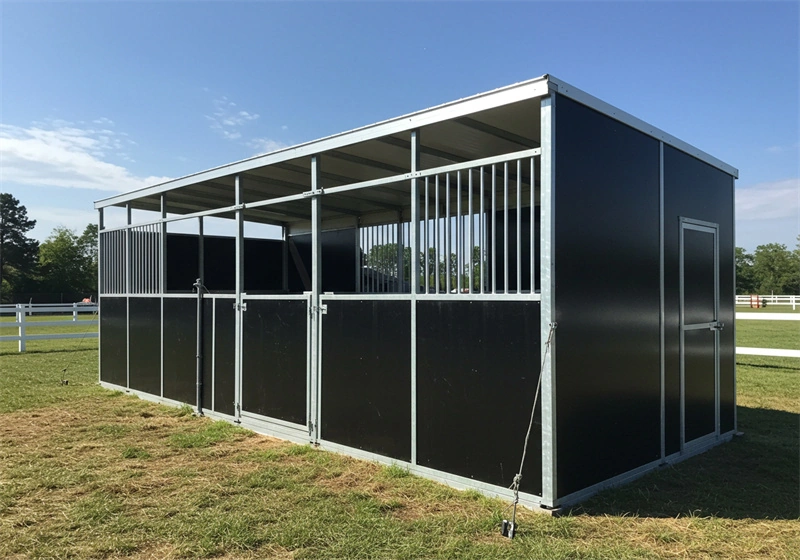
The other reason to ask early is that the answers feed back into the order. Setout, roof height, wall length and anchorage are all things a council may ask about, and all things a manufacturer can still change before production. A unit built to a documented specification — front walls 2200 mm high in 1150 or 1300 mm widths, HDPE boards at 2844×1194×10 mm or 3494×1194×10 mm on a welded 50×50×2.0 mm frame — is easy to describe in an application. A unit that has to be cut and re-drilled on site is not.
Key Takeaways
- Ask the consent questions before the freight booking, not after. A kit ordered at the 10-set minimum is rarely cheap to hold at the wharf while an application is written.
- Resource consent and building consent are separate conversations with separate triggers, and a structure can pass one and still need the other. Treat every answer as site-specific and confirm current requirements with the district council that administers the land.
- Being portable does not settle the question. The exemption tests and their limits are set out in our NZ council consent guide, and they differ district to district.
- Put eight questions in writing and keep the answers. A dated email from a council officer is worth more than a recollection of a phone call.
- Configuration choices that answer consent questions are cheap before production and expensive afterwards: overall length, eave height, roof type, door position and anchorage.
- Ask the supplier for documents a consent case can cite — galvanising to a named standard, frame section, board dimensions, a drawing set — rather than marketing photographs.
What an answer decides before you ship
The rulebook is in the consent guide linked above; this piece covers only what to ask, and when. Three project variables sit downstream of a council’s answer, none of them in the factory. The first is cash flow. If consent is required, units may sit in bonded storage or a hire yard while an application runs, and storage charges arrive whether or not the paperwork does. The second is labour: a job that waits for a decision tends to lose its installer, and re-booking a crew in a thin rural market is rarely a same-week affair. The third is credibility, which matters most to a dealer selling on to clients. The yard that hears about a consent requirement from its own council, after paying a deposit, tends to remember who sold it.
Asking early costs little but an email. Many district councils will give a preliminary view on whether an activity needs consent, and a written acknowledgement of that view — even a hedged one — lets you plan the order. Our own process runs to the same sequence: enquiries answered inside 6 hours, a drawing-based quotation inside 24. Those answers are what a consent conversation needs.
Eight questions worth putting in writing
These turn a vague reply into something usable. Send them as a list with the site address, a simple plan and the intended use, and ask for the reply by email. These are questions, not assertions: rules are administered locally, they change, and one proposal can be treated differently two suburbs apart.
| Ask this | Why it matters to the order |
|---|---|
| Does this land use, at this address, need a resource consent for stabling? | Decides whether the project has a lead time measured in weeks or months. |
| Is a building consent needed for the structure itself, and on what basis? | A separate test from land use; some small, non-habitable structures may be exempt, often subject to conditions. |
| Do your rules turn on floor area, height, or distance from a boundary or neighbour? | These are configuration inputs you can still change before production. |
| Is keeping horses on this site a permitted activity, or a restricted or discretionary one? | Determines whether consent is about the building at all, or about the use of the land. |
| Are there nutrient discharge, stormwater or effluent rules that apply at this stocking level? | Often the real reason a neighbouring yard objects; shapes where the block can sit. |
| Do you have rules on night lighting, external lighting or noise from a commercial yard? | Roof-mounted lighting is a specification line, not an afterthought. |
| Is the site in a wind zone, flood area, or on land with a slip or liquefaction history? | Drives anchorage and footing decisions you should agree with the factory, not the installer. |
| What evidence do you need from me, and who else gets notified? | Tells you which documents to request from the supplier before the deposit. |
Specification choices that answer for you
Several of the questions above are answered by the order sheet rather than by a planner. Overall length is one: the published board lengths are 2844 mm and 3494 mm, so a run of bays is built up in those increments and the footprint can usually be trimmed without losing a stall. Height is another — the standard front wall is 2200 mm, and the raised steel roof option sits at 2.65 m with a 4.6 m run and a 70 cm front eave, a shape an officer can read off a drawing.
Anchorage is where buyers most often get this backwards. A galvanised frame on a level, free-draining pad is a straightforward story; a frame on fill beside a watercourse invites questions about wind load and runoff that no brochure answers. Ask for the anchor and footing arrangement to be drawn. If a council has stated a wind zone or asked for engineer sign-off, put that in the enquiry before production rather than in a message afterwards. The frame itself is documented as Q235 steel in 50×50 mm square tube, fully welded, with a factory commitment of 42 microns and above on galvanising and the process run to AS/NZS 4680.

What to put to the factory before a deposit
Ask for four things, and ask for them before the deposit. First, a dimensioned drawing set for the exact layout — bay widths, front wall heights, door positions and the roof line. Second, a written material schedule naming the frame section, board thickness and the galvanising standard, since those are the lines a consent case cites. Third, the packing and freight documents that match what arrives — a separate topic covered in our import documentation checklist. Fourth, a named contact who answers the drawing questions, not only the sales ones.
Two cautions. A certificate number you cannot verify is not evidence — ask for the issuing body and check it. And a claim that a unit “does not need consent anywhere” is a sales line, not a legal opinion; the exemption tests are set locally and administered by the council on the ground.
Conclusion
The value of asking early is not a guarantee. It is that the expensive variables — setout, height, anchorage and the documents that describe them — are still open while you can move them.
Send the site address and a layout to the council first, then send its questions to us. Drawings against your layout come back inside 24 hours — usually faster than an answer out of a planning queue.
Frequently Asked Questions
Does calling a stable portable settle the consent question?
No. Movability is one input among several, and the exemption tests belong to each district. Our council consent guide sets those tests out; the council administering the site confirms which apply.
When should I ask — before or after I order?
Before you book freight, and ideally before the deposit. Once kits are in production the layout is fixed; a question about boundary distance or eave height is nearly free at that point, and expensive after it.
Can the manufacturer tell me whether my site needs consent?
No, and be sceptical of anyone who does. We can document the structure to a named standard and draw it accurately, which is what a council needs; the land-use decision belongs to the council.
Does a consent requirement change what ships?
Often only on paper first: drawings, a material schedule, anchorage details. If the council sets a condition on height, colour or setback, tell us before production so the panels and frames are made to it.