Three named comments sit on this site’s homepage under a heading that reads Client Feedback, Trusted Across AU & NZ. They are the only DB Stable reviews published here — no star rating, no aggregate score, no third-party feed — and they are worth reading as process evidence rather than as praise.
Each one lands on a different moment: the day the consignment arrives, the morning the panels go up, and the years of reordering that follow. Those are the same three moments a distributor’s own customers raise first. Here is what recurs in the record, what is conspicuously missing from it, and how to turn a testimonial into a procurement question.
Key Takeaways
- The record: three entries on this site’s homepage — Tony (Australia), Lily Granger (New Zealand) and Jeson Foxx (Australia).
- Theme one is arrival. “Showed up right” and “delivered in record time” — the first promise a flat pack order is tested against is the date, not the specification.
- Theme two is help at set-up: one client credits the supplier with showing them how to set the stables up, another recalls “an exciting morning installing” them.
- Theme three is durability, offered without prompting — “super sturdy and built to last” and “fantastic quality boxes”.
- Absent from all three: coating thickness, AS/NZS 4680, certificates and inspection reports. Those remain factory documents, and only the factory can issue them.
- For a distributor the operative wording is repeat intent — “can’t wait to get some more” and “thankyou for all your help over the years”.
What is actually on the record
The block carries three entries, each with a name and a country label, under the line “customer satisfaction … always comes first”. Tony, in Australia: the supplier “showed up right, not only delivered 4 gorgeous stables, but they helped us how to set them up”, and the stables are “super sturdy and built to last”.
Lily Granger, in New Zealand: “Fantastic quality boxes, delivered in record time”, followed by “we love your work guys, thankyou for all your help over the years”. Jeson Foxx, in Australia: “Thanks Frank for your professionalism. It was an exciting morning installing our new portable horse stables.”
Read that as a source statement, not a score. This is not a reviews listing; it is a reading of three sentences as procurement evidence. There is no review count, no date on each comment, no project detail and no order size, so nobody should pretend it is a satisfaction index. It is a small set of ordinary sentences from people who received goods and put them up — and ordinary sentences show what a buyer notices first.
Theme one: the day it arrives
Two of the three comments open with arrival rather than the product. “Showed up right” and “delivered in record time” are the same claim in two dialects: the goods came when promised, and came in a state worth photographing. For an order crossing the Tasman, that is the promise with the most ways to fail — a container is a long place to discover a shortage.
The product design explains why arrival is discussable at all. These are flat pack structures; shipping a welded stable means paying freight on air, so reducing the volume each set travels at is the baseline decision, with air freight for urgent items at extra cost as a valve rather than a plan. The published service numbers sit behind the same promise — enquiries answered within six hours, quotes built from drawings within 24.
What a compliment cannot tell you is the lead time. Stated output is about 20 sets a week against a minimum order of 10 sets, and bulk production lead time is not published for this category. So the arrival praise is worth converting into a document: a delivery date agreed against a production slot, in writing, before the deposit moves.
Theme two: help at set-up
Tony’s line is the most operationally interesting of the three, because the compliment is about a conversation: the supplier “helped us how to set them up”. Jeson’s comment is the same fact from the other side — an “exciting morning installing” the units.
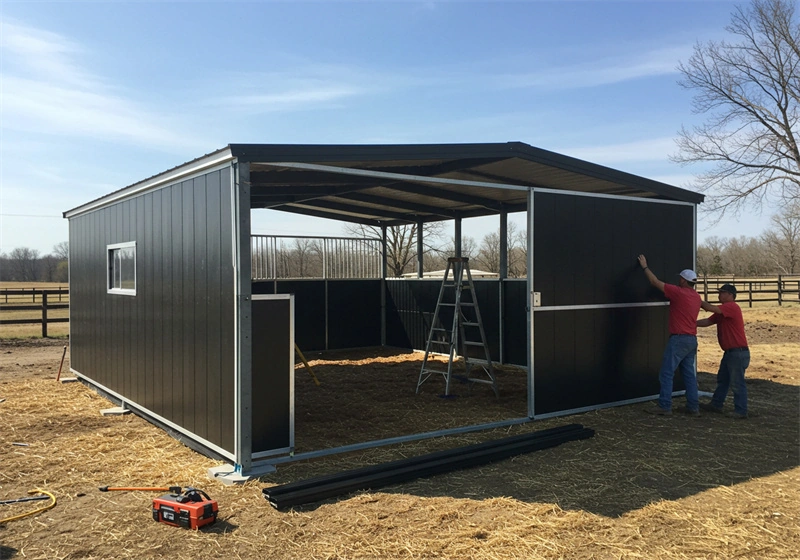
That expectation is set by the design. The panels are joined with tool-free corner pins, and the published figure is two to three people and around 30 minutes to assemble a set. It is an assembly claim only — the record says nothing about teardown or relocation time, which a buyer reselling on portability should ask for separately.
The commercial point is who carries the set-up conversation. A finished panel weighs about 200 kg, so a block going up is a small crew job with handling risk. The difference between dropping pallets and walking a customer through the first bay is exactly what Tony’s sentence records.
Theme three: durability, and the silence
“Super sturdy and built to last” and “fantastic quality boxes” are unprompted durability talk, and it maps onto the specification: 10 mm HDPE sheet, fully welded Q235 frames in 50×50×2.0 mm square tube, 4.0 mm wire at 50×50 mm mesh. The material is sold as rot-proof, UV-resistant, washable, chew-resistant and forgiving on a kick, and the durability wording in the feedback lines up with the last two of those.
The opinion this roundup should leave you with: feedback that never mentions specification is a marketing asset, not a procurement one. It signals how a consignment behaved and stays silent on what decides whether your second order clears a tender.
| What clients said | What it actually tests | What only a document gives you |
|---|---|---|
| Delivered in record time | Arrival discipline on one order | Bulk production lead time, not published |
| Helped us how to set them up | Help during set-up; the wording does not say where | Disassembly and relocation behaviour |
| Super sturdy and built to last | Durability wording, offered without prompting | Coating of 42 microns or more as a factory specification, galvanising process executed to AS/NZS 4680 |
| Thankyou for all your help over the years | Repeat intent across a long relationship | Certificate numbers, inspection scope, warranty terms |
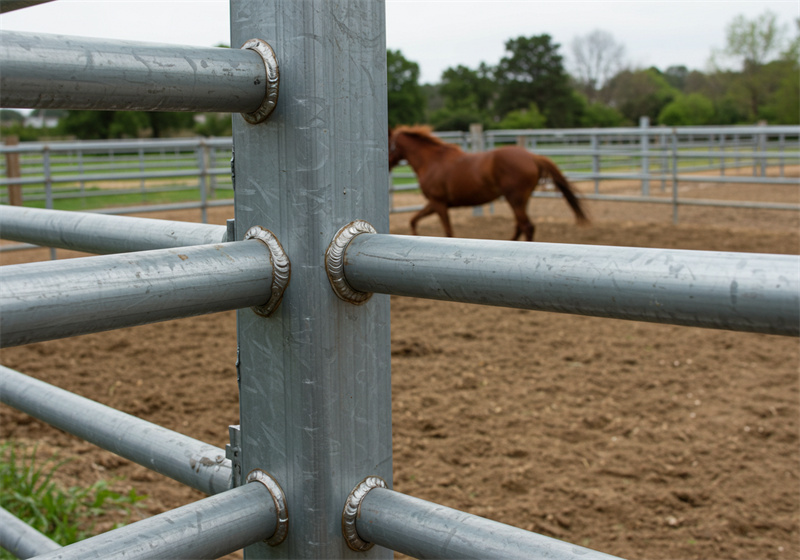
None of the three comments mentions the coating standard, and that is not a criticism of the clients. Corrosion protection is rarely visible in year one and is often what a tender or an insurer asks about later. The statement to obtain is a factory specification of 42 microns or more with the galvanising process executed to AS/NZS 4680 — a works commitment alongside a standard, not a substitute for one. Certificate numbers are not published for this category, so any tender that relies on them needs the original document. The installation side of the same gap is covered in the post-installation inspection and handover checklist.
Repeat intent is the other thing feedback carries that a specification sheet cannot. Lily Granger’s line runs from a delivery comment straight into “can’t wait to get some more” and “thankyou for all your help over the years”. The wording records intent and a long relationship; it does not document an order history. That distinction matters more to a distributor’s risk than any adjective about quality, because intent is what a reseller’s forecast is built on. How shared walls and panel counts change the economics of a second order is worked through in the NSW twelve-stall back-to-back build revisited, and the range those orders are built from is the portable horse stable range.
Frequently Asked Questions
Does this site publish customer reviews or ratings?
Three named comments appear in the Client Feedback block on the homepage, labelled Australia and New Zealand. No star rating, review count or third-party feed is published alongside them, so treat them as documented feedback rather than a score.
What do those reviews mention most often?
Arrival, help at set-up and durability — in that order, across three entries. Two mention timing, two mention the install conversation, and two use sturdiness or quality language. None mention specification detail.
Can a testimonial replace a compliance document?
No. Coating, standards and certificates are factory papers: a specification of 42 microns or more, the galvanising process executed to AS/NZS 4680, and inspection reports from third-party checks in plant. A happy customer is not one of those documents.
What should a distributor ask before trusting supplier feedback?
Ask what happens when an order arrives short, how long disassembly takes, which report covers the coating, and what the quoted delivery date was measured against. Any supplier with a repeat customer will answer all four in writing.
Conclusion
Three published comments will not tell you whether a supplier is good. They do tell you what a delivered order is judged on in this market: arriving when arranged, being helped through the first bay, and still looking solid when the panels are cleaned.
Use the recurring themes to set your own questions, then get the answers on paper. Feedback shows where the risk is felt; documents are how you close it.