Panel unloading delivery is the shortest phase of an imported stable project and the one most often left to luck. The freight is planned to the dollar, the site to a fence line, and then a truck reaches the gate at seven in the morning with no forklift in sight and two people booked to build.
One number drives every decision below. A finished wall panel on this line is about 200 kg — a 10 mm HDPE board set in a welded 50 × 50 × 2.0 mm square-tube frame, 1194 mm wide and up to 3494 mm long. That weight and that length decide your crew size, whether plant gets hired, how the bundles break down, and how much labour goes into moving metal rather than assembling it. “Without machinery” is the hard case this guide is written for; where a forklift can reach, hire it.
Key Takeaways
- A completed wall panel is roughly 200 kg, so offloading is a lift plan, not a favour asked of the driver.
- The 30-minute figure on the data sheet is assembly by two to three people. It says nothing about unloading a consignment.
- Panels arrive as 2844 × 1194 × 10 mm or 3494 × 1194 × 10 mm plates. Length, not mass alone, sets the swing room you need.
- Chain and bare straps mark the coating. Galvanising here is a factory specification of 42 microns or better, worked to AS/NZS 4680, and it is not an unlimited resource.
- Count bundles against the packing list before the truck leaves. Damage signed for at the gate is usually damage you carry, and where the risk transferred depends on your trade term.
- Flat pack exists to cut sea volume, which also means nothing stands rigid until it is framed and pinned.
What actually arrives
Ask for the bundle list, not the stall count. A six-stall back-to-back block is eleven wall panels and six doors, and side panels, stall fronts, door leaves and roof kit travel as separate strapped bundles. A driver told to “drop it anywhere flat” drops the heaviest bundle where it suits him.
| What comes off | Its shape | Handling consequence |
|---|---|---|
| Wall panel | 10 mm HDPE in a welded square-tube frame, up to 3494 × 1194 mm | About 200 kg, two lift points, awkward in wind |
| Stall front and door | 2200 mm high and 1150 mm or 1300 mm wide; door board 1024 × 1054 × 10 mm | Tall and tippable — keep flat until the frame is square |
| Roof kit | Raised steel roof 2.65 m high, 4.6 m long, 700 mm front eave | Longest item; needs clear ground to lay out |
| Pins and hardware | Tool-free corner pins plus boxed fixings | Open one box per stall |
Get the packing detail before the truck is booked — it is the cheapest thing to change on paper and the dearest to fix at the gate. Our guide to sea freight packaging for flat-pack stables covers how bundles are braced.
Getting 200 kg down: machine, crew lift, or ramp
There are three ways to get a panel off a deck, and only one of them is a plan rather than an improvisation.
- Hire plant where it can reach. Ask the hire firm for tine extensions and use padded slings. How long a machine takes depends on ground, reach and driver waiting time, so price it by the hour when you book. Slings matter: a chain dragged across a galvanised frame leaves a scratch that rusts long before the horse moves in.
- A crew lift with four people. A hand lift is normally planned with four pairs of hands plus one person calling the move: lifting straps, nobody on the downhill side, bundles leaned and banded until needed. Two people can usually walk an already upright panel a short distance on flat ground while it stays strapped; two people should not lift one clear of a truck bed and try to control its tail.
- Walk-down ramps. Sliding a bundle down timber onto the ground works until the panel picks up speed, then it takes a fence post, a leg or a corner with it. Use ramps for door boards and short panels, not for a 3494 mm wall.
Plant hours are a line on the job; one cracked HDPE board is a replacement panel and a delay nobody reimburses. Reach for the machine when the ground is soft or when the crew unloading is the same two people who then have to build.
Site access decides the last 100 metres
Freight ends where the sealed surface ends. Decide before booking whether the truck stands at the block or stops at a gate, because everything beyond that is carried by hand, and rough ground costs more hands and time than the plan assumes.
- Stand the truck once. Reversing a loaded rigid on wet paddock access is a common way to put the same panel on the ground twice.
- Stage by stall number. Lay each bundle out in build order next to the position it fills, so the block assembles as a sequence instead of a shuffle.
- Keep the surplus covered and flat. Panels you do not hang today should sit level, out of sun and stock movement, not leaned against a strainer post that will move.
- Plan for the second delivery. A block built in stages is unloaded twice; a level staging spot near the hardstand keeps a second machine call off the invoice.
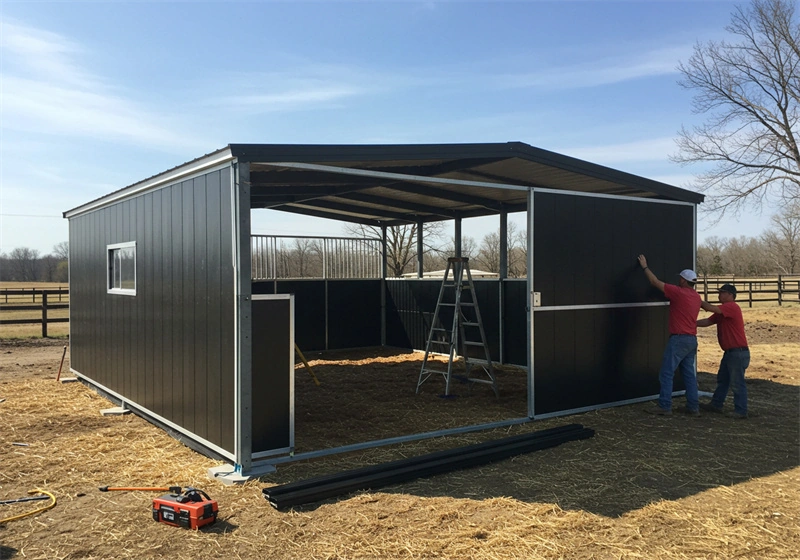
Once panels are staged, the build is quick: corner pins are tool-free, and two to three people assemble a set in around 30 minutes. That figure is assembly only — nobody should read it as the time a consignment takes to land. Remote sites with no all-weather access need their own plan, which we covered in DIY stable kits for remote stations; and if a block sits unfinished for weeks, the stacking rules in our flat-pack panel storage guide keep boards flat and frames off the mud.
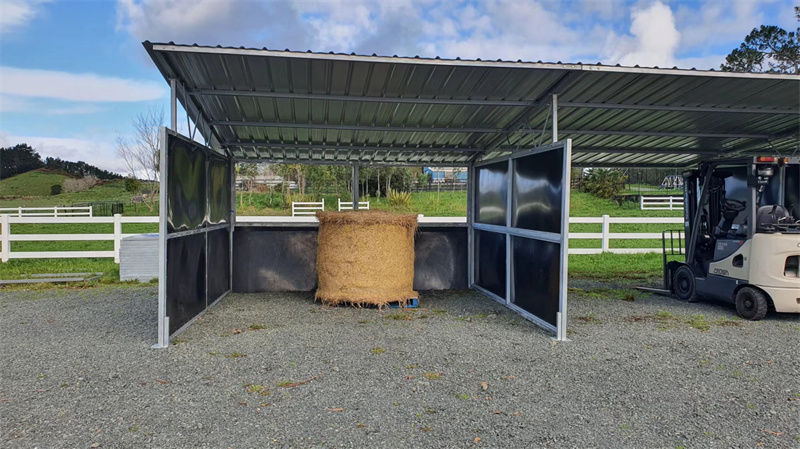
Before you sign the delivery note
Three minutes at the tailgate, before straps are cut, decides whether damaged freight stays a claim or becomes your problem. A clean signature makes the next conversation much harder.
- Count bundles, not stalls. Compare against the packing list, and check the bundle markings match the stall sequence you planned.
- Photograph before you cut. Strap tension marks, crushed corners and split board edges all read better in a photo taken on the truck than in one taken on the paddock after the driver has gone.
- Write exceptions on the document. One line naming the bundle and the damage, signed by the driver, is what your carrier will accept later.
- Know which side of the risk line you are on. Where the trade term put transfer matters — our comparison of FOB, CIF and DDP stable pricing sets out who carries each leg, and our customs broker versus self-clearing walkthrough covers who holds the clearance record.
Third-party QC inspection happens at the factory, before loading. That is why the tailgate check is yours: it is usually the first inspection after the vessel, and the last one with an independent witness on site who can sign.
How many people does it take to unload a portable horse stable kit?
Plan on four if no plant is available, plus one person calling the move. Assembly afterwards is a separate job and runs at two to three people per set.
Can two people lift a 200 kg stable panel?
Not off a truck bed. Two people can walk an already upright panel a short distance on flat ground while it stays strapped; lifting it clear of a deck needs plant or a four-person crew with lifting straps.
Do I need a forklift on site for delivery day?
Yes, if it can reach the load. Book it by the hour, use tine extensions and padded slings so nothing chains the galvanised frames, and if plant cannot reach the paddock, stage at the hardstand and carry the last leg by hand.
What should I check before the delivery driver leaves?
Bundle count against the packing list, strap marks, crushed corners and any cracked HDPE. Write the exceptions on the consignment note and photograph the load before anything is cut loose.
Conclusion
Unloading is a lift plan built around one fact: every wall panel you receive weighs about 200 kg and is up to 3494 mm long. Buy the plant hours, break the bundles out in build order, and inspect before you sign, and the block goes up on the schedule the 30-minute assembly figure promised.
Ask your supplier for bundle counts and panel weights with the drawing quote, then match them against where your truck can actually stand. It costs an email and it moves the offload from luck to logistics.