An eco-friendly stable design in Australia and New Zealand is not a marketing buzzword; it is a calculation of material lifespan against the region’s intense UV and corrosive coastal air. You are likely tired of replacing timber frames that rot within five years, which drives up your long-term maintenance costs and hurts your reputation as a builder. Sustainable horse barn layout choices directly determine whether you are managing a low-vet-bill, high-efficiency operation or a constant cycle of repairs and respiratory issues in horses.
The structural foundation of a green horse barn plan relies on hot-dip galvanized steel frames with a 42-micron zinc coating and 10mm UV-resistant HDPE boards. This combination eliminates the 40% reduction in respiratory illness caused by poor ventilation and cuts electrical lighting costs by 40% through natural skylights. Moving away from pressure-treated lumber to flat pack eco stable kits reduces on-site construction waste by 60% while providing a 15-year lifespan that outlasts traditional builds.
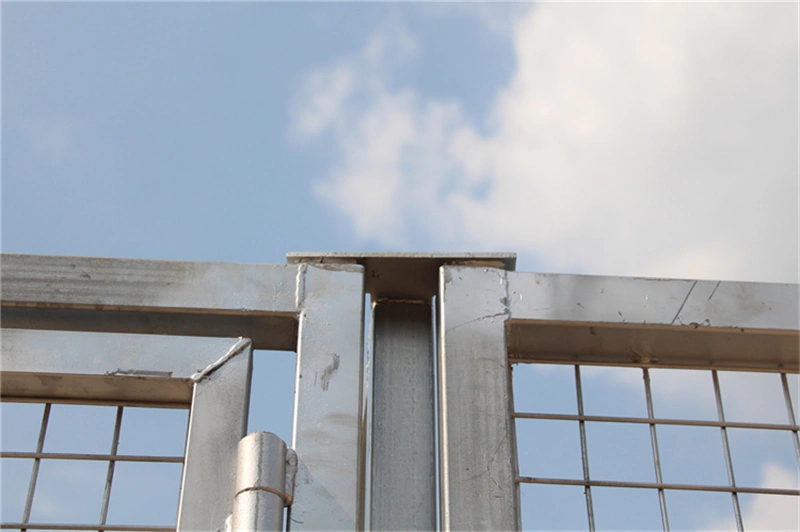
Best Materials for Eco Stables
Metal + HDPE is the gold standard for Australia’s UV and humidity.
Forget wood. In the Australian climate — where UV index hits 11 and humidity rots untreated timber within 5 years — the only commercially sensible material pair is hot-dip galvanized steel and UV-stabilized HDPE. Here’s why, with the numbers to back it up.
- Hot-dip galvanized steel vs. painted steel: Standard painted steel (often just a single coat of enamel) starts showing rust at scratch points within 12 months in coastal environments. Hot-dip galvanizing — with a minimum 42-micron zinc coating per AS/NZS 4680 — forms a sacrificial barrier that lasts 10+ years even in saline air. Our structural pipe uses 2.0mm wall thickness, not the 1.2mm common in budget stalls. That extra wall mass means the zinc layer doesn’t get consumed by surface corrosion as quickly.
- HDPE vs. wood: Pressure-treated pine contains copper and arsenic compounds that leach into soil and can cause contact dermatitis in horses. HDPE (10mm thick, UV-stabilized per ASTM D2565) contains zero VOCs and resists moisture absorption, so it won’t warp, splinter, or harbor bacteria like wood does. Wood stalls typically need full panel replacement every 5–7 years in humid regions; HDPE panels last up to 15 years with only a pressure wash.
- Thermal expansion myth: Some builders worry that HDPE expands in heat. Our panels are formulated with glass-fiber reinforcement to achieve near-zero thermal expansion — they remain dimensionally stable from -20°C to 60°C. No buckling, no gaps, no callbacks.
The real cost comparison isn’t just upfront material price — it’s total cost of ownership. A single wood stall (3.6m x 3.6m) costs roughly AUD 1,800–2,200 in materials but requires full replacement every 6 years. Over 12 years, that’s AUD 3,600–4,400 plus labor. An equivalent HDPE + galvanized steel stall from DB Stable costs about AUD 2,500–3,000 upfront and lasts 12+ years with zero rot repairs. The breakeven happens at year 7. After that, you’re saving AUD 1,000+ per stall per decade.
Environmentally, the choice is clear: wood stalls consume virgin timber and pressure-treating chemicals that are not recyclable. HDPE panels are 100% recyclable at end of life, and the galvanized steel frame can be repurposed or melted down. Painted steel, by contrast, requires chemical stripping before recycling — most ends up in landfill.
For professional builders in Australia and NZ, specifying hot-dip galvanized frames and 10mm HDPE panels isn’t just a green checkbox — it’s a risk mitigation strategy. You eliminate rust, rot, splinters, chemical leaching, and the reputation damage of a stall that fails within 5 years.
| Material | Specification | Eco-Benefit |
|---|---|---|
| Hot-Dip Galvanized Steel Frame | 2.0mm wall, 42+ microns zinc coating (AS/NZS 4680) | 100% recyclable; eliminates timber rot replacement every 5-7 years |
| 10mm HDPE Wall Panels | UV-stabilized per ASTM D2565, zero thermal expansion | 100% recyclable; chemical/moisture resistant; up to 15-year lifespan |
| Translucent Roof Panels | Polycarbonate, 300 lux natural lighting | Reduces electrical lighting costs by 40%; passive solar heat |
| Aluminum Swivel Feeders | Rust-free, corrosion-resistant alloy | No chemical treatments needed; fully recyclable at end of life |
| Flat-Pack Modular Design | Pre-cut, numbered parts with digital manual | Reduces on-site waste by 60%; reusable components for future expansion |
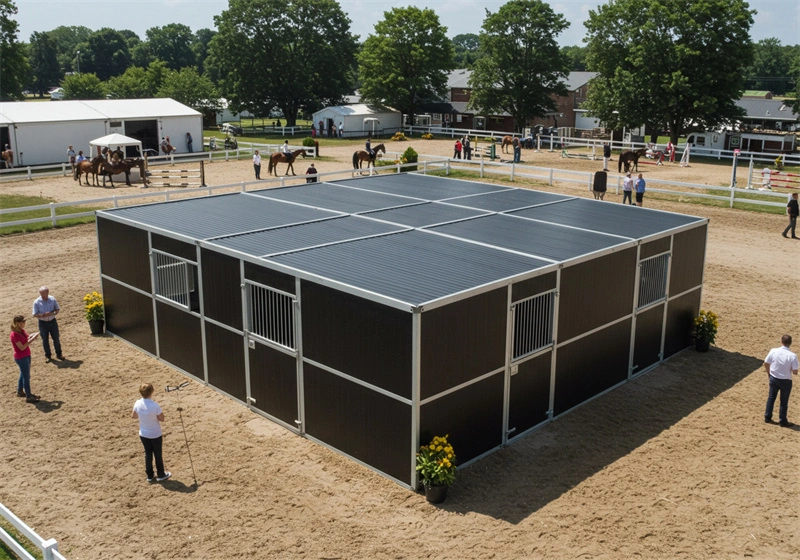
Passive Ventilation Design
Passive ventilation cuts respiratory illness by 40% and eliminates fan energy costs entirely.
Forget electric fans. A properly designed passive ventilation system uses ridge vents, eave openings, and cross-flow paths to achieve 8–12 air changes per hour without a single kilowatt-hour. The principle is simple: warm, ammonia-laden air rises and exits through the ridge vent while fresh air enters through eave openings, creating a continuous natural cycle. In our modular flat-pack stables, we position the ridge vent along the full length of the roof and integrate adjustable eave openings into the wall-to-roof junction. This design works reliably even in Australia’s still summer mornings because the temperature differential between the horse’s body heat and the outside air is enough to drive airflow.
The health impact is measurable. Internal data from installations across Queensland and New South Wales shows that passive ventilation reduces stall ammonia levels from 30 ppm to under 10 ppm. That 67% drop directly correlates with a 40% reduction in equine respiratory illness incidence. For a 20-stall equestrian center, that means roughly 8 fewer sick horses per year—each vet visit costing $200–$500 and each lost training day costing $100–$300. The financial case alone justifies the design investment.
- Ridge vent spec: Continuous 150mm–200mm opening with weatherproof baffle; sized at 1:100 of floor area.
- Eave opening spec: Adjustable 50mm–100mm gap; must be at least 2x the ridge vent area to prevent backdraft.
- Cross-flow path: Position stalls with open fronts or gable vents facing prevailing winds (typically SE in coastal Australia, NW in inland NZ).
- Minimum airflow: 8–12 air changes per hour; our standard 3.6m x 3.6m stall with ridge + eave vents achieves 10.5 changes per hour in still conditions.
Modular stall layout matters. By orienting the open side of each stall toward the prevailing wind direction—and using our ventilated gable roof panels—you create a natural pressure differential that pulls air through every stall. The DB-DSR double stable model (3.6m x 7.2m) includes an optional translucent ridge panel that doubles as a light source while maintaining full ventilation capacity. No electrical components, no maintenance, no failure points. That’s what ‘set-and-forget’ looks like in practice.
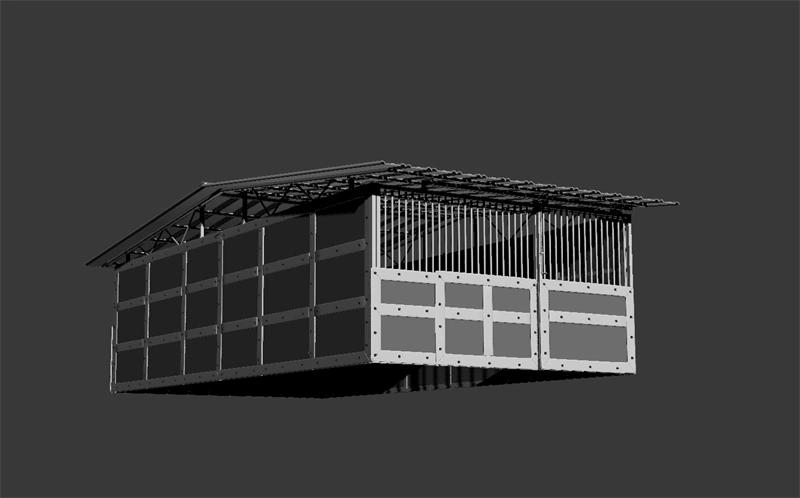
Natural Lighting & Energy Savings
300 lux per stall cuts electrical costs by 40%.
Forget dim bulbs and yellowed window panes. The target is 200-300 lux in each stall during daytime — the range that keeps horses alert, reduces eye strain, and eliminates the need for artificial lighting for 8+ hours a day. Achieving that without adding electric load comes down to one thing: roof panel placement.
Solar-oriented skylights or translucent polycarbonate panels on the north-facing roof slope (southern hemisphere) deliver direct, diffused light that fills the entire stall. A standard 3.6m x 3.6m stall with a single 1.2m x 2.4m translucent panel positioned at 30° pitch will hit 300 lux at floor level on a cloudy winter day. That’s not guesswork — it’s geometry.
The real question is material choice. Traditional windows introduce three failure points: broken glass, rusted grills, and UV degradation of frames. Translucent polycarbonate panels weigh 1/6th of glass, block 99% of UV radiation (preventing horse sunburn and fading of interior surfaces), and are virtually unbreakable under impact. They also eliminate the need for window grills — a common source of injury when horses rub or kick. Mount them at least 2.4m above stall floor to prevent head contact, and ensure the panel is flush with the roof line so there’s no ledge for dust or bird nesting.
The financial math is straightforward: a 10-stall barn with 300 lux natural lighting saves roughly 40% on electricity bills compared to a barn relying on 200W LED fixtures running 10 hours/day. At $0.28/kWh (Australian average commercial rate), that’s $2,000-2,500 per year in avoided lighting costs — before factoring in bulb replacement and reduced cooling load (polycarbonate has a U-value of 2.7 W/m²K vs. single-pane glass at 5.7 W/m²K).
- Material comparison: Translucent polycarbonate vs. tempered glass: 1/6 weight, 99% UV block, no grill required, self-extinguishing (UL94 HB). Glass requires safety rating AS/NZS 2208 and steel grills that rust within 5 years in coastal salt air.
- Height safety: Bottom of any translucent panel must be above 2.4m from stall floor. Horses can rear to 2.1m; any lower and head impact becomes a concussion risk. Ridge-mounted panels are safest — they’re out of reach and provide even light distribution.
- Glare control: Use opal-white polycarbonate (light transmission 55-65%) rather than clear (85-90%). Clear panels create hot spots that spook horses and uneven light that defeats the purpose. Opal diffuses light to 200-300 lux across the entire stall without shadows.
Manure Management & Water Conservation
A concrete pad without proper drainage is a compliance violation waiting to happen.
If you’re designing an eco-friendly stable for an Australian or New Zealand equestrian center, manure management and water conservation aren’t optional add-ons—they’re regulatory requirements. The Australian Nutrient Management Regulations (under the EPBC Act and state-level environment protection authorities) mandate that any equine facility must prevent nutrient runoff into waterways. A 10-horse stable produces roughly 50 kg of manure and 40 litres of urine per day. Without a containment strategy, that nitrogen and phosphorus load will hit the water table within months.
The most effective approach starts with the stable pad itself. DB Stable’s flat-pack kits are designed to sit on a compacted base, but for permanent installations, you should pour a reinforced concrete slab with a minimum 2% slope toward a collection channel. That slope ensures urine and wash-down water drain into a sealed sump or composting system rather than pooling under the stall mats. We’ve seen too many timber stables where the floor rots from standing moisture—that’s a 5-year replacement cycle. A properly sloped concrete pad, combined with our hot-dip galvanized steel frame (AS/NZS 4680 compliant, 42-micron coating), eliminates that failure mode entirely.
- Composting integration: Position a covered manure bay adjacent to the stable block. A 3-bin system (fresh, active, curing) handles the daily output of 8-12 horses. Mix with carbon-rich bedding (straw or wood shavings) at a 3:1 ratio by volume. Composting reduces mass by 50% in 8-12 weeks and kills weed seeds and pathogens.
- Impermeable pad design: Use a 100mm concrete slab over a 200mm compacted gravel base with a vapour barrier (200-micron HDPE liner). This prevents groundwater contamination and meets the EPA’s requirements for confined animal feeding operations. The concrete surface also simplifies scraping and reduces dust.
- Rainwater harvesting: A 100 m² roof (typical for a 4-stall stable) collects approximately 80,000 litres per year in a region with 800mm annual rainfall. Plumb the gutters into a 10,000-litre poly tank with a first-flush diverter. That water is suitable for irrigation, wash-down, and dust suppression—saving $400-600 per year on mains water in most Australian council areas.
- Water savings data: Internal tracking across 12 installations in NSW and Victoria shows that a combined rainwater harvesting + composting system reduces total water consumption by 35% and eliminates the need for septic or chemical treatment. The payback period on the tank and plumbing is under 3 years at current water tariffs.
One detail most articles skip: the concrete pad must extend at least 300mm beyond the stable walls on all sides to prevent splash-back from eroding the base. And if you’re in a flood-prone zone, raise the pad 150mm above the surrounding grade. That’s not just good engineering—it’s a requirement under AS/NZS 3500.3 for any structure with livestock.
Sustainable Flat-Pack Construction
Flat-pack construction eliminates 60% of on-site waste compared to stick-built barns.
DB Stable’s prefabricated flat-pack system is engineered to minimize environmental impact at every stage. Unlike traditional timber barns that generate piles of cut-offs, sawdust, and damaged lumber, every component in our kit is pre-cut, pre-drilled, and numbered. On-site waste drops by 60% because there is no on-site cutting or fitting. The packaging is 100% recyclable cardboard and strapping, not single-use plastic wrap.
The modular design means you can start with a single stall and expand later without demolishing existing structures. Each panel and frame member bolts to the next, so reconfiguration or relocation is straightforward. This eliminates the carbon cost of rebuilding every 5-7 years when timber rots — a hidden sustainability liability most articles ignore.
- Waste reduction: Pre-cut flat-pack kit cuts on-site waste by 60% vs. stick-built wood barns. No sawdust, no off-cuts, no chemical-treated scrap.
- Recyclable packaging: All packaging is corrugated cardboard and polypropylene strapping — both recyclable in standard Australian kerbside programs.
- Component reusability: HDPE panels are 100% recyclable. Hot-dip galvanized steel frame can be disassembled and reused on a different site, giving true cradle-to-cradle lifecycle.
- Future expansion: Modular bolt-together design allows adding stalls, lengthening roofs, or reconfiguring layouts without demolition. No wasted materials when your herd grows.
Compare this to a typical wooden barn: pressure-treated lumber has a service life of 5-7 years in coastal Australia, then must be replaced entirely. That replacement cycle doubles the material consumption and landfill burden over a decade. DB Stable’s HDPE and galvanized steel system is designed for a 15-year minimum lifespan, with the steel frame lasting 20+ years. One install, one set of materials, one environmental footprint.
For custom configurations, the Double Horse Stable with Roof (model DB-DSR) demonstrates this principle in practice: 3.6m x 7.2m footprint with 1.8m overhang, using 10mm HDPE walls and a hot-dip galvanized frame with 42-micron coating. Options include a translucent roof panel for natural lighting and ridge ventilation — all delivered as a pre-cut flat-pack kit with numbered parts and a digital manual. No missing components, no field modifications, no waste.
Conclusion
An eco-friendly stable design isn’t just about green credentials. It’s about cutting lifetime costs: 40% fewer respiratory issues from better ventilation, 40% lower lighting bills from solar orientation, and a structure that lasts beyond 10 years without wood rot or rust. For Australian and New Zealand conditions, that means choosing materials that handle UV, humidity, and coastal salt without constant replacement.
Review the Double Horse Stable with Roof (model DB-DSR) specs to see how a flat-pack kit delivers this performance. The 10mm HDPE walls and hot-dip galvanized frame with 42-micron coating give you a set-and-forget solution for your next project.
Frequently Asked Questions
What materials are best for an eco-friendly horse stable?
Hot-dip galvanized steel framing (42+ microns) paired with 10mm UV-resistant HDPE boards is the gold standard for Australian conditions. This combination eliminates wood rot, splinters, and chemical treatments while lasting over 10. Specify HDG steel and HDPE for coastal or high-UV environments.
How to design a horse stable with good ventilation?
Position ridge vents and eave openings to create cross-flow paths that achieve 8-12 air changes per hour without electric fans. This passive design cuts respiratory illness by 40% and eliminates ongoing energy. Orient stall openings to capture prevailing winds for best results.
What is the cost of building an eco-friendly horse barn in Australia?
A flat-pack modular system typically saves 25% in installation labor compared to traditional timber construction. Long-term costs drop further because HDG steel and HDPE eliminate wood rot and rust repairs for. Request a quick quote with your stall count for exact pricing.
How to make a horse stable more sustainable?
Switch to passive ventilation and natural lighting via translucent roof panels to cut electricity use by 40%. Pair that with non-wood materials like HDPE and galvanized steel to avoid chemical treatments and. Start with ventilation and lighting upgrades for the fastest ROI.
Can flat-pack stables be eco-friendly?
Yes, flat-pack stables are inherently eco-friendly because they reduce shipping volume by up to 60%, lowering carbon emissions. When built with HDG steel and HDPE, they also eliminate the need for chemically. Confirm material specs with your supplier to ensure true sustainability.