Paying a deposit to a horse stable factory commits you to everything that follows: the steel grade, the galvanised coating, the packing and the shipping dates. The right factory deposit questions, asked before the money moves, are the cheapest quality control an Australian or New Zealand importer will ever get. Once production starts, a verbal promise about coating thickness is worth nothing. You negotiate from strength only before the transfer clears.
Here is the benchmark this guide uses: DB Stable, a portable horse stable manufacturer based in Anping, China, in the portable stable business since 2013 and exporting to Australia and New Zealand. The factory answers enquiries within 6 hours, quotes from drawings within 24 hours, and books third-party QC inspection before dispatch. If the factory you are vetting cannot match those numbers in writing, that comparison alone tells you something.
Key questions, answered at a glance
- Minimum order: 10 sets for this product line; production capacity of up to 20 sets per week.
- Frame spec to demand in writing: Q235 steel, 50×50mm square tube, fully welded.
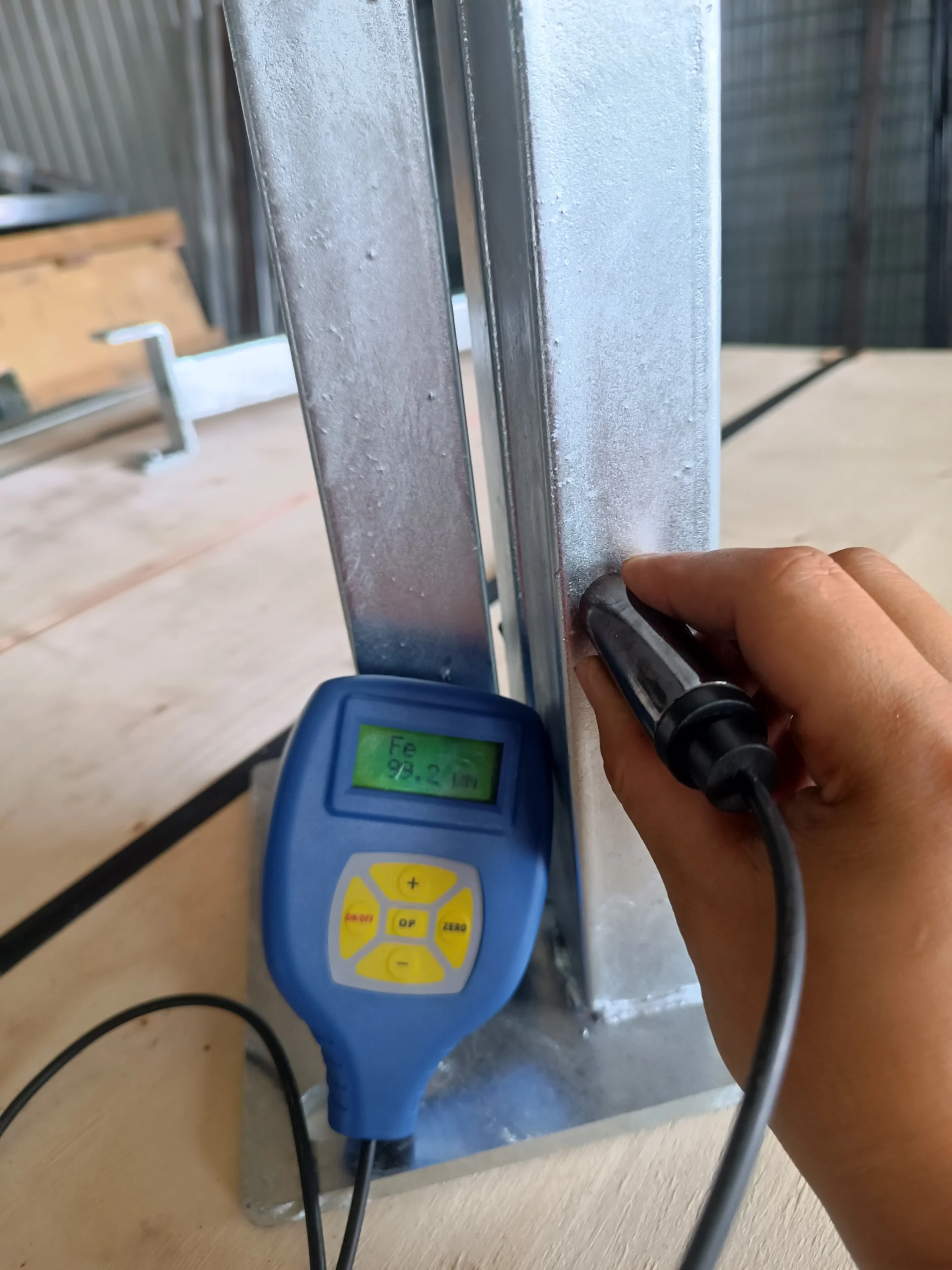
- Coating spec to demand in writing: hot-dip galvanised, factory spec ≥42 micrometres, process to AS/NZS 4680.
- Inspection: third-party QC resident inspection at the factory before dispatch, with the report shared.
- Assembly claim to verify: tool-free corner pins, 2–3 people, about 30 minutes per stable.
- Trade terms: deposit percentage, currency and payment schedule vary by factory — get them printed on the proforma invoice, not agreed by chat message.
Capacity and order size: can the factory build your order?
Start with the two numbers that frame every import decision: the minimum order quantity and the production rate. For this product line the MOQ is 10 sets, and production capacity runs at up to 20 sets per week. Both figures belong in your written enquiry reply, not in a sales representative’s memory. A factory that will not state its MOQ plainly is usually hiding either a trading-company markup or a workshop that subcontracts your order to someone you never vetted.
Then ask how your order slots into the current schedule. A weekly capacity figure means little if your 10 sets sit behind a larger export order for six weeks. Ask for a written production schedule that starts the day the deposit clears, and ask what happens if the factory misses it. Lead times for full container orders vary by order size and season, so treat any delivery date without a named production window as a placeholder — and see how a China portable stable manufacturer actually runs an order before you compare quotes.
Materials and coating: get every figure in writing
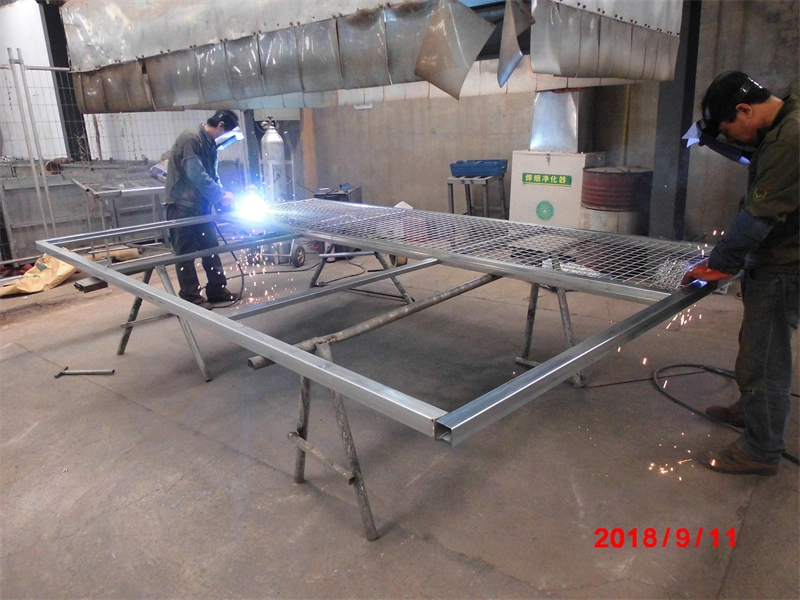
The deposit conversation is the moment to lock the specification sheet. Ask the factory to state, in writing: the steel grade, the tube size, the panel material and thickness, and the coating process with its thickness. For this product line the answers should read: Q235 steel frame in 50×50mm square tube (60×30mm oval and 32mm round tube available for some components), fully welded; 10mm HDPE infill panels in black, white or green; hot-dip galvanised to a factory specification of at least 42 micrometres, with the galvanising process carried out to AS/NZS 4680, the Australian and New Zealand standard for hot-dip galvanising of structural steel. Pre-galvanised tube with a powder-coated finish is the alternative surface treatment on some configurations, so confirm which one your quote actually covers.
Ask for the panel dimensions too, because they drive your freight and handling plan. Standard stable panels measure 2844×1194×10mm or 3494×1194×10mm in HDPE, on a 50×50×2.0mm tube frame, with 4.0mm wire mesh at 50×50mm apertures on mesh-fill sections. A single panel weighs about 200kg — a number your transport contractor will want before the container arrives, not after.
In my view, the single most revealing deposit-stage question is the coating one: “What coating thickness do you guarantee, in micrometres, on the spec sheet?” A factory that hesitates to put a number on paper is answering your question anyway.
| Checkpoint | What to demand in writing | Verified factory specification |
|---|---|---|
| Frame | Steel grade, tube size, weld type | Q235 steel, 50×50mm square tube, fully welded |
| Panel fill | Material and board thickness | 10mm HDPE, black / white / green colour options |
| Coating | Process standard plus guaranteed thickness | Hot-dip galvanised, factory spec ≥42μm, process to AS/NZS 4680 |
| Assembly | Crew size and build time per stable | Tool-free corner pins, 2–3 people, about 30 minutes per set |
| Minimum order | MOQ stated on the quotation | 10 sets |
Quality control: who inspects before the container leaves?
Ask one direct question: “Do you accept third-party QC inspection at your workshop before dispatch, and will you send me the report?” This factory’s standard arrangement is third-party QC resident inspection, with inspection and test documents available on request. That is the arrangement you should hold any supplier to, because a factory that only inspects itself is marking its own homework.
Be specific about what the inspection covers. Weld integrity on the frame, coating condition, panel fixings and door hardware are the checkpoints that fail in service, and each one is cheap to verify while the goods are still in China and expensive to discover a season after arrival. If you want a deeper inspection method for welded frames, our weld quality inspection guide for stable frames lists what a pre-shipment inspector should look at weld by weld. Agree the inspection cost and timing before the deposit, not after the goods are packed.
Compliance and documentation claims
Yes, every supplier says “ISO certified”. The claim means nothing until you hold the certificate, check which entity and product scope it actually covers, and confirm the document is current. This factory declares compliance of ISO and EN systems; a serious supplier will send certificate copies on request, and you should verify each one against the issuing body rather than accepting a file attachment as proof.
Ask which documents travel with the goods and which arrive before the deposit clears. The standard set for an AU or NZ stable import includes the specification sheet, the galvanising process statement, third-party QC reports, packing lists and the proforma invoice with the full trade terms. Our documentation checklist for stable imports breaks the set down line by line; sending that list to the factory before you pay tells you how the account will be managed after the money moves.
Response times and the quoting process
Response speed before the deposit is the best available preview of service after it. The working benchmark: enquiries answered within 6 hours, and a quotation from your drawings or reference images within 24 hours. The order process runs in three steps — you submit requirements with drawings or reference photos, the factory returns a solution and quote within 24 hours, and production plus shipping arrangements begin once the deposit is paid. Ask any factory you are vetting to match that sequence in writing.
A quote that takes a week before you have paid anything will take longer when you are chasing a missing door latch after arrival.
Assembly, logistics and after-sales support
Portable stables ship flat pack to cut sea freight volume, so ask how the kit actually goes together on your end. This line uses a tool-free corner pin design: 2–3 people assemble one stable in about 30 minutes, and multiple stables connect in a row or back-to-back. A standard configuration uses three side panels and one gate per stable, with five panels and two gates for two adjacent stables. Ask the factory to confirm the panel counts for your layout in the quote, because a missing panel mid-build stops the whole installation.
Confirm the after-sales arrangement before the deposit: who answers warranty and spare-parts questions, in what time zone, and how fast. This factory runs a 24×7 after-sales service. Also confirm the logistics options — sea freight is standard for flat pack consignments, and urgent air freight is available at extra cost.
The deposit-stage checklist
Work through these questions with the factory in one written thread before any funds move. Each answer belongs on the quotation or spec sheet, not in a chat window.
- What is your minimum order quantity, and what is your current weekly production schedule?
- Will you send a written spec sheet covering steel grade, tube size, panel material and thickness?
- Which standard governs your galvanising process, and what coating thickness do you guarantee in writing?
- Do you accept third-party QC inspection before dispatch, and will you share the inspection report?
- Which certificates can you send copies of, and do they cover this product and this factory entity?
- What are the trade terms, deposit percentage and payment schedule, printed on the proforma invoice?
- What is the production plan for my order from the day the deposit clears?
- Who handles after-sales and spare parts, and what are the committed response times?
Conclusion
A deposit converts a sales conversation into a production order, so every specification, inspection right and document you care about needs to be in writing before the transfer. The eight questions above cover the areas where stable imports actually go wrong: unstated MOQs, vague coating specs, self-certified quality and payment terms that exist only in a chat history.
Before you pay, compare your factory’s written answers against the benchmarks in this guide — the 6-hour enquiry response, the 24-hour drawing quote, the ≥42μm factory galvanising specification to AS/NZS 4680 and third-party QC before dispatch. If you are still shortlisting suppliers, run the checklist against every quote on your desk before you commit funds.
Frequently Asked Questions
How much is a typical deposit for a stable order from China?
There is no universal figure — deposit percentages and payment structures vary between factories and orders. Get the percentage, currency, beneficiary and payment schedule printed on the proforma invoice.
Should the inspection happen before or after I pay the deposit?
The deposit starts production, so inspection happens after it — but the right to inspect must be agreed before it. Book third-party QC inspection of the finished goods before dispatch, and make the report a condition of the final payment.
What coating thickness should I ask a stable factory to guarantee?
Ask for a written micrometre figure on the spec sheet. This product line’s factory specification is a hot-dip galvanised coating of at least 42μm, with the galvanising process carried out to AS/NZS 4680.
What is the minimum order for portable horse stables from this factory?
The MOQ is 10 sets, with production capacity of up to 20 sets per week. Confirm both figures plus your production window in the written quote before paying anything.