Front wall opening width is one of the few stable dimensions that is already decided for you. The published gate sizes are 1150 mm and 1300 mm, both set into fronts 2200 mm high, and there is no third number in the catalogue. So the buying question is narrower than most importers expect: not how wide can I go, but which of two widths suits your horses, your traffic and the doors you intend to stock.
Width is where a spec sheet stops being decoration. Both openings sit behind the same gate board and panel system, so 150 mm is the entire difference on paper — and it shows up later in how a bay is worked and how many spare fronts you carry.
Key Takeaways
- Two published opening widths only — 1150 mm or 1300 mm — both on a 2200 mm-high front; anything else is a drawing item, not a catalogue line.
- The wider option adds 150 mm — about 13 per cent more opening — judged against your own traffic, not a brochure.
- Both widths use the same 10 mm HDPE gate board (1024 × 1054 × 10 mm), so one spare-part pool covers a mixed order.
- Three door styles are published: double doors as standard, a slide door on a 2950 mm twin-roller track, or a barn door.
- Gates count one per stall — a six-stall back-to-back block is 11 side panels and 6 gates — so you choose the width six times per block.
What the two numbers actually fix
A stable front is the way a horse gets out, the face of the building and a load of hardware on a frame. The published range offers two openings and no intermediate size, so the front wall opening width question on a purchase order is a choice between two standard shapes.
What sits behind the opening does not change with it. Frames are Q235 steel in 50 × 50 × 2.0 mm square tube, fully welded, with a 25 × 25 × 1.6 mm lower frame section; the mesh option is published at 4.0 mm wire on a 50 × 50 mm grid; the lower panel is 10 mm HDPE in black, white or green. Gate leaves come from the same board family at 1024 × 1054 × 10 mm — and that board does the work: bite-resistant, rot-proof, washable, UV-stable, antibacterial and cushioning under a kicked hoof.
Coating is stated in two parts, and the order matters: a factory specification of at least 42 microns galvanising, with the process executed to AS/NZS 4680. Do not merge those into “42-micron AS/NZS galvanising”. The standard’s own minimum for steel in the 1.5 to 3.0 mm wall band is 45 microns local and 55 microns average — the 42 figure is the plant’s promise, not the standard’s requirement.

Choosing between 1150 mm and 1300 mm
Four questions settle most yards. What else goes through the front? In most doorways the horse is the smallest thing passing — bins, troughs and a barrow of bedding all use the same opening, and the tight point sets the pace of every routine job. Where does a hinged leaf swing? Into room a trough or a parked float does not already occupy. Which horses use it? The catalogue pairs no width with any breed, so a pony-and-warmblood split is a claim you would be making; measure the horses in front of you and read the sizing logic in this pony club sizing guide. What will you stock? One width across a display yard buys one spare front; two widths buy two.
| Question on the drawing | 1150 mm opening | 1300 mm opening |
|---|---|---|
| Opening width | The narrower published opening | 150 mm wider — about 13 per cent more opening |
| Gate board and spares | Same 1024 × 1054 × 10 mm HDPE gate board | Same 1024 × 1054 × 10 mm HDPE gate board |
| Daily traffic through the front | Where bins and troughs are carried, not pushed | Typically gives wheeled items more room off the wall face |
| What to confirm before ordering | Leaf width, latch position, swing clearance | Whether the bay still carries that opening |
How each door style spends its width
Double doors are the published standard: two leaves on the front frame. Stainless latches are in the accessory list, but no hardware is published against a leaf width — ask which latch and hinge set your doors carry. Where a fixing must be drilled on site, cut surfaces can be left unprotected, so get the repair-coating specification in writing before anyone reaches for a drill.
Slide doors are where width and geometry meet. The published hardware is a 2950 mm twin-roller track; the published gate board is 1024 × 1054 × 10 mm, so the leaf that slides is a different number from the opening it closes. Take the 1300 mm opening and 1650 mm of track remains beside it; take the 1150 mm opening and 1800 mm remains. That is arithmetic from two published numbers, not a specification — ask the plant to mark the leaf width and the stop position on your bay drawing.
Barn doors carry no published dimension, so treat a barn-style front as a drawing item and ask for leaf, hanger and track sizes on paper. Assembly is identical at either width: corner pins need no tools, and two or three people can put a set up in about 30 minutes — a figure for putting a set together, not for tuning a door.
Our position: with no other constraint, order the 1300 mm front. Same leaf board, same front height, same spare pool — and it removes the tight point from the jobs you do twice a day.
What the width does to your order
Read the configuration table as a gate counter. One stall takes 3 side panels and 1 gate; four take 9 panels and 4 gates; five take 11 and 5; a six-stall back-to-back block takes 11 panels with 6 gates. Choose a width and you have chosen it six times in one block. Growth is a smaller hardware step than a new kit: four bays to five adds 2 panels and 1 gate, and the shared wall behind that saving is worth marking on your drawing rather than assuming.
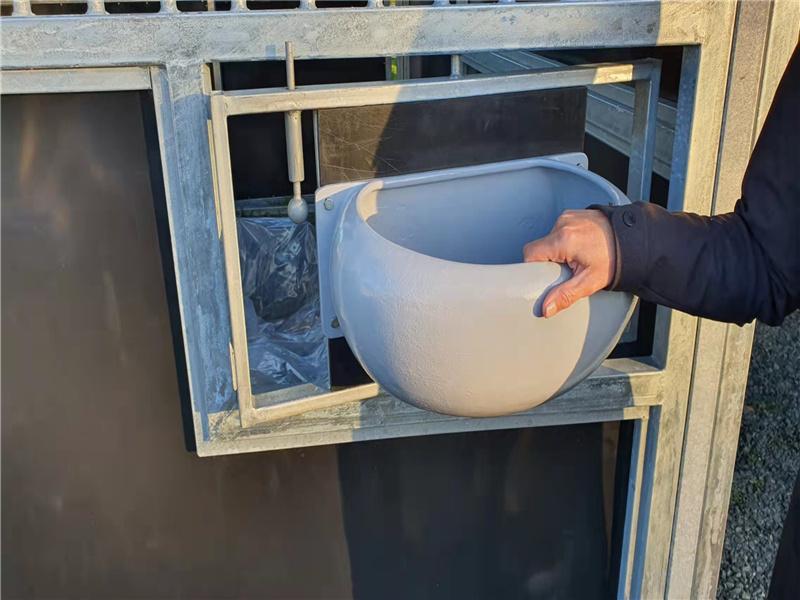
Inside a 10-set minimum order both widths travel together, and with one gate board spec there is no second spare system to carry. The accessory list includes feeders and water bowls, but no opening or drilling specification for them, so settle that line in writing before the fronts are cut. Ask for a packing list mapped to the configuration table so the stack sorts into identified fronts, and plan the offload around the panel itself — close to 200 kg each is forklift territory at either width.
The published service is an enquiry reply inside six hours and a drawing-based quote inside 24, against about 20 sets a week, so what usually slows a width decision is your drawing, not the plant’s queue. Bulk production lead time is not published for this category; get it in writing before you commit a season. The mesh versus pipe stable fronts comparison goes further on the upper section.
Frequently Asked Questions
Which front wall opening width should a first order standardise on?
One width, whichever you pick. Both gates are cut from the same 10 mm HDPE board, so standardising keeps a single spare front; the size debate is settled by what you push through the doorway most often.
Can a slide door run in either opening?
The published slide configuration is a 2950 mm twin-roller track, and nothing in the documents ties that track to a gate width. Ask for the leaf width and the stop position on your bay drawing before ordering.
Is 1150 mm the pony size and 1300 mm the horse size?
Nothing published says so. Two widths and a continuous spread of horse sizes do not line up neatly, so measure the animals you actually stable — depth of bay and the width of the widest point going through — instead of applying a breed rule.
Does the wider opening cost more?
No price list is published for this category, so treat it as a quote question against your own gate count. A six-stall back-to-back block carries six gates, and that 150 mm difference is repeated in every one of them.
Conclusion
Two widths, one panel system, one front height. There is little to argue about on paper, so the decision belongs to your yard: what passes through a front most often, where a leaf swings, and how many spare fronts you keep.
Settle the width on the drawing with the gate count beside it, then let the quote tell you what the mix is worth — a faster answer than any rule of thumb about horses.