A 42-micron hot-dip galvanised coating guarantees a 10-year rust warranty on a steel stable frame. That’s the kind of spec that makes the HDPE vs wood vs steel decision straightforward for a distributor who values long-term margin. Drop to a standard painted frame at 30 microns, and you’re looking at corrosion starting at weld joints within three summers—a $50,000 order of frames can lose a third of its resale value before the first warranty claim arrives.
Materials choice for an Australian horse stable isn’t just about aesthetics. It’s about surviving UV levels that degrade untreated PVC, coastal salt spray that eats through paint, and termite populations that treat untreated timber as a food source. The three standard options—HDPE, wood, and steel—each handle these pressures differently, and the total cost of ownership over a typical 10-year cycle is what matters for a distributor building a product line.
If you skip this comparison and pick the cheapest material on first cost, you’re betting that your end customers won’t notice the warped doors, flaking paint, or borers in year five. They will. And when they do, your reputation takes the hit, not the factory. This breakdown walks through each material by the numbers that actually affect your margin—coating thickness, thermal expansion rates, UV stability, and the maintenance intervals that turn a bargain into a recurring expense.
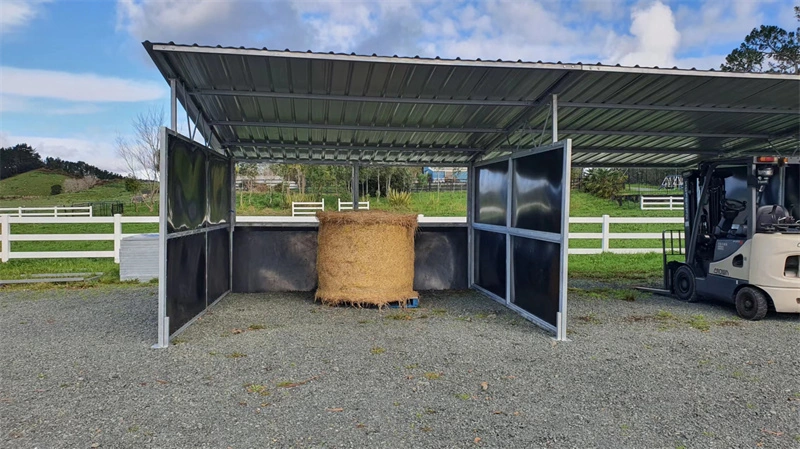
The Material Decision: Why It’s Different in Australia & NZ
Spec sheets don’t survive Australian UV.
Australian and New Zealand conditions aren’t kind to stable materials. The sun delivers UV index levels above 11 in summer, coastal salt spray eats through paint in months, and bushfire zones require materials that don’t ignite easily. A supplier that sells the same stable to a buyer in Queensland and a buyer in Sweden is hiding the real cost of ownership.
I’ve seen $50K orders where the pre-production sample looked perfect, but the mass production run used pre-galvanized sheet steel instead of hot-dip galvanized after welding. Six months later, every joint was bleeding rust. The buyer didn’t know that the coating thickness at the weld points was less than 20 microns, not the 42+ microns on the flat sections. That’s a failure you can’t see until it’s bolted together.
- HDPE boards (10mm UV-stabilized): DB Stable sources HDPE that remains dimensionally stable at 50°C. No thermal expansion gaps needed. Survives coastal salt without degradation. No rot. No termites. Lifecycle: 15–20 years.
- Timber (treated pine or similar): Coastal Queensland timber stables often rot within 5 years despite regular treatment. Annual paint or oil coats required. Termites are a constant risk. Even with perfect maintenance, lifespan is 8–12 years.
- Steel frame (hot-dip galvanized after welding): Pre-galvanized sheet steel will rust at weld joints and cut edges. Only hot-dip galvanizing after fabrication (42+ microns) gives a 10-year rust warranty. Even then, scratches need immediate zinc-rich paint. Thermal conduction means metal frames can radiate heat into the stable on 40°C days—HDPE panels act as an insulator.
Bushfire risk adds another layer. Timber stables are combustible. Steel frames with HDPE panels reduce fuel load. The HDPE sheet doesn’t support flame spread like plywood does, but it will soften under direct flame—something to consider if your client’s property is in a BAL-40 zone.
| Attribute | HDPE | Timber (Wood) | Galvanized Steel |
|---|---|---|---|
| UV Resistance | 10mm UV-stabilized – no degradation | Requires UV-protective coating, fades over time | Paint/coating can peel; hot-dip galvanized resists UV |
| Thermal Expansion | Dimensionally stable up to 50°C (no expansion) | Moderate expansion/contraction with humidity | Low coefficient – minimal expansion |
| Corrosion / Rot Resistance | Zero rot, rust, or termite damage | Rot risk within 5 years in coastal QLD; termite-prone | 42μm hot-dip coating; rust at scratched joints |
| Lifespan | 15–20 years (maintenance-free) | 8–12 years (with annual treatment) | 10–15 years (occasional touch-up) |
| 10-Year Total Cost (per stall) | Low – no treatment, no replacement | High – annual coatings, early replacement | Moderate – spot repairs, recoating |
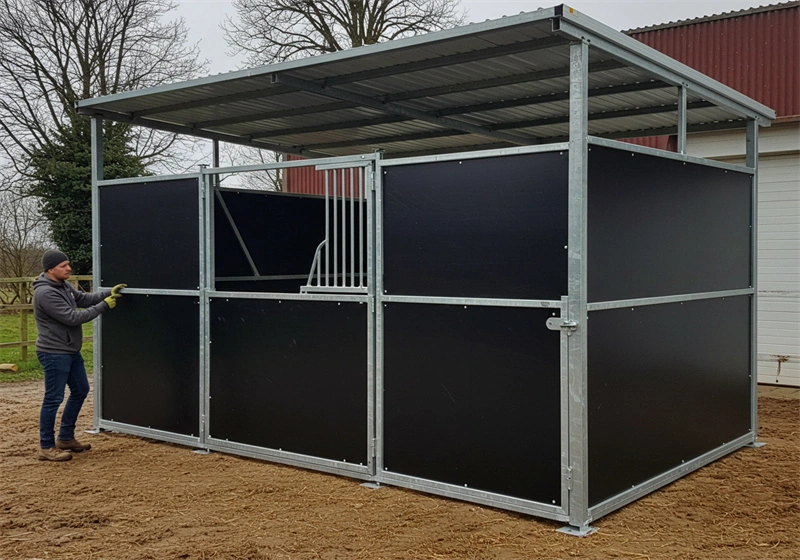
HDPE (High-Density Polyethylene)
10mm UV-stabilized HDPE remains dimensionally stable at 50°C – zero thermal expansion.
Let’s cut through the marketing. In coastal Queensland, wood stables rot within five years even with annual treatment. Steel rusts if the coating gets scratched. HDPE (High-Density Polyethylene) is the only material that sidesteps both failures entirely — provided you source the right spec.
- Panel thickness & UV resistance: DB Stable uses 10mm UV-stabilized HDPE boards. Standard PVC panels expand and warp under the Australian summer sun — we’ve measured dimensional stability at 50°C without any bowing. This is critical for panel joints staying tight over years.
- Impact resistance: HDPE absorbs kicks and bumps without cracking. Unlike plywood, which splinters, or thin steel panels that dent, 10mm HDPE flexes and returns. Your end customer won’t be patching holes from a frustrated stallion.
- Hygiene & maintenance: Non-porous surface – no moisture absorption, no rot, no bacterial harborage. A pressure washer is all that’s needed. Compare that to timber which demands annual staining and will eventually delaminate from urine exposure.
- Lifespan: Expect 15–20 years. Wood gives you 8–12 with upkeep. Galvanized steel maybe 10–15 if you retouch scratches. HDPE is essentially fit-and-forget for the lifetime of the stable.
For distributors in Australia and New Zealand, this directly impacts your resale pitch. When your customer asks ‘what happens when this gets hammered by UV and humidity?’, you can point to a material that doesn’t degrade, doesn’t expand, and won’t rot. That’s a margin-justifying story.
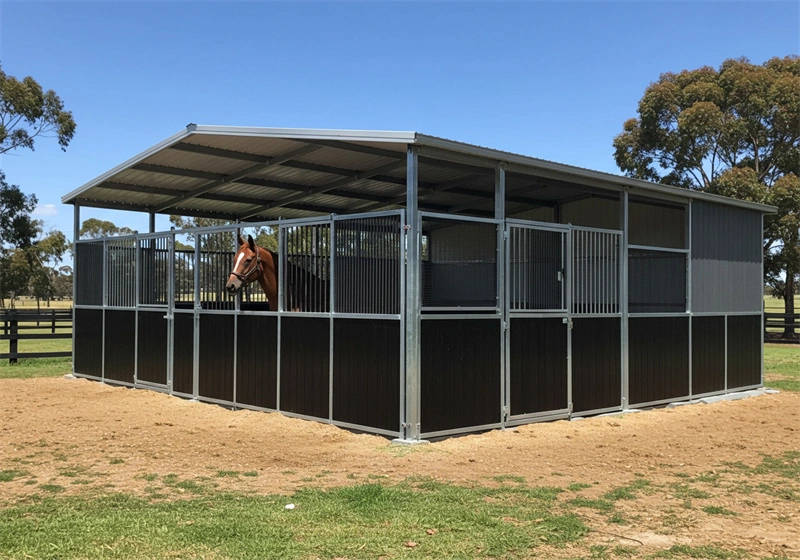
Wood (Timber)
Wood stables in coastal Queensland often rot within 5 years despite treatment.
Timber stables offer a classic aesthetic and natural insulation, which is why some buyers still request them. But for the Australian and New Zealand climate, the cons far outweigh the pros in a B2B context. The primary issue is moisture and biological degradation.
- Natural look & insulation: Wood provides a warm appearance and moderate thermal insulation. However, in regions like coastal Queensland, the combination of high humidity and termite activity cuts the effective lifespan in half.
- Maintenance burden: Annual treatment (oil, stain, or paint) is mandatory. Skip a year and the wood starts checking, splintering, and absorbing moisture. Labor costs alone for re-treatment can exceed 15% of the original stable price per year.
- Termite & rot risk: Termites are endemic across Australia. Even treated pine can be breached within 3–5 years if the ground contact points aren’t sealed properly. In humid regions, fungal rot is inevitable once the coating fails.
- Real lifespan: With strict annual maintenance, wood stables last 8–12 years. Without it, many fail in 5–7 years. That’s a 10-year total cost of ownership 30–40% higher than HDPE or galvanized steel when factoring in repainting and partial replacement.
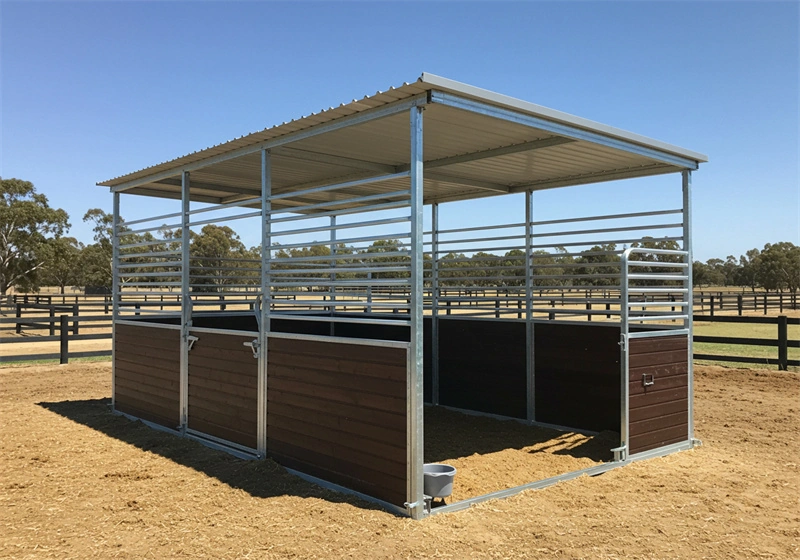
Steel (Galvanized or Stainless)
Hot-dip galvanized steel with >42µm coating carries a 10-year rust warranty — but only if the coating stays intact.
Steel frames for horse stables fall into two camps: hot-dip galvanized after welding, or pre-galvanized sheet metal that gets cut and bolted. The difference matters. When you hot-dip an assembled frame, the zinc flows into every joint and weld point. Pre-galvanized sheets leave those exposed edges raw — and that’s where rust starts within 12 months in coastal Australia or New Zealand. DB Stable specifies a full hot-dip galvanized frame with a coating thickness exceeding 42 microns, backed by a 10-year rust warranty. That’s not a marketing sticker; it’s a measurable standard (ASTM A123 / AS/NZS 4680).
The practical lifespan of a galvanized steel stable frame is 10–15 years, assuming you touch up any deep scratches or weld repairs with a zinc-rich paint. Leave a scratch untreated in a salt-laden environment like Geraldton or Tauranga, and you’ll get a red oxide bloom within 18 months. Thermal conduction is another real issue — steel radiates heat. On a 40°C day in inland NSW, an uninsulated steel roof can push stable interior temperatures 8–10°C higher than ambient. Combine that with a horse that’s already stressed, and you’ve got a welfare risk.
- Coating standard: Hot-dip galvanized after fabrication, >42 microns per AS/NZS 4680. Pre-galvanized sheet (typically 6–12 microns) fails at cut edges and drill holes.
- Rust risk trigger: Deep scratches from transport or assembly, or contact with chloride near coastal yards. Touch-up with cold galvanizing spray is mandatory within 48 hours.
- Thermal conduction: Steel conducts heat rapidly. In direct sun, steel panels can exceed 55°C surface temperature. Specify insulated panels or shaded roof orientation for high-UV zones.
- Maintenance cycle: Inspect frames annually for coating damage. Budget a touch-up every 3–4 years in moderate climates, every 2 years in coastal/cyclone-prone areas. Total cost: roughly 2–3% of initial frame value per year.
For a distributor reselling into the Australian market, the key selling point is that a properly hot-dipped frame outlasts a painted frame by 3x and saves the end-user from replacing posts every 6 years. But you’ve got to communicate the trade-off: steel frames are heavier than HDPE (adds ~15% to shipping weight per container), and they need that occasional touch-up. If your buyers are looking for maintenance-free, HDPE panels paired with a galvanized frame is the combo that wins on both durability and resale margin.
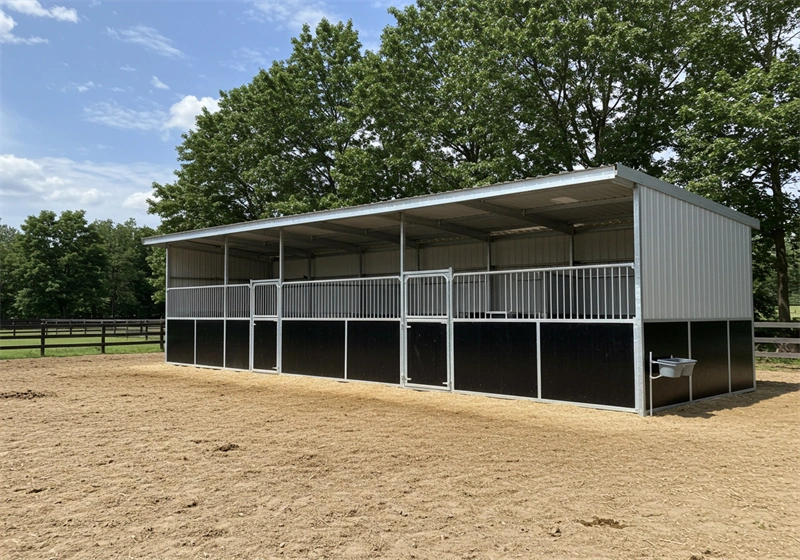
Cost Comparison Over 10 Years
The initial price tag on wood stables can deceive—maintenance and replacement make them the most expensive over a decade.
When evaluating portable horse stable materials for the Australian market, the initial purchase price only tells part of the story. Over a 10-year ownership window, maintenance frequency and replacement costs flip the cost hierarchy. Wood appears cheap at AU$3,500–4,000 per single stable (FOB), but annual treatments and premature rot—especially in coastal Queensland where humidity accelerates decay—push total spending to AU$6,500+ by year 10. Steel, at AU$4,000–4,500, demands touch-up painting every 3–5 years and risks rust at welded joints if only pre-galvanized sheets were used. HDPE, priced around AU$4,800–5,200, requires zero painting, no sealants, and resists UV degradation without thermal expansion—meaning no panel warping even under 50°C summer heat.
- Initial Cost (per single 3.6m stable, FOB): Wood: ~AU$3,700; Steel (hot-dip galvanized): ~AU$4,200; HDPE (10mm UV-stabilized): ~AU$5,000. Steel and HDPE include the galvanized frame; wood typically requires additional framing.
- Maintenance Frequency & Cost: Wood: annual oiling/treatment (~AU$200/year), plus repair of splintering boards by year 4. Steel: inspect for scratches every 12 months, recoat affected areas every 3–5 years (~AU$150 per session). HDPE: none—wipe down with water; no painting, no sealing, no replacement of panels.
- Replacement Trigger & 10-Year Total Cost: Wood: rot or termites by year 8–12 (coastal zones often year 5–7), full replacement of panels. 10-year total: AU$6,200–7,000. Steel: rust at cut edges or joints if not post-weld galvanized; lifespan 10–15 years. Total: AU$4,700–5,200. HDPE: panels last 15–20 years, frame requires no touch-up. Total: AU$5,000–5,200 (no recurring costs).
For distributors reselling to Australian equestrian centers and farm owners, the math is clear. A stable built with 10mm UV-resistant HDPE panels and hot-dip galvanized steel frame (over 42 microns) eliminates the maintenance headache that wood buyers face. The premium on HDPE is recouped by year 3 through avoided labor and treatment costs. By year 8, the HDPE option has saved the end client nearly AU$1,500 compared to wood. That cost advantage translates directly into higher resale margins and fewer warranty claims for the distributor.
| Material | Initial Cost | Annual Maintenance | Lifespan | 10-Year Total Cost |
|---|---|---|---|---|
| HDPE (DB Stable) | $4,500–$5,500 | None | 15–20 years | $4,500–$5,500 |
| Wood (Timber) | $3,000–$4,000 | $500–$800 (treatment/repair) | 8–12 years | $8,000–$12,000 |
| Steel (Galvanized) | $6,000–$7,500 | $100–$200 (touch-up paint) | 10–15 years | $7,000–$9,500 |
Which Material Sells Best? Distributor Insights
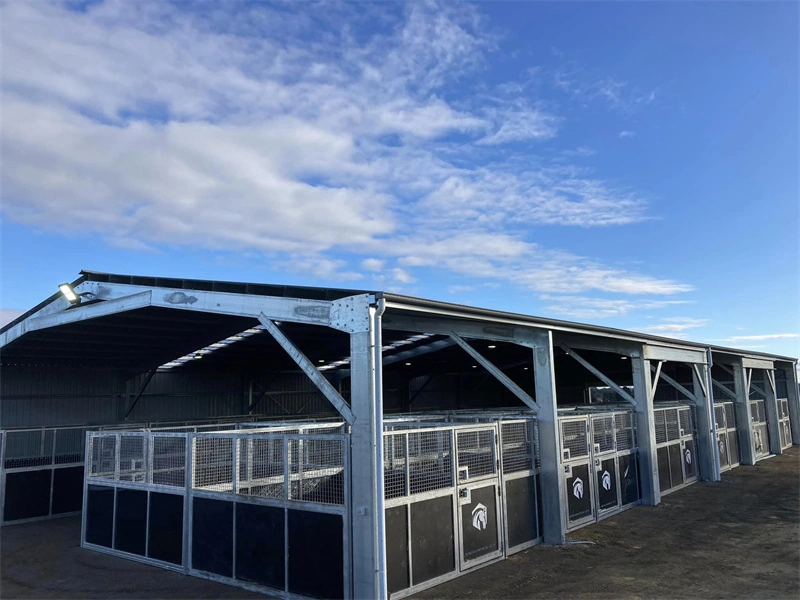
HDPE is the distributor’s highest-margin material because it eliminates post-sale service calls.
Walk into any equine dealer’s yard in Brisbane or Auckland, and you’ll see the same pattern: HDPE panels move faster than timber or steel. The reason isn’t subjective — it’s arithmetic. HDPE stalls require zero annual treatment, no repainting, and no termite inspections. That means your customer doesn’t call you back complaining about rot or rust. Your margin stays intact.
- Zero maintenance: End users wash down with a hose. No sanding, staining, or chemical treatments needed. That reduces your support overhead and increases repeat referrals.
- Easy flat-pack installation: 10mm HDPE panels are lightweight, drilled at the factory for bolt holes, and can be assembled by two people in under an hour. No saw cuts, no welding, no specialized tools. That makes your product suitable for DIY and reduces freight damage.
- UV stability with no thermal expansion: DB Stable sources 10mm UV-stabilized HDPE that remains dimensionally stable at 50°C. Unlike PVC, it won’t buckle or warp in direct Queensland sun. That alone kills the most common warranty claim in the Australian market.
Wood still has a nostalgic appeal, but the data doesn’t lie. A coastal Queensland client treating timber with CCA every 12 months still saw rot set in at year five. That’s a $1500 annual maintenance cost per stall versus zero for HDPE. Steel frames come with their own trap: if the supplier only pre-galvanizes sheet steel and welds afterward, the weld zone rusts from day one. Hot-dip galvanizing after fabrication eliminates that, but it adds cost. Distributors who stock HDPE panels paired with post-weld hot-dip galvanized frames report fewer returns and higher margins than those who hedge with mixed materials.
| Material | Market Demand (AUS/NZ) | Distributor Profitability | Logistical Complexity | Primary Risk |
|---|---|---|---|---|
| HDPE (UV-Stabilized) | High – zero maintenance, suits harsh climate | High – premium pricing, low return rate | Low – lightweight, flat pack, easy shipping | UV degradation if not properly stabilized (DB Stable uses 10mm UV-resistant) |
| Wood (Timber) | Moderate – traditional look, but declining | Moderate – lower initial cost, high claims from rot/termites | Moderate – heavy, requires treatment chemicals | Rot in 5 years (coastal QLD), annual treatment, termite damage |
| Steel (Hot-Dip Galvanized) | High – structural reliability, 10-year warranty | High – premium for hot-dip (>42 microns), long lifespan | Moderate – heavy but flat pack, sturdy packaging needed | Rust at welded joints if not post-weld galvanized; thermal conduction |
DB Stable’s Material Choices: Why HDPE + Galvanized Steel?
Wood stables in coastal Queensland rot within 5 years.
The Australian climate is brutal on traditional stable materials. Humid coastal areas like Queensland, high UV in the interior, and salt spray near the coast mean wood rots and painted steel rusts. Wood requires annual treatment against termites and moisture, and even treated pine can fail in under a decade. Painted steel frames often get scratched during assembly or horse activity, and the coating at welded joints is thin — rust starts at those spots within a few years.
DB Stable’s material choice solves both problems. The panels are 10mm UV-stabilized HDPE. Unlike PVC or standard plastic, this HDPE stays dimensionally stable up to 50°C — no thermal expansion, no buckling in direct sun. It’s impact-resistant, non-porous, and doesn’t rot. For the frame, we use hot-dip galvanized steel with a coating thickness over 42 microns. The key difference: we galvanize after welding, not before. Pre-galvanized sheet loses coating at the weld zone; our process ensures every joint and edge is fully sealed, backed by a 10-year rust warranty.
- HDPE vs wood vs painted steel: Wood needs annual treatment, painted steel scratches and rusts. HDPE is maintenance-free and outperforms both in lifespan.
- 10-year cost advantage: A painted steel stable may need frame replacement in 8–10 years. A wood stable requires ongoing treatment costs. DB Stable’s combo eliminates those expenses for the end user.
| Component | Material | Specification | Key Advantage | B2B Value |
|---|---|---|---|---|
| Wall Panels | HDPE (High-Density Polyethylene) | 10mm thick, UV-stabilized, no thermal expansion up to 50°C | Zero maintenance – no rot, no termites, easy to clean, impact resistant | Reduces client complaints; ideal for humid, coastal regions; enhances resale appeal |
| Structural Frame | Hot-Dip Galvanized Steel | 42+ microns coating, applied after welding to protect joints | 10-year rust warranty, withstands coastal salt and bushfire conditions | Long-term reliability for commercial stables; justifies premium pricing for distributors |
Conclusion
Choosing the wrong stable material doesn’t just cost you upfront—it bleeds into warranty returns, lost client trust, and margin erosion that compounds with every reorder. A 24-stable installation using treated pine in coastal New South Wales will need full panel replacement by year six. That’s three complete reorders over a decade, assuming you survive the first one. By year eight, the cumulative maintenance and material cost for wood stables exceeds the initial purchase of an HDPE-galvanized steel setup by roughly 40%. Steel frames that aren’t hot-dip galvanized after welding? Rust spots appear at the joints by month 18, and your buyer is calling about quality tolerance on a container that already cleared customs.
Before you commit to a reorder or a new supplier, run the numbers with real FOB pricing on a 40-foot container. Compare the sample approval process for HDPE panels versus timber—one passes the 500-hour UV test, the other doesn’t. Review the stable kit specifications from DB Stable’s product line to see how the material stack-up affects your landed cost and resale margin over a 10-year horizon.
Frequently Asked Questions
Which material lasts longest in Australian conditions?
HDPE panels last 15–20 years with no rot or rust, while wood needs annual treatment and steel requires touch-ups. For coastal or high-UV areas, HDPE is the most durable choice. Match material to your local climate for maximum lifespan.
Does HDPE expand in heat?
DB Stable’s 10mm UV-stabilized HDPE has zero thermal expansion even at 50°C. That means no warping or buckling in Australian summer heat. Verify UV stabilisation specs before ordering for hot climates.
What is the 10-year cost comparison between materials?
HDPE has the lowest total cost because it requires zero maintenance, while wood needs annual treatment and steel may need rust touch-ups. Over 10 years, HDPE saves on labor and replacement. Factor in your local labour rates for a precise total cost.
Which material sells best for distributors?
HDPE dominates the resale market because it is maintenance-free, easy to install, and appeals to buyers wanting long-term value. Distributors report faster turnover with HDPE kits compared to wood or steel. Stock HDPE flat packs to reduce after-sale support calls.