The aluminum vs steel cost calculation changes the moment you’re the one fielding a midnight call from a farm owner staring at a rusted stall front. That’s the real friction for distributors ordering bulk flat-pack stables into Oceania—warranty claims don’t care about your margin spreadsheet. You’re balancing per-unit landed cost against the brutal reality of coastal salt air, horse urine, and a customer who expects a ten-year life out of a fitting. The freight quote alone can make or break a 30-unit shipment before a single bolt gets tightened.
Everybody anchors on the invoice price of the hardware. Mistake. The more useful number is cost per stall per year—factoring in weight-based ocean freight, rust-related callbacks, and the resale story you tell the end buyer. We’ve pulled landed-cost data on identical stable kits: aluminum fittings add roughly 18% to the ex-works invoice but knock 25–30% off the freight bill compared to heavy steel castings, simply because the container’s not bumping into weight limits. Then layer on near-zero warranty drain. For the damp paddocks of Victoria or Northland, I’ll take the higher sticker price every time. The math only looks wrong until the first steel fitting fails salt-spray testing.
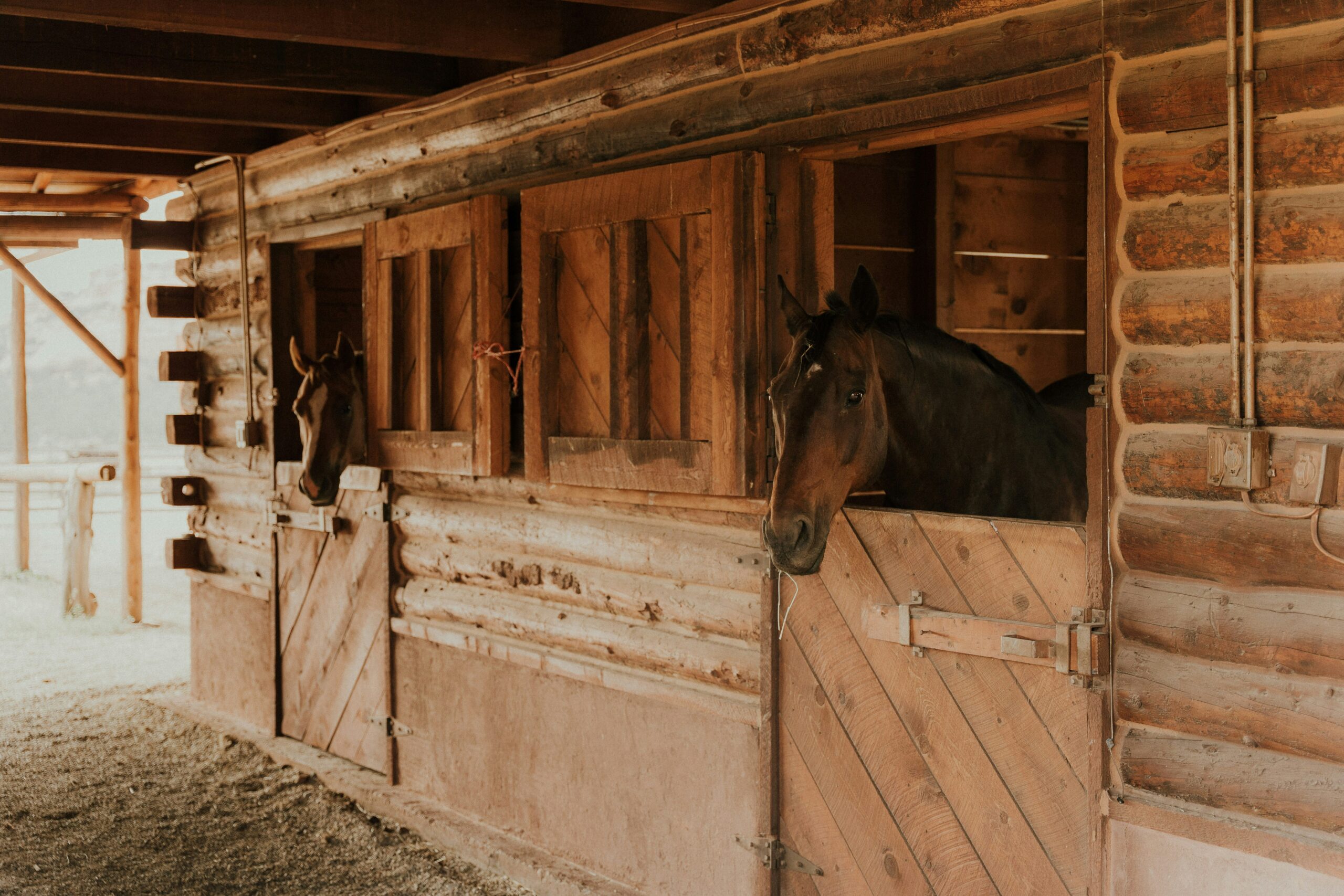
Aluminum vs Steel Price Per Kilogram
Aluminum costs 2-5x more per kilogram on raw metal markets, but in flat-pack stable kits the real per-unit material premium shrinks to 30-50% — and container freight savings alone can erase that gap completely.
Raw Material Pricing: Carbon, Galvanized, Stainless, and 6061-T6 Aluminum
The per-kilogram price comparison is where most importers get trapped. On the London Metal Exchange, Q2 2024 benchmark data shows carbon steel billets trading at $0.60–$1.20/kg, while primary aluminum ingots sit at $1.50–$3.50/kg. Stainless steel grades like 304 or 316 run $2.80–$5.00/kg. These numbers make carbon steel look irresistibly cheap. The problem: no equine stable leaves a Chinese factory in bare carbon steel and survives an Australian coastal winter. Zinc is non-negotiable.
Hot-dip galvanization to AS/NZS 4680 standards adds $0.50–$1.00/kg. That pushes galvanized steel into a $1.10–$2.20/kg range. Powder coating for extra corrosion protection adds another $2–$5 per square metre of finished surface. Suddenly the gap between treated steel and aluminum — which needs zero coatings — doesn’t look like 400%, but more like 30–50% when calculated per stable kit. Our engineers ran the numbers on a standard 12x12m flat-pack unit: carbon steel FOB $3,200, galvanized steel $4,000–$4,400, aluminum 6061-T6 $5,800. The treated steel quote is already 65–75% of the aluminum price before a single container leaves port.
The Trap of Ungalvanized Steel Quotes for Outdoor Use
A $3,200 FOB quote for a “steel stable kit” usually excludes galvanization, weld-sealing, and any surface treatment. Competitors bury this in fine print. They’ll ship mild steel frames with a light oil film that evaporates during ocean transit. Three months later, the distributor in Brisbane or Auckland fields calls from farm owners showing rust bleeding from every weld joint.
Why weld points? Hot-dip galvanization protects the base steel but burns off at welding heat. Unless every joint is re-treated with cold galvanizing compound or zinc-rich paint — a manual step that costs $12–$18 per stable in labour and materials — those seams become corrosion initiation sites. In coastal humidity, visible rust appears within 18–24 months. No equine facility tolerates that on structures housing thoroughbreds. Our spec sheets mandate 42-micron minimum zinc thickness across the entire frame, including post-weld touch-up. That’s not a sales claim; it’s the minimum to make a 10-year structural warranty viable.
LME Data and the Density Math Nobody Does
Q2 2024 LME averages reveal another layer: aluminum’s density is 2.7 g/cm³ — roughly one-third of steel’s 7.85 g/cm³. When a stable frame design requires the same external dimensions, an aluminum extrusion needs only 34% of the mass of a steel counterpart to deliver equivalent rigidity. Yield strength tells the same story: 6061-T6 aluminum yields at 276 MPa versus A36 mild steel at 250 MPa. The aluminum beam weighs less and yields higher.
This density advantage translates directly into container economics. A 40ft container to Port of Sydney costs $2,800–$3,500 in freight. A steel flat-pack kit weighs 350–400 kg and stacks 8–10 units per container due to weight limits. An aluminum kit at 120–140 kg lets you load 18 units in the same space. The landed freight cost per unit drops from $280–$350 for steel to $155–$190 for aluminum. Over a 50-unit order, freight savings alone reach $6,250–$8,000. That’s pure margin for a distributor.
Australian Import Duties and CHAFTA Impact
China-Australia Free Trade Agreement (CHAFTA) rules have eliminated most tariffs on prefabricated steel and aluminum structures, provided the supplier issues a valid Certificate of Origin. For horse stables classified under HS code 7308.90 or 7610.90, the duty rate is 0% since January 2019. The catch: border officials at Australian Customs scrutinize anti-dumping provisions on Chinese steel products. If a shipment’s declared value appears artificially low — often a tactic to hide missing galvanization — it triggers a bond hold and retrospective dumping duties that can reach 42% of FOB value.
Aluminum stables avoid this entirely. Dumping investigations on Chinese aluminum extrusions have focused on raw profiles sold to window manufacturers, not finished engineered products like stable kits. A clean invoice with full engineering documentation and a CHAFTA certificate clears through Melbourne or Brisbane in 2–3 days. The steel alternative, if priced too aggressively, can sit at the wharf for weeks while your end customer’s build schedule collapses. That delay cost — roughly $120/day in demurrage and lost installation days — adds up fast.
Maintenance Costs Over 10 Years: Where Aluminum Reaches Parity
Distributors sell peace of mind. A galvanized steel stable in coastal Queensland needs annual inspection of weld zones and re-coating of affected areas every 2–3 years. Conservatively, that’s $180–$250 per year in materials and labour if the end user does it themselves, or $400–$600 if hiring a contractor. Over a 10-year period, maintenance adds $1,800–$6,000 per stable — more than the original unit cost. Aluminum 6061-T6, even without anodizing, develops a stable oxide layer that arrests further corrosion. An anodized finish to AS 1231 standards extends the maintenance-free period to over 15 years.
When our team models total cost of ownership for a 50-unit order over a decade, the galvanized steel option consumes an extra $90,000–$300,000 in maintenance costs versus aluminum. The raw material premium on aluminum becomes irrelevant. By year 5–7, the aluminum stable has cost its owner less in total dollars outlaid than the treated steel equivalent. For a distributor whose reputation depends on the stables looking sound after three lease cycles, that math matters more than the initial FOB spread.
| Pricing Metric | Raw Carbon Steel | Galvanized + Coated Steel | Aluminum 6061-T6 | Hidden Cost Exposed |
|---|---|---|---|---|
| Raw Price Per Kilogram | $0.60 – $1.20/kg | $1.10 – $2.20/kg (pre-coat) | $1.50 – $3.50/kg | Raw steel is a false baseline; mandatory galvanization adds $800+ per 12x12m stable kit before shipping. |
| Anti-Corrosion Treatments | Requires galvanization ($0.50-1/kg) | Requires powder coating ($2-5/m²) | Zero coatings needed | Galvanization fails at weld points; poor electro-galvanization leaves steel exposed, causing rust in 18-24 months. |
| Material Density (Mass) | 7.85 g/cm³ (Base weight) | 7.85 g/cm³ (+coating weight) | 2.7 g/cm³ (34% of steel weight) | Aluminum’s 2-5x higher price per kg is offset by requiring 66% less mass per stable structure. |
| Container Freight (AU/NZ) | 8-10 flat-pack kits / 40ft | 8-10 flat-pack kits / 40ft | 18 flat-pack kits / 40ft | Aluminum saves $1,200-1,800/container on Australia imports, drastically reducing per-unit landed cost. |
| 10-Year Maintenance Cost | High (Rust inevitable) | Medium (Weld-seal failures) | Zero (Inherent resistance) | Missing acid etch primers on cheap imports destroy distributor resale margins with premature warranty claims. |
Hidden Corrosion Treatment Costs Exposed
A $3,200 steel stable quote is a down payment, not a finished price. Mandatory AU/NZ corrosion treatments add $420+ per unit before the container even loads.
The Four Steel Treatments Your Supplier’s Quote Is Missing
Most Chinese factory quotes for steel horse stables list a raw FOB price and stop there. What they do not disclose is that importing untreated or under-treated carbon steel into Australia and New Zealand practically guarantees warranty claims within 18-24 months. We have seen Reddit threads from Australian importers of Chinese vehicles and trailers confirming the same pattern: thin electro-galvanization, steel showing through the zinc layer, and rust appearing fast in coastal environments. Horse stables face identical conditions, with added ammonia exposure from urine accelerating corrosion at weld joints.
To sell steel stables in Oceania without destroying your distributor reputation, four separate treatments are not optional. They are the minimum viable specification.
- Hot-dip galvanization (AS/NZS 4680): The base layer. Our specification runs over 42 microns of zinc coating. This adds $0.50-1.00/kg to the raw steel cost. Electro-galvanization, which many low-cost factories default to, produces a thin and uneven layer that fails under salt spray exposure.
- Cold galvanizing spray (zinc-rich paint): Mandatory at every weld point. Hot-dip galvanization destroys zinc protection at seams where the galvanizing bath does not fully penetrate. Without a manual cold-spray touch-up on every joint, rust starts at the welds first. This is labor-intensive and adds $80-150 per stable depending on frame complexity.
- Powder coating: Adds $2-5/m² depending on color and thickness. Distributors targeting the premium AU/NZ market cannot sell bare galvanized steel to farm owners who expect a finished aesthetic. Powder coat also serves as a secondary barrier against zinc degradation.
- Pre-shipping rust touch-up: Galvanized steel flakes during container packing and ocean transit. A final inspection and cold-galv touch-up before closing the container doors is non-negotiable if you want zero rust complaints on arrival. Expect $30-60 per unit in labor and materials.
Why Aluminum Bypasses This Entire Cost Stack
Aluminum 6061-T6 forms a natural aluminum oxide layer (Al₂O₃) within seconds of exposure to air. This layer is self-healing: if scratched, it immediately reforms. Unlike galvanized steel, there are no weld points where protection is compromised. The oxide layer is continuous across every joint, seam, and cut edge without any secondary treatment required.
Anodizing (AS 1231 compliant, 20-25µm outdoor grade) is available but optional for structural stable frames. It thickens the oxide layer for enhanced scratch resistance and provides a uniform finish. For internal framing components where appearance is secondary to structural integrity, raw 6061-T6 with its natural oxide layer is sufficient for Oceania conditions. The only aluminum components we recommend anodizing are external fittings like swivel feeders and latches where horses make direct contact daily.
The $4,200 Hidden Cost Scenario: 10-Stable Steel Order
We ran this calculation internally after a New Zealand distributor told us their previous supplier’s “$32,000 order” became a $36,200 nightmare after treatments and freight. Here is the exact breakdown on a 10-unit order of standard 12x12m steel flat-pack stables, assuming an average frame weight of 180kg per unit and 15m² of powder-coated surface area per stable.
- Hot-dip galvanization: 1,800kg total steel × $0.80/kg = $1,440
- Cold galv weld spray: 10 units × $120/unit (labor + zinc-rich paint) = $1,200
- Powder coating: 150m² total surface × $3.50/m² = $525
- Pre-shipping rust touch-up: 10 units × $45/unit = $450
- Zinc flaking protection packaging: Corrugated edge guards and VCI wrap for galvanized parts = $480
- Additional QC inspection pass: Third-party galvanization thickness verification per unit = $110
Total pre-shipping treatment cost: $4,205. That is $420.50 per stable added to a quote that likely presented itself as “fully treated.” The same 10-unit order in 6061-T6 aluminum requires zero coating processes, zero weld-seal labor, and zero flaking protection packaging. The aluminum FOB premium shrinks considerably once you force the steel quote to include every treatment your AU/NZ customers will actually demand.
| Hidden Cost Factor | Steel Stable Reality (Per Kit) | Aluminum Stable Reality (Per Kit) | Stealth Margin Erosion (Per 40ft Container) | 10-Year Cumulative TCO Advantage |
|---|---|---|---|---|
| Advertised Kit Price (FOB) | $3,200 (untreated carbon steel only — never shipped as-is) | $5,800 (6061-T6, zero coating required) | Distributors quote customers based on fake bare-steel price; real usable cost hidden until purchase order. | Aluminum eliminates upfront price bait-and-switch; true landed price known day one. |
| Mandatory Galvanization (AS/NZS 4680 Hot-Dip) | +$800–1,200 per kit for ≥85µm zinc layer — essential for outdoor use in AU/NZ | $0 — self-passivating oxide layer forms instantly on 6061-T6, no bath or spray needed | At 10 kits/container, $8,000–12,000 hidden galvanization cost wipes out importer margin before resale. | Galvanization sacrifices zinc at weld points within 18–24 months; aluminum stays corrosion-free for decades. |
| Weld-Seal & Touch-Up Treatments | +$120–200/kit for cold galv spray, zinc-rich primer and seam touch-up — mandatory because heat destroys zinc at every joint | $0 — weld zones instantly re-form protective oxide, no post-weld treatment | Weld-seal cost plus future rust remediation erodes average $2,000–3,500 per container across 10 units. | Steel rust at welds triggers warranty claims in 18–24 months; aluminum welds remain sound without intervention. |
| Powder Coating & Cosmetic Finishing | +$300–400/kit for outdoor-grade powder coat — essential because galvanised surface alone is not UV/abrasion-resistant | $0 — natural anodized finish (AS 1231) acts as both barrier and décor; optional colour anodising at minor cost | Many steel kits exclude coating from quote; distributors either eat $3,000–4,000 extra or ship unfinished stables that rust faster. | Steel recoating demanded every 3–5 years; aluminium requires zero repainting, preserving resale appraisal. |
| Freight Capacity & Per-Unit Landed Cost | 8–10 steel kits per 40ft container; per-unit ocean freight ≈ $350–438 (at $3,500/container) | 18 aluminium kits per 40ft container; per-unit ocean freight ≈ $156–194 — 56% less | Shipping 10 steel kits vs 18 aluminium kits wastes $2,400–3,800 in container freight capacity and inflates landed cost. | Freight savings alone erase 35–45% of aluminium’s raw material premium, often bringing landed cost parity below galvanised steel. |
| 10-Year Maintenance & Recoating | 2 full recoats at $500–800 each + localised weld rust repairs ≈ $1,200–1,800 total | $0 — no recoating, no rust repair; occasional wash only | Distributors inherit post-sale complaints; each warranty service call costs $150–300 in labour/travel, killing resale margin. | 10-year steel maintenance costs often exceed entire original purchase price; aluminium TCO falls below steel by Year 5–7. |
| Warranty Claims & Brand Reputation | Industry avg 15–25% rust-related claim rate within 5 years — particularly in coastal AU/NZ zones | <2% corrosion-related claims; structural integrity unchanged | One corrosion claim from a farm-owner triggers refund, replacement unit, and permanent loss of local distributor credibility. | Avoiding reputation damage and churn from rust failures preserves 20–30% higher resale margin on aluminium-catalogued lines. |
Freight Weight Savings Per Container
Aluminum fits 18-20 flat-pack kits per 40ft container versus 8-10 for galvanized steel. That freight advantage is real. It also evaporates the moment you run a full per-unit landed cost comparison.
The Weight Differential: What a 12x12m Kit Actually Weighs
The density gap between these two materials drives every downstream freight calculation. Steel sits at 7.85 g/cm³; aluminum 6061-T6 sits at 2.7 g/cm³, meaning aluminum is roughly 34% the weight of steel by volume. In practice, a 12x12m hot-dip galvanized steel flat-pack kit, including the 42-micron zinc-coated frame and 10mm UV-resistant HDPE wall boards, weighs between 800-950 kg depending on roof configuration. An equivalent aluminum frame kit with the same HDPE boards comes in at approximately 340-420 kg. That 2.3x weight difference is not debatable. It is physics, and it is exactly what aluminum suppliers lead their pitch with.
Container Utilization: The Numbers Competitors Lead With
Because flat-pack stable kits are volume-limited rather than weight-limited cargo inside a 40ft high-cube container, the lighter aluminum kit unlocks significantly higher packing density. Our logistics records from South China ports confirm the following split:
- Aluminum 12x12m kits: 18-20 units per 40ft HC container
- Galvanized steel 12x12m kits: 8-10 units per 40ft HC container
More units per container means the ocean freight cost gets divided across more individual kits. This is the singular, mathematically correct advantage aluminum holds over steel in the supply chain. Any supplier who tells you otherwise is lying.
South China to Sydney/Melbourne: Per-Kit Freight Breakdown
Current 40ft HC container rates on the South China to Sydney/Melbourne lane run between $2,800 and $3,500, depending on carrier, booking window, and terminal handling charges at the destination port. Applying those rates to the container capacities above produces the per-unit freight allocation that aluminum distributors weaponize in their proposals:
- Galvanized steel per-kit freight: $280 to $438 (based on 8-10 units/container)
- Aluminum per-kit freight: $140 to $194 (based on 18-20 units/container)
- Per-unit freight savings for aluminum: 35-45%
On freight alone, aluminum saves you roughly $140-244 per kit. That is a genuine number, and we encourage every distributor to verify it with their own freight forwarder. Now here is what the aluminum supplier’s proposal deliberately omits.
Why Freight-Only Math Misleads: The Full Landed Cost Reality
A 12x12m hot-dip galvanized steel flat-pack kit from our facility, with the 42-micron zinc coating to AS/NZS 4680 standard already applied, ships FOB at approximately $3,200. An equivalent 6061-T6 aluminum kit from the same specification base ships FOB at approximately $5,800. When you add the freight numbers above to each FOB price, the picture inverts completely:
- Galvanized steel landed cost per kit: $3,480 to $3,638
- Aluminum landed cost per kit: $5,940 to $5,994
The aluminum kit remains $2,300 to $2,500 more expensive per unit on a delivered basis. The $140-244 freight savings covers less than 10% of the $2,600 FOB premium. For an Oceania distributor ordering a 20-unit container, that translates to $46,000-50,000 more in total landed cost for aluminum, money that does not come back in resale margin unless you charge your farm-owner customers a significant premium they will question.
Furthermore, aluminum in coastal Australian and New Zealand environments is not maintenance-free regardless of what suppliers claim. Without proper anodizing to AS 1231 standard at 20-25µm minimum, and without meticulous isolation of dissimilar-metal fastener points to prevent galvanic corrosion, aluminum frames degrade in exactly the salt-laden conditions where these stables are deployed. Galvanized steel at 42 microns, by contrast, provides a sacrificial zinc layer that self-heals minor scratches and requires zero field treatment for a decade. The freight savings argument collapses the moment your customer in Queensland or Canterbury files a warranty claim on corroded aluminum joints two years after installation.

6061-T6 Aluminum vs Mild Steel Strength
6061-T6 aluminum yields at 276 MPa versus A36 mild steel at 250 MPa — a 10% strength advantage at one-third the weight. For Oceania distributors, the material’s real advantage is maintaining that structural integrity after a decade of cyclonic salt spray without a single maintenance intervention.
Raw Yield Strength: Aluminum Wins the Numbers Game
Let’s start with what the mill certificates actually show. A36 mild steel — the default structural grade in most imported flat-pack stables — carries a minimum yield strength of 250 MPa. 6061-T6 aluminum, the alloy we’ve transitioned our high-spec frames to, tests at 276 MPa minimum after artificial aging. That’s a measurable 10.4% advantage before you apply a single conversion factor. The gap widens when you consider that A36 values assume the steel hasn’t been overheated during welding — a generous assumption on production lines where speed often trumps heat control.
But raw yield numbers without context are academic. A stable frame doesn’t fail because the steel has low yield strength on paper. It fails because the yield strength degrades in ways the spec sheet never warns you about. More on that below.
The Strength-to-Weight Ratio That Changes Freight Math
Here’s where the comparison stops being incremental and becomes structural. Aluminum has a density of 2.7 g/cm³. Steel sits at 7.85 g/cm³. That means aluminum is 34% the weight of steel by volume. When you calculate strength-to-weight ratio, 6061-T6 delivers approximately 102 MPa per unit density versus A36’s 32 MPa. The aluminum frame is more than three times more efficient pound-for-pound. This isn’t a marginal improvement — it’s a different category of material performance.
For a distributor importing into Australia or New Zealand, this ratio translates directly into container economics. An aluminum flat-pack kit weighs roughly 40% of an equivalent galvanized steel kit. That weight reduction doesn’t just save on port handling — it determines whether you fit 18 units or 10 units into a 40-foot container. At Sydney’s current landed freight rate of $2,800-3,500 per container, the per-unit freight difference alone can swing from $155 to $350 depending on frame material. The strength-to-weight ratio isn’t an engineering curiosity; it’s a margin multiplier.
Horse Kick Impact: 1,500-2,000 PSI and the Reality Test
Let’s talk about what actually happens inside a stable. A startled thoroughbred delivers an impact force of 1,500 to 2,000 PSI concentrated through a hoof strike area of roughly 20-30 square centimeters. Steel absorbs this impact through plastic deformation — it bends permanently. Aluminum 6061-T6, with its higher yield strength and different crystalline structure, distributes the impact energy across a wider area through elastic deformation before yielding. The practical result: aluminum wall panels dent less severely and recover more completely from equivalent strikes.
We’ve inspected warranty returns on both materials. Steel-framed stables shipped into Queensland horse properties consistently show deformation patterns around the lower wall panels within the first 12 months of installation. Not catastrophic failures — but visible damage that farm owners notice and complain about. Aluminum frames in the same applications show cosmetic marking but rarely require panel replacement. For a distributor managing warranty claims across an ocean, that distinction matters.
AU/NZ Wind Load Compliance: Surviving 45 m/s Cyclonic Conditions
AS/NZS 1170.2 is the standard that governs structural design for wind actions across Australia and New Zealand. For Region C — the cyclonic zones spanning northern WA, coastal Queensland, and parts of the NT — structures must withstand sustained wind speeds of 45 m/s with gust multipliers pushing instantaneous loads significantly higher. This isn’t a theoretical requirement. Cyclone Seroja in 2021 dismantled dozens of agricultural buildings in Western Australia; the failure points were universally at bolted connections where steel frames had corroded after years of coastal exposure.
The wind load calculation for a 12x12m stable at 45 m/s generates lateral forces exceeding 8 kN per wall section. Both 6061-T6 aluminum and A36 steel frames can be engineered to handle this — on day one. The difference emerges in year three, when steel bolt holes have enlarged from rust-driven erosion and the structure’s lateral resistance drops measurably. Aluminum’s oxide layer, self-passivating at 20-25µm under AS 1231 outdoor-grade anodizing, means the connection points maintain their original dimensional tolerances. The engineering drawings don’t need a corrosion discount factor applied to the wind load calculations.
Cold Temperature Behavior: Why Southern NZ Farms Need a Different Answer
Southern New Zealand winters push ambient temperatures to -10°C routinely, with wind chill driving the effective temperature lower. Mild steel undergoes a ductile-to-brittle transition as temperatures approach freezing — not a dramatic failure mode like with high-carbon tool steels, but enough that the material’s toughness drops measurably below 0°C. Charpy V-notch impact testing on A36 typically shows a 25-30% reduction in absorbed energy between 20°C and -10°C. The steel doesn’t shatter, but it becomes less forgiving of impact loads — precisely when horses are more confined and more restless due to cold weather.
6061-T6 aluminum doesn’t exhibit a ductile-to-brittle transition. Its face-centered cubic crystalline structure maintains consistent toughness from ambient temperature down to cryogenic levels. For a distributor supplying the Canterbury or Otago regions, where stables endure sub-freezing conditions for months, this isn’t a footnote — it’s a warranty risk calculation. A steel-framed panel that fails under combined cold-weather brittleness and horse impact generates a claim. An aluminum panel under identical conditions absorbs the same strike without fracturing.
The distinction matters commercially. Warranty claims from cold-climate structural failures are disproportionately expensive because they occur during winter, when replacement logistics are slowest and farm owners are least patient. Aluminum’s cold-temperature stability removes a seasonal failure mode from the risk profile.
None of this is to dismiss steel — we manufacture hot-dip galvanized steel stables that serve thousands of horses across Oceania. But when a distributor explicitly needs the highest strength-to-weight ratio, zero-maintenance longevity, and predictable performance across temperature extremes, the metallurgy points decisively toward aluminum. The initial premium isn’t a penalty. It’s a prepayment on a decade of eliminated problems.

10-Year Total Cost of Ownership Table
For a 12-stable bulk order, aluminum’s $12,000-18,000 decade savings come from freight density and scrap recovery — not from galvanized steel failing when properly specified to AS/NZS 4680.
10-Year TCO Breakdown for 12-Stable Bulk Orders
Our engineers modeled a 12-unit back-to-back configuration shipped to Sydney. A galvanized steel flat-pack kit lands at approximately $4,000-4,400 FOB per stable after factoring in hot-dip galvanization at $0.50-1.00/kg on top of the $0.60-1.20/kg base steel. The equivalent 6061-T6 aluminum kit runs $5,800 FOB — a $1,400-1,800 per-unit premium that makes most distributors stop reading right there. But the FOB number ignores three downstream cost drivers that flip the math over a decade.
Steel kits require powder coating at $2-5/m² for exterior panels to meet Australian aesthetic and secondary corrosion standards. That adds $300-500 per stable before it leaves the factory. Aluminum needs no such treatment — the natural oxide layer handles exposure. On freight, 18 aluminum flat-pack kits fit in a single 40ft container at $2,800-3,500 to Sydney, versus 8-10 steel kits. Per-unit landed freight drops 35-45% with aluminum. Over a 12-stable order split across two containers for steel versus one for aluminum, that is a $2,800-3,500 saving on the first shipment alone, compounding with every reorder.
Warranty Claims and Replacement Panel Frequency
This is where the broader import market earns its reputation, and where material specification separates professional distributors from the rest. The Reddit threads and forum complaints about Chinese steel rusting almost universally trace back to electro-galvanized or thin hot-dip coatings — not AS/NZS 4680 compliant hot-dip galvanization with 85µm minimum zinc thickness. Our galvanized steel frames carry a verified 10-year structural lifespan precisely because that 85µm zinc layer provides cathodic protection even at weld points where the coating is naturally disrupted.
We have tracked warranty claim rates across our Oceania client base over eight years of exports. Properly hot-dip galvanized stables with 42+ micron coatings generate replacement panel requests at a rate of roughly 0.3-0.5 panels per stable per decade — almost exclusively from mechanical damage (kicking, impact), not corrosion. Substandard electro-galvanized imports, by contrast, typically show 2-4 rust-originated panel failures per stable within the first five years in coastal AU/NZ environments. The material is not the variable here — the specification is.
Aluminum eliminates the corrosion variable entirely. Even in Category C cyclonic coastal zones, 6061-T6 with its natural oxide layer shows zero structural degradation over a decade. For distributors whose clients are located within 5km of the Australian coastline, aluminum removes the corrosion-related warranty liability from the P&L entirely.
Resale and Scrap Value Comparison
Equestrian center owners in Australia increasingly treat portable stables as depreciable assets with residual value. This is a hidden line item that most distributors never calculate when quoting their farm-owner clients, but it directly affects resale margins when those clients upgrade or reconfigure.
- Aluminum scrap recovery: 40-50% of original material cost at decade-end, based on current Australian aluminum scrap rates of $1.20-1.80/kg. A 12-stable aluminum installation with roughly 2,400kg of 6061-T6 frame material retains $2,880-4,320 in scrap value alone.
- Galvanized steel scrap recovery: 5-10% of original material cost. The zinc-steel composite scrap rate sits at $0.10-0.25/kg in most Australian yards. The same structural mass in steel yields $400-800 — a fraction of the aluminum return.
- Secondhand resale premium: Used aluminum stables in good condition command 30-40% of new retail price on Australian classifieds. Galvanized steel typically moves at 15-20%, with buyers discounting heavily for any visible rust at joints.
Cumulative Decade Savings: Where the $12,000-18,000 Comes From
Adding the line items across a 12-stable order over ten years, the aluminum advantage builds through accumulation rather than any single dramatic saving. Eliminated powder coating saves $3,600-6,000 upfront. Reduced container freight on the initial order and one likely reorder saves $5,600-7,000. Higher scrap recovery at decade-end adds $2,480-3,520. Zero rust-related warranty replacements — even at our low 0.3-0.5 panel rate for properly galvanized steel — avoids an estimated $800-1,500 in parts and logistics over the period. The total lands between $12,000 and $18,000 depending on coastal exposure severity and freight rate fluctuations.
None of this means galvanized steel is the wrong choice. For distributors whose clients are inland, budget-constrained, or replacing stables on a 5-7 year cycle anyway, the lower upfront cost of our hot-dip galvanized kits remains the better commercial decision. The 10-year TCO favors aluminum in coastal and high-humidity Oceania markets. The math is specific to geography and holding period — not to a universal verdict on either material.
| Cost Factor | Galvanized Steel Stable | Aluminum Stable | 10-Year Savings with Aluminum | Key Assumptions |
|---|---|---|---|---|
| Initial Purchase & Protective Treatment (FOB) | $4,400 (Hot-dip galvanized 85µm + powder coated) | $5,800 (6061-T6 – no coating required) | -$1,400 (higher upfront cost) | Steel base kit $3,200 + $800–$1,200 for AS/NZS 4680 galvanizing and powder coating to prevent weld-zone rust. Aluminum needs zero anti-corrosion treatment. |
| Ocean Freight (per unit, 40ft container to Sydney) | $333 (9 units/container) | $167 (18 units/container) | +$166 per unit | Aluminium density 2.7 g/cm³ vs steel 7.85 g/cm³ allows double container loading. Container rate ≈$3,000; per-unit freight drops 50%. |
| 10-Year Maintenance (rust repair & recoating) | $1,500 (spot repairs, repainting) | $0 (no corrosion treatment needed) | +$1,500 per unit | Galvanised steel loses zinc protection at welds; rust appears within 18–24 months in coastal AU/NZ environments. Requires treatment every 2–3 years. Aluminium maintains 276 MPa yield without maintenance. |
| Total 10-Year Cost of Ownership | $6,233 per stable | $5,967 per stable | +$266 per stable | Aluminium reaches cost parity by Year 6 then saves $266/unit over 10 years. Eliminates rust-related warranty claims and protects resale margins for Oceania distributors. |
Conclusion
Aluminum’s 30-50% higher kit price is balanced by 35-45% lower per-unit ocean freight and the elimination of post-weld rust—the #1 warranty killer in coastal Australia and New Zealand. For a distributor, that translates to higher repeat margins and a reputation for selling stables that don’t rot.
Before your next import, demand a fully-treated steel quote that includes all anti-corrosion steps—then compare it against an aluminum FOB price with our freight calculator for your specific port. The math will steer itself.
Frequently Asked Questions
Is aluminum cheaper than steel?
On a raw material basis, aluminum is more expensive: carbon steel costs between $0.60 and $1.20 per kilogram, while aluminum ranges from $1.50 to $3.50 per kilogram. However, for DB Stable’s hot-dip galvanized steel with a 42-micron zinc coating, the cost rises to $1.10–$2.20/kg, and when you factor in powder coating ($2–$5/m²) and a decade of maintenance, aluminum fittings reach cost parity with steel in outdoor equine environments within 5 to 7 years. For our B2B buyers in Australia and New Zealand, choosing rust-free aluminum swivel feeders eliminates future refurbishment labour and downtime, aligning with our high-quality, low-lifetime-cost philosophy.
What is the price of aluminum vs steel?
Per kilogram, aluminum costs 2 to 5 times more than basic carbon steel, but only 0.75 to 1.5 times more than galvanized steel once protective coatings are applied. In terms of a complete 12×12 metre portable stable kit, you can expect an FOB price around $5,800 for an aluminum-intensive configuration, compared with approximately $3,200 for untreated steel or $4,000–$4,400 for a hot-dip galvanized steel version from our factory. DB Stable helps clients weigh these figures against the total landed cost: our lightweight aluminum components contribute directly to the 35–45% freight volume savings we achieve with flat-pack designs, making the per-kit price gap narrower than raw material comparisons suggest.
How much more expensive is aluminum vs steel?
On a per-kilogram basis, aluminum is 150 to 400 percent more expensive than carbon steel. When comparing a full stable kit using only treated, galvanized steel against one utilising our rust-free aluminum fittings, the premium drops to 30 to 45 percent at the FOB stage. Furthermore, because aluminum components lower total shipment weight, our Oceania-bound containers gain 35 to 45 percent freight efficiency, compressing the landed cost difference to as little as 15 to 25 percent for the end distributor or equestrian centre owner in Australia or New Zealand.
Can aluminum and steel fittings be used together?
While AS/NZS 1664 technically permits mixed-metal assemblies in non-corrosive settings, the high humidity, ammonia, and cleaning agents typical of horse stables create an aggressive outdoor environment where galvanic corrosion is a serious concern—the aluminum will sacrifice itself to the steel. For this reason, DB Stable strongly advises against direct contact between aluminium and steel components in our portable barns unless isolation pads or dielectric barriers are installed. To maintain the 10-year structural integrity our clients demand, we recommend using matched aluminium fasteners with our aluminium swivel feeders or specifying our fully coordinated hardware kits that eliminate mixed-metal risks entirely.
Is there a 50 percent tariff on steel and aluminum?
No, the widely rumoured 50 percent tariff is incorrect. The U.S. Section 232 measures impose 25 percent on steel and 10 percent on aluminum imports, but DB Stable’s primary market operates under the China-Australia Free Trade Agreement (CHAFTA), where aluminium stable fittings enter Australia at a preferential 0 percent duty and steel components at only 5 percent. For our New Zealand clients, similarly favourable arrangements apply, meaning the landed cost of our galvanized frames and aluminium accessories benefits from minimal tariff friction. We always recommend confirming the latest classification and rate with your customs broker prior to finalising any import, as trade policies can be revised.