...
Get a Quote
Home About Products Blog Get a Quote

Import Horse Stables to Australia: 3 Mistakes That Cost You

  • Home
  • Blog
  • Pages
  • Import Horse Stables to Australia: 3 Mistakes That Cost You

Import Horse Stables to Australia: 3 Mistakes That Cost You is the first checkpoint buyers should lock before they approve a supplier, budget, or production slot. The spec sheet says hot-dip galvanized, 42 microns minimum. The container arrives, and the framerusts at the bolt holeswithin six months. That gap between what the factory quotes and what lands in Australia is where margins disappear for importers of horse stables. A distributor lost an entire season of sales because the pre-production sample passed visual inspection but the mass production run used a different steel gauge. The math on that mistake was brutal: a $50,000 order sat in a Melbourne warehouse while the buyer scrambled for re-coating quotes.

Getting the landed cost right starts before you even look at ocean freight rates. Most buyers calculate duty and GST against the EXW price from the Chinese factory. That is wrong. Australian Customs values goods at the FOB price — which includes inland transport to the port and loading charges — plus ocean freight and insurance. A typical duty rate of 5 percent applies under HS code 9406.90 for prefabricated buildings, but if your supplier sources raw steel from a country with a free trade agreement, you might qualify for a lower rate. The paperwork matters more than most distributors realize.

Then there is biosecurity. HDPE panels are low-risk; wood components are not. Any timber in your flat pack horse stables must carry heat treatment or fumigation certification before it clears Australian quarantine. A single untreated pallet can hold your entire shipment at the port for weeks, racking up storage fees that eat into your margin per unit.
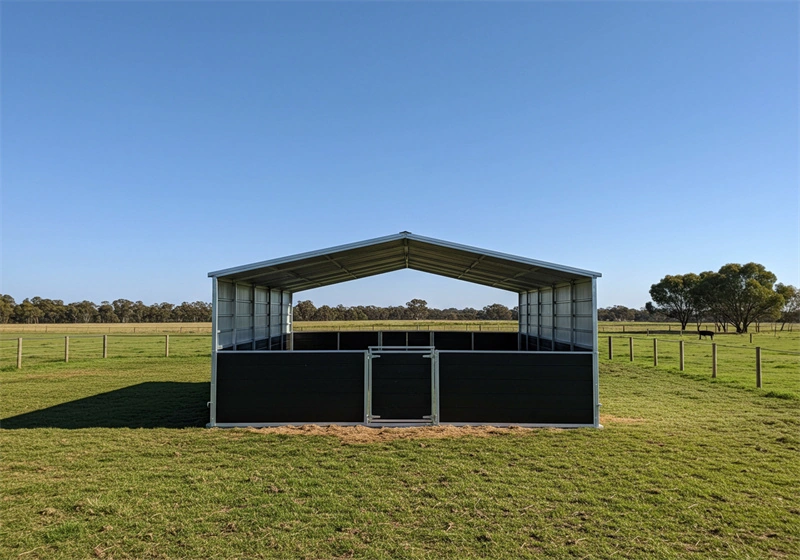
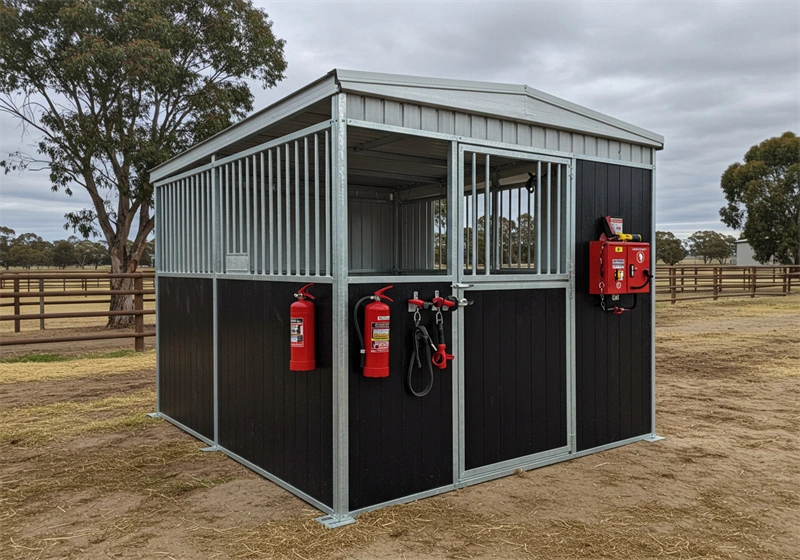
A robust, flat-packed portable horse stable kit manufactured for the Australian and New Zealand markets, featuring galvanized steel frames. This durable, DIY equine facility provides secure and modular storage solutions for professional equestrian centers.

Understanding HS Codes for Horse Stables (9406.90)

HS code 9406.90 covers both portable and flat-pack prefabricated buildings at a 5% duty rate.

The correct HS code for importing horse stables into Australia is 9406.90 — prefabricated buildings. This classification applies whether the stable arrives as a fully assembled unit or as a flat-pack kit for on-site assembly. The Australian Border Force and ABF tariff database treat them identically under this heading, so you don’t need separate codes for different build formats.

The general duty rate under HS code 9406.90 is 5% of the FOB value (not CIF). That said, if your supplier holds a valid Certificate of Origin under the China-Australia Free Trade Agreement (ChAFTA), you may qualify for a preferential rate as low as 0%. Most commercial importers I’ve worked with claim the preferential rate — it’s worth verifying with your freight forwarder before shipment.

    • Duty calculation base: Use FOB price (goods + packing to port) not EXW or CIF. Australian Customs calculates duty on the FOB value declared on the invoice.
  • GST calculation base: GST (10%) is applied on the sum of: FOB value + ocean freight + insurance + duty. Using FOB instead of EXW here avoids underpayment risk and potential penalties.

One nuance that trips up new importers: HDPE panels and hot-dip galvanized steel frames are classified under the same HS heading as the overall stable structure — no separate subheadings needed for material components when they arrive as part of a complete kit. However, if you import spare panels or frames separately, those fall under different plastic or steel HS codes (3921 or 7308), which carry different duty rates.

%.
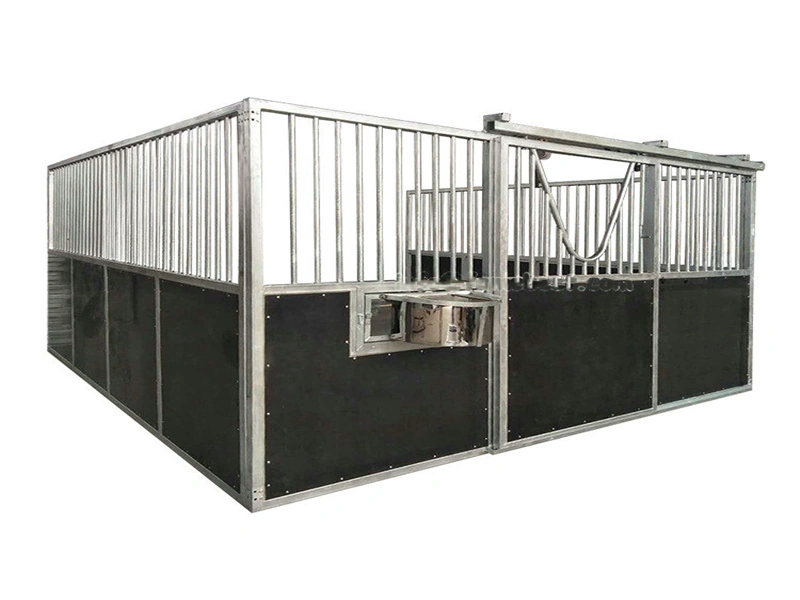
DB Stable's hot-dip galvanized steel portable horse stables, specifically designed for the Australian and New Zealand equine industry, feature high-strength HDPE boards and secure metal railings.

Calculating Landed Cost: FOB + Ocean Freight + Insurance + Duty + GST

Use FOB price for GST calc — EXW understates your landed cost by 12-15%.

Most first-time importers of flat pack horse stables Australia customs clearance get tripped up on the same thing: they calculate duty and GST off the EXW price. That is wrong. Australian Border Force and the ATO require you to use the FOB value (Free On Board at the port of loading) as the base for duty, and the landed cost (FOB + freight + insurance) as the base for GST. Use EXW and you will underpay — and the discrepancy will surface at customs, delaying your container.

    • FOB price: The factory gate price plus all costs to get the goods on the vessel at the Chinese port. For a typical single stable flat-pack kit, expect FOB in the range of USD 4,500–7,500 depending on configuration and material spec.
    • Ocean freight: From Shanghai or Ningbo to Sydney or Melbourne, a 20ft container runs roughly USD 1,800–2,800 in 2026. A 40ft container runs USD 2,500–4,000. Flat-pack stables pack efficiently — a 20ft can hold 2–3 single units.
    • Insurance: Typically 0.3–0.5% of the CIF value. Do not skip it. A container shifting at sea can crush HDPE panels or bend galvanized frames. One claim covers years of premiums.
    • Duty (5%): HS code 9406.90 for prefabricated buildings carries a general duty rate of 5% for imports into Australia. If your supplier holds a valid Certificate of Origin under the China-Australia Free Trade Agreement (ChAFTA), you may qualify for a preferential rate of 0%. Verify the COO before shipping — it must be issued by an authorized Chinese body, not a broker.
  • GST (10%): Applied on the sum of (FOB + freight + insurance + duty). This is the part most calculators get wrong. GST is not on the purchase price — it is on the total landed cost plus duty. For a USD 6,000 FOB stable, expect GST around USD 680–780.

A real-world example: A distributor importing four flat-pack stables (FOB USD 24,000) in a 40ft container (freight USD 3,200, insurance USD 140) pays duty of USD 1,367 at 5% and GST of USD 2,871 at 10%. Total landed cost: USD 31,578. That is about USD 7,895 per stable before local delivery. Run those numbers against your retail price before you commit to an order — margin compression happens fast when you forget to stack the taxes.

One more thing on the duty side: if your stable includes wood components (timber framing, plywood kickboards), the wood must be treated to ISPM 15 standard. Untreated wood can trigger biosecurity holds at the border, and the quarantine inspection fees plus storage charges can add USD 800–1,200 to your landed cost. HDPE panels, on the other hand, are low-risk and clear without issue — another reason to specify a supplier that uses HDPE over plywood for the stall walls.

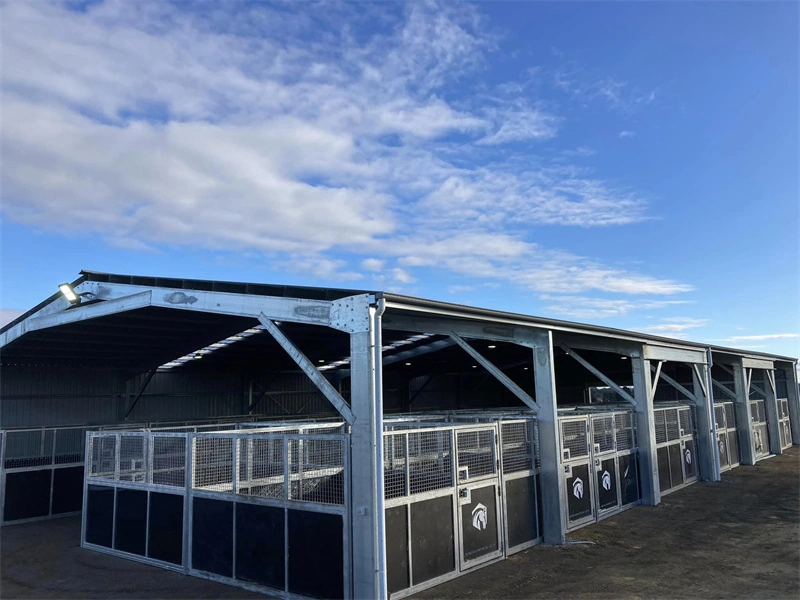
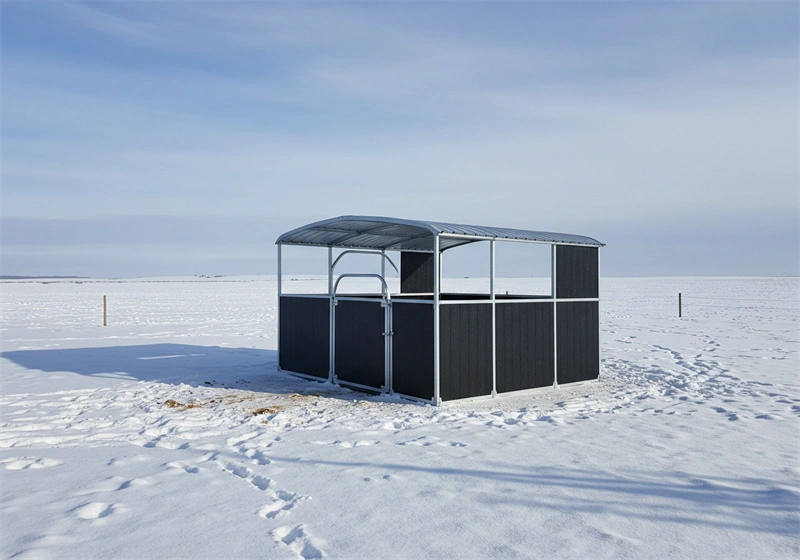
A comprehensive view of our high-quality portable horse stables for ANZ markets, manufactured with galvanized steel frames and HDPE panels. This durable stable structure offers the perfect solution for professional equestrian centers and commercial horse owners requiring secure, prefabricated facilities.

Shipping Methods: Container Loading Tips for Flat-Pack Stables

A 40ft container can hold 12–14 flat-pack stables, but poor packing wastes 30% of the space.

The difference between a profitable shipment and a break-even one often comes down to how tightly you pack the container. Flat-pack horse stables are designed for this — the frames, HDPE panels, and roofing disassemble into uniform bundles. But if your supplier doesn’t optimize the pallet layout for a standard 20ft or 40ft container, you’re paying ocean freight for empty air. Here is what actually works when loading these kits.

    • 20ft container capacity: A standard 20ft general-purpose container (internal dimensions ~5.9m x 2.35m x 2.39m) typically fits three to four single stable kits (12ft x 12ft configuration) when packed flat. The limiting factor is usually the length of the hot-dip galvanized steel frame members — those over 42 microns thick — which must be oriented lengthwise.
    • 40ft container capacity: A 40ft container (~12m x 2.35m x 2.39m) holds eight to twelve single stable kits depending on whether you include roof panels and optional aluminum swivel feeders. Double-stacking HDPE boards vertically inside the same footprint recovers significant cubic volume.

    The most common mistake seen from first-time importers is using loose dunnage instead of custom steel pallets. Steel pallet systems lock components into fixed positions so nothing shifts during transit — a shifting load can crack HDPE panels or bend galvanized frame brackets before they ever reach your warehouse in Melbourne or Brisbane.

    • Steel pallet system advantage: Custom welded steel pallets let you stack two layers of flat-pack components without crushing lower bundles. A properly designed system for a quadruple back-to-back stable configuration can reduce total pallet count by nearly half compared to wooden crating.
  • Weight distribution rule: Keep heavier items — galvanized steel posts and door frames — at the bottom of each stack and toward the container’s centerline to avoid exceeding axle weight limits during Australian road transport after port clearance.
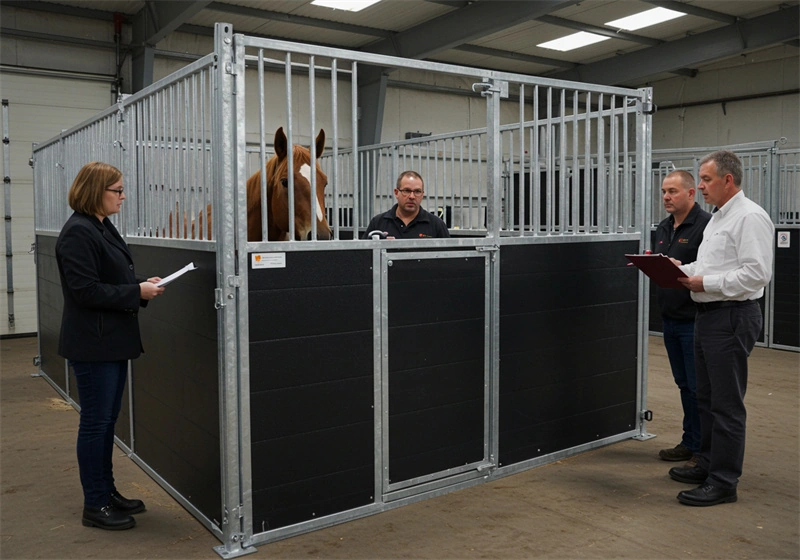
DB Stable team conducting a quality inspection of a portable horse stable unit featuring hot-dip galvanized frames and HDPE panels. This image highlights the precision of our custom stable designs, ensuring durability and compliance for the Australian and New Zealand markets.

Customs Documentation: Packing List, Invoice, Bill of Lading

Incorrect customs documentation turns a 30-day shipment into a 90-day detention.

The three documents that clear your container through Australian Customs are the packing list, commercial invoice, and bill of lading. Each has a specific function, and a single mismatch — say, a unit price on the invoice that doesn’t match the FOB quote — will trigger a query. That query can sit for 72 hours minimum, and during peak season, it introduces a week of storage fees at the terminal. The advice from the trade desk is blunt: align the invoice value with the FOB price you used for the landed cost calculation. Using EXW (ex-works) instead of FOB (freight on board) understates the declared value, which can lead to a GST reassessment or a penalty.

    • Commercial Invoice: Must state FOB value (not EXW), HS code 9406.90, country of origin, and a clear description of each component. The duty rate is 5% for prefabricated buildings; GST is 10% on the FOB + freight + insurance + duty sum. Errors here invite a customs audit.
    • Packing List: Needs weight, dimensions, and piece count per box. For flat‑pack horse stables, itemize every panel, bracket, and fastener. If the list says “1 crate” but the inspector sees 2, the container gets X‑rayed. That’s a 48‑hour hold.
  • Bill of Lading: The carrier’s contract. The consignee name must match the importer of record. A typo here means the container is diverted to a bonded warehouse until corrected — $200–$400 per day, plus documentation fees.

Biosecurity documentation is the third rail. If your shipment includes wood components (pallets, crated timber frames), the packing list must cross‑reference a fumigation certificate or heat‑treatment stamp. HDPE panels and hot‑dip galvanized steel frames are low‑risk, so they move through inspection faster. The practical takeaway: a supplier who ships on steel pallets instead of wood reduces your customs clearance time by roughly 3 days. DB Stable’s flat‑pack kits use steel pallets and HDPE walls, so the documentation stays clean and the container clears on the first pass.

How to Import Custom Horse Stables to Australia
Browse this product, solution, or service page to explore relevant offerings.

Explore Our Products →

CTA Image
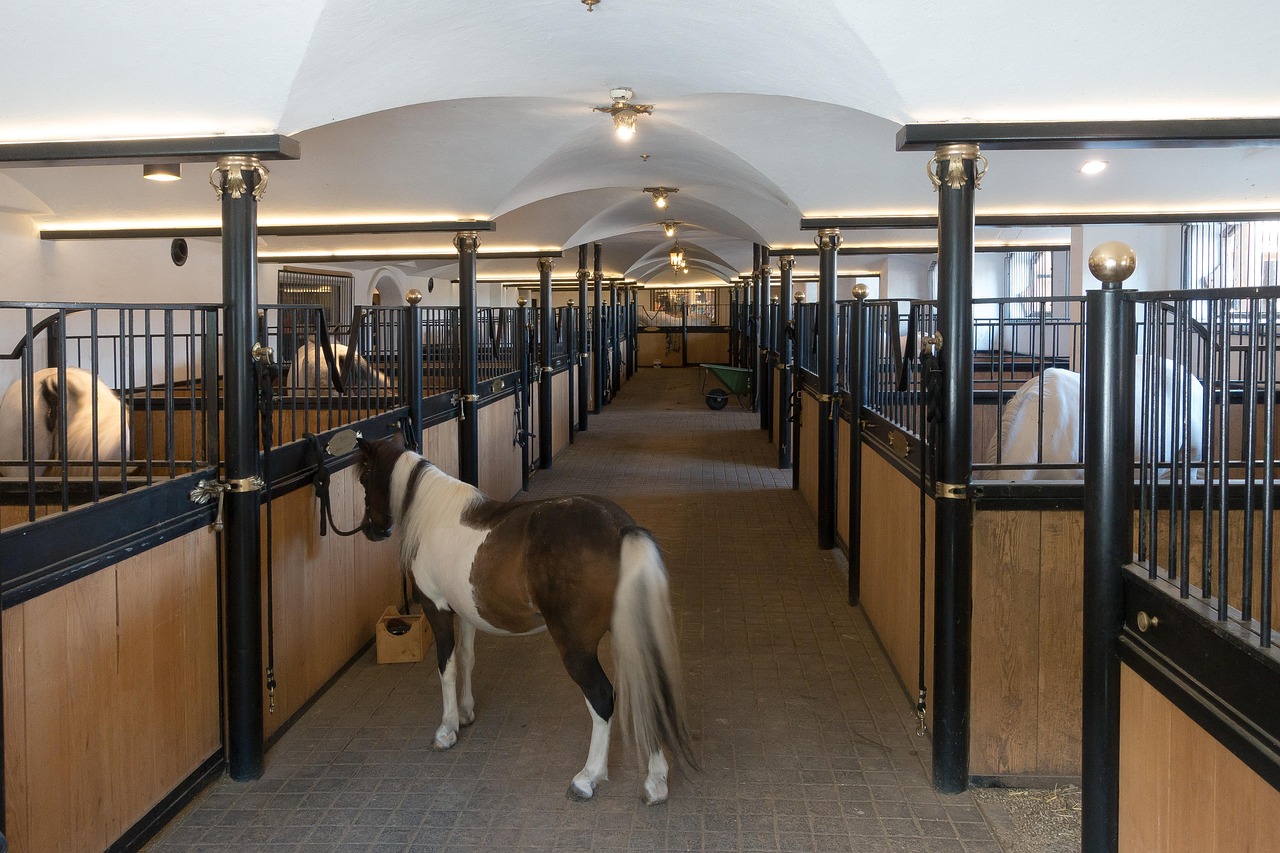
DB Stable exports durable, flat-pack portable horse stables for professional facilities in Australia and New Zealand. This image highlights our hot-dip galvanized steel frames and HDPE boards designed for the ANZ market.

Biosecurity Requirements for Wood & HDPE

Wood requires ISPM-15 treatment; HDPE panels skip quarantine entirely.

Australia’s biosecurity laws treat wood and HDPE very differently. Any timber used in a flat-pack horse stable — whether it’s pine kickboards, door frames, or pallet skids — must meet the Department of Agriculture’s import conditions. The only accepted treatments are kiln-drying to below 20% moisture content (heat treatment) or methyl bromide fumigation. Both must be stamped with the ISPM-15 mark on each piece. Ship without that stamp and your container gets directed to an approved arrangement facility for inspection and re-treatment, which runs AUD 600–1,200 plus storage fees per day.

    • Treatment proof: Request photos of the ISPM-15 stamp before loading. Some suppliers apply it only to visible outer boards — every individual timber piece must carry the mark.
    • HDPE advantage: 10mm UV-resistant HDPE panels contain no organic material. They are classified as low biosecurity risk by BICON (the Australian Biosecurity Import Conditions system). No fumigation, no heat treatment, no additional paperwork at clearance.
  • Packing material trap: Even if your stables are all-steel and HDPE, the wooden pallets or dunnage used inside the container still require ISPM-15 certification. A single untreated softwood block can hold up a full container release.

For distributors importing flat pack horse stables Australia customs clearance becomes simpler when you specify HDPE linings over plywood. The landed cost difference is marginal — roughly AUD 80–120 per stable for the panel upgrade — but it eliminates one entire variable from your biosecurity checklist. That matters when your consignment is part of a larger order cycle and you cannot afford a two-week quarantine hold.

Port Clearance & Local Transport

A direct-to-farm delivery saves $200–$400 per container vs.

Once your container clears customs at an Australian port — typically Melbourne, Sydney, or Brisbane — you have two options: deliver the entire container to a warehouse for unpacking and redistribution, or send it straight to the farm for on-site unloading. The choice depends on whether you are a distributor holding inventory or a stable builder staging a single install.

    • Warehouse delivery: Best for distributors who need to break down flat-pack kits, inspect components against the packing list, and re-ship partial orders. Expect a local drayage fee of AUD 250–$450 plus storage if the container sits more than 48 hours. You also pay for forklift unloading and potential palletizing.
  • Direct-to-farm delivery: For end-users or builders installing immediately, this eliminates double-handling. The truck backs up to the site pad; you unload with a telehandler or tractor forks. Requires that the farm has adequate access for a semi-trailer — check turning radius and overhead wires before booking.

The critical variable is cargo readiness. If your supplier uses steel pallets (common with hot-dip galvanized horse stables Australia import), the container can be stripped in under an hour on-site because each pallet is crane-liftable. If the kit is loose-loaded without pallets, plan for manual sorting at a warehouse — that adds AUD 150–$300 in labour.

Conclusion

Importing custom horse stables to Australia comes down to getting three things right: the HS code, the landed cost calculation, and the biosecurity paperwork. A single classification error can hold a container at the wharf for days, eating into your margin before the kit reaches the farm.

Before you commit to an order, run your supplier through a quick three-point check. First, does their quote use FOB pricing so you can calculate GST accurately? Second, can they provide a fumigation certificate for any wood components in the flat pack? Third, do they have a documented sample approval process that confirms your quality tolerance on hot-dip galvanized steel thickness? If the answer is yes to all three, you have a partner who understands how to clear Australian customs. Review current product specifications and flat-pack configurations on our products page to compare options.

Frequently Asked Questions

What is the HS code for horse stables?

HS code 9406.90 covers prefabricated buildings including portable and flat-pack horse stables, with a standard duty rate of 5%. This classification applies to both single units and multi-stall configurations. Always confirm with your broker if adding custom fittings.

How do I calculate landed cost for importing stables?

Use FOB price plus ocean freight, insurance, 5% duty, and 10% GST on the total to get your true landed cost. Basing your calculation on EXW instead of FOB can understate costs by. Run the full FOB-based calc before placing any order.

What biosecurity rules apply to imported horse stables?

All timber components must be heat-treated or fumigated per Australian biosecurity standards, while HDPE panels generally face no restrictions. Your supplier must provide a valid treatment certificate or the shipment risks quarantine delays or destruction. Verify wood treatment certification before shipping.

How many flat-pack stables fit in a container?

A standard 40ft container holds roughly 12 to 14 flat-pack horse stables when packed efficiently. Poor loading layout can waste up to 30% of container volume, so request a detailed loading plan from. Ask for a container loading diagram before production starts.

Cost Component Calculation Basis Typical Value (AUD) Key Notes for Distributors
FOB Price (Free on Board) Ex-works price + inland logistics to port + loading fees $8,000 – $15,000 Use FOB not EXW for accurate GST base; includes all factory-to-ship costs
Ocean Freight Per container from China to major Australian ports (Sydney, Melbourne, Brisbane)
Facebook
Twitter
LinkedIn
Pinterest

Talk To Our Expert

Connect with our specialists to discuss your needs and confidently start your project!

Picture of Frank Zhang

Frank Zhang

Hey, I'm Frank Zhang, the founder of DB Stable, Family-run business, An expert of Horse Stable specialist.
In the past 15 years, we have helped 55 countries and 120+ Clients like ranch, farm to protect their horses.
The purpose of this article is to share with the knowledge related to horse stable keep your horse safe.

Leave a Reply

Your email address will not be published. Required fields are marked *

Categories

DownLoad

Table Of Contents

We are at your disposal for any technical or commercial information

Table Of Contents

Picture of Frank Zhang

Frank Zhang

Hi, I’m Frank Zhang, the funder of dbstable.com, I’ve been running a factory in China that makes portable horse stable for over 10 years now, and the purpose of this article is to share with you the knowledge related to portable horse stable from a Chinese supplier’s perspective.
Facebook
Twitter
LinkedIn

Leave a Reply

Your email address will not be published. Required fields are marked *

Ask For A Quick Quote

We will contact you within 1 working day, please pay attention to the email with the suffix “@dbstable.com”

JOIN OUR MAILING LIST AND

Enjoy 10% Off

Your First Order