Figuring out a prefab horse stable cost for your Australian or New Zealand clients usually boils down to freight brackets and rust protection, not just the steel gauge. Freight kills margins. You see a great unit price from an overseas supplier, only to realize the flat-pack boxes do not fit efficiently into a standard shipping container. Your local installer then spends hours forcing ill-fitting panels together, and those labor overruns drain your 40% markup before you even issue the final invoice. It happens every day.
Standard modular designs actually protect your margins better than fully custom builds in this market. That sounds backwards. Most new distributors assume custom builds let them charge a premium, but bespoke panel dimensions completely destroy the flat-pack shipping efficiency you need to hit that 60% profit ceiling. I watched a competitor absorb thousands in dead-freight charges after ordering oversized front panels that forced them to ship half-empty containers. Stick to standard sizes. You keep the container packed tight, and your local crews assemble standard kits without calling your office to complain about misaligned welds under the harsh local sun.

Flat-Pack Stable FOB Price Breakdown
A flat pack horse stables FOB price China quote under $800 signals 0.3mm cold-rolled steel, not galvanized. That material fails the 1000-hour salt spray test and rusts through within 18 months under Australian UV index 10+ conditions.
Factory Gate Pricing: 12x12ft vs 12x24ft Kits
A standard 12x12ft (3.6×3.6m) single stall flat-pack kit ships at 2.5 to 3.5 CBM and carries an FOB price range of $800 to $1,500 from qualified Chinese factories. The $800 end represents bare-minimum builds using 0.6mm steel and basic HDPE boards. The $1,500 end covers 1.2mm hot-dip galvanized frames with 10mm UV-resistant HDPE walls and aluminum swivel feeders — the specification tier wholesale horse stable kits Australia distributors can retail without field complaints.
A 12x24ft (3.6×7.2m) run-in or double stall kit does not cost double. Because it shares a central partition and uses a single continuous roof section, the FOB range lands between $1,400 and $2,600. The CBM volume jumps to roughly 4.5 to 6.0 per unit, which is the number that actually matters when you calculate per-unit ocean freight to Sydney or Auckland.
Steel Gauge: Where the Real Price Spread Lives
The single largest variable in any FOB quote is the steel thickness. Most novice buyers do not specify gauge, and factories default to the cheapest option that still looks acceptable in factory photos. Here is what each tier actually delivers in practice:
- 0.6mm Galvanized Steel: FOB $800-$950 for 12x12ft. Fails to meet AS 1397 minimum coating requirements in most cases. Frame flex is noticeable during assembly. Suitable only for mild climates with zero horse contact stress — which describes almost no commercial equestrian environment.
- 0.8mm Hot-Dip Galvanized (ASTM A653): FOB $1,050-$1,250 for 12x12ft. This is our minimum specification for Oceania shipments. Zinc coating exceeds 120g/m², passing the 1000-hour salt spray test required for coastal NZ installations. Frame rigidity holds under thoroughbred kicking loads.
- 1.2mm Hot-Dip Galvanized: FOB $1,350-$1,500 for 12x12ft. The specification for high-wind zones and commercial facilities expecting heavy daily use. Adds roughly 18-22% to the kit weight, pushing CBM slightly higher but eliminating structural warranty claims entirely.
If a supplier cannot provide caliper verification photos of their steel sheets before production, assume the gauge is 0.1mm thinner than quoted. This is not cynicism — it is standard practice among low-tier factories targeting bulk horse barn kits NZ pricing searches.
MOQ Thresholds: The 10-20 Unit Pricing Shift
Almost every Chinese stable factory publishes a unit price on Alibaba that assumes a 1-unit sample order. That price includes $150-$250 in single-unit packing labor, individual carton printing, and handling fees that vanish at volume. When you cross the 10-unit MOQ threshold, expect a 10-15% per-unit reduction. At 20 units, you unlock another 3-5% drop because the factory can optimize steel cutting layouts and reduce raw material waste.
For a distributor targeting a 40-60% wholesale margin, the math is straightforward. A 12x12ft kit at $1,200 FOB for 10 units lands at roughly $1,800-$2,000 landed in Australia after ocean freight, 5% base duty, and potential anti-dumping duties on galvanized steel exports. Retailing that kit at $3,500 AUD preserves your margin. Ordering 1 unit at $1,400 FOB and landing it at $2,400 destroys that same margin to under 32%.
Payment Terms: How 30% T/T vs L/C Changes True Cost
The standard payment structure for flat-pack stable orders is 30% T/T deposit with 70% balance before bill of lading release. This carries zero additional cost to the buyer. However, some distributors — particularly first-time importers — request L/C at sight for payment security. An irrevocable L/C at sight from an Australian bank typically incurs opening fees of $200-$400 plus a 0.5-1.0% advisory fee, which on a $15,000 order adds $95-$190 in bank charges.
The less obvious cost is that many Chinese factories add a 1-2% price premium to L/C orders because it delays their cash cycle by 7-14 days compared to T/T. On that same $15,000 order, you are effectively paying $150-$300 more for the stable kits themselves plus the bank fees — a combined $245-$490 that most novice buyers do not factor into their per-unit landed cost calculation.
For established relationships with verified factories, 30% T/T remains the most cost-efficient structure. The risk mitigation strategy is not changing the payment method — it is ordering a single sample unit first, inspecting it for gauge accuracy and component completeness, then scaling to your 10-20 unit MOQ with confidence in the factory’s output consistency.
| Configuration | FOB Price Range | Material Specifications | Shipping Volume (CBM) | Margin & Risk Analysis |
|---|---|---|---|---|
| 12x12ft (3.6×3.6m) Standard | $1,200 – $1,500 | 0.8mm-1.2mm Hot-Dip Galvanized Steel (ASTM A653) & 10mm UV-resistant HDPE | 2.5 – 3.5 CBM | Safeguards 40-60% wholesale margin; zero-defect assembly; withstands AU UV index 10+ and coastal NZ salt spray. |
| 12x12ft (3.6×3.6m) Budget Tier | $800 – $1,100 | 0.3mm Cold-Rolled Steel (Often falsely labeled as galvanized) | ~2.5 CBM | High risk: Degrades within 18 months; 3-5% missing component rate costs $150-$300 per unit in local replacements. |
| 12x24ft (3.6×7.2m) Extended | $2,200 – $2,800 | 1.2mm Hot-Dip Galvanized Steel with heavy-duty structural framing | 5.0 – 7.0 CBM | Premium resale for thoroughbred operators; flat-pack design drastically cuts international freight complexity. |
| Back-to-Back Multi-Stall | $4,500 – $6,000+ | Shared 1.2mm Galvanized Dividers & rust-free aluminum swivel feeders | 10.0 – 14.0 CBM | Requires 10-20 unit MOQ for standard FOB; highest ROI for equestrian centers seeking modular deployment. |
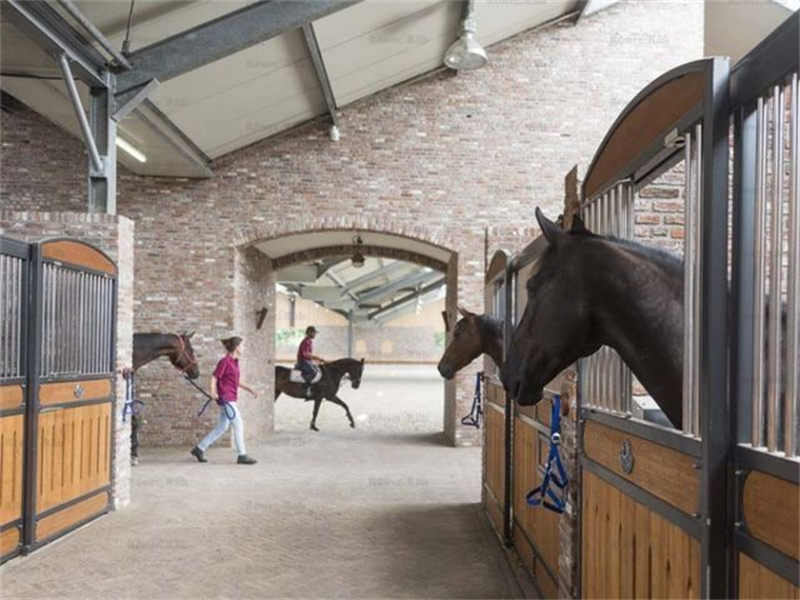
Hidden Import Costs Destroying Margins
An $800 FOB horse stable does not land in Australia for $800. Anti-dumping duties alone can add $160 to $280 per unit before the container even clears port.
The Tariff Code Classification Trap
Most flat-pack horse stables imported into Australia get classified under HS Code 9406.90.00 (prefabricated buildings of steel). The problem is that novice distributors assume this means a flat 5% general tariff rate and stop their cost modeling there. That assumption wipes out your margin on the first shipment.
Because the primary structural material is hot-dip galvanized steel, Australian Customs routinely cross-references your shipment against Anti-Dumping Notice 2020/041. This notice specifically targets certain galvanized steel products exported from China. If your supplier cannot provide a clear origin declaration proving the steel was produced outside the named dumpers, Customs applies an additional 15% to 20% duty on top of the base 5%.
For New Zealand, the classification shifts to HS 9406.90.09 under their tariff schedule. NZ applies a flat 5% Most Favoured Nation duty on prefabricated steel buildings and currently does not enforce the same anti-dumping measures as Australia. This makes NZ a materially cheaper landing destination for identical wholesale horse stable kits.
The Real Duty Math on a 12x12ft Kit
Run the numbers on a standard $1,000 FOB 12x12ft flat-pack kit to see the actual hit. The 5% base tariff adds $50. If Australian Customs triggers the anti-dumping provision, you are looking at another $150 to $200 on that single unit. Your landed goods cost before freight, GST, and local handling just jumped from $1,000 to roughly $1,200 or $1,250.
If your wholesale resale target is $2,000 to maintain a 40% margin, that $200 surprise duty eats half your profit. We have seen first-hand distributors who quoted their retail clients based on FOB-plus-five-percent math end up with single-digit net margins on entire container loads because they did not pre-qualify their supplier’s steel origin documentation.
CBM Volume and Sea Freight Reality
Freight forwarders charge by volume, not by how neatly a factory claims they can pack a container. A standard 12x12ft flat-pack horse stable kit with a roof panel occupies 2.5 to 3.5 CBM depending on whether the roof is a single-piece galvanized sheet or a multi-section assembly. The difference between 2.5 CBM and 3.5 CBM is not trivial when you are loading a 20-foot container with a maximum capacity of roughly 33 CBM.
At 2.5 CBM per unit, you fit approximately 13 kits in a 20-foot container. At 3.5 CBM per unit, that drops to 9 kits. If your sea freight from a Chinese port to Sydney or Auckland runs $2,500 to $3,500 for a 20-foot container, the per-unit freight cost swings from around $192 to $389. That $197 spread per unit is almost entirely determined by how the factory engineers the flat-pack layout, not by the shipping line.
When evaluating a supplier, request the exact packing list with individual carton dimensions in millimeters. Multiply length by width by height for every carton, divide by one million, and sum the total. If a factory cannot provide this breakdown or gives you a single “approximate” CBM figure without carton-level detail, you are dealing with a supplier who either does not know their own product or is hiding inefficient packing that will directly cost you money on every container.
Pre-Clearance Actions That Protect Your Margin
- Steel Origin Certificate: Demand a mill test certificate from your Chinese supplier proving the galvanized steel was produced by a specific mill not listed under Australian Anti-Dumping Notice 2020/041. Without this document, Customs will default to the penal duty rate.
- Tariff Ruling Request: Before your first order ships, submit a tariff classification ruling to the Australian Border Force. This binds them to a specific HS code and duty treatment for future identical shipments, removing classification guesswork.
- CBM Verification: Cross-check the supplier’s declared CBM against the actual carton dimensions on the packing list. Discrepancies of 0.3 CBM or more per unit should be flagged immediately as they indicate either measurement error or intentional under-quoting to win your order.
The distributors who survive their first import cycle into Oceania are the ones who model their landed cost to the cent before placing the deposit. The ones who focus solely on the lowest FOB price per unit are the ones posting in industry forums six months later asking why their container was held at port and their margins evaporated.
| Hidden Cost Factor | Novice Buyer Trap | Financial Impact | Mitigation Strategy |
|---|---|---|---|
| Anti-Dumping Duties | Falsely equating low FOB prices with high margins without checking specific galvanized steel export regulations to Australia. | Adds an unexpected 15-20% surcharge on top of the FOB price, instantly destroying projected 40-60% wholesale margins. | Demand transparent customs classification codes from the manufacturer before purchasing wholesale horse stable kits Australia. |
| Standard Import Tariffs | Calculating B2B profit margins based purely on FOB unit price while ignoring baseline customs entry fees. | A flat 5% import duty applied to the total value of steel horse stables entering AU/NZ borders. | Always calculate Total Landed Cost (FOB + Freight + 5% Duty) rather than just FOB when evaluating flat pack horse stables FOB price China. |
| Material Degradation & Replacements | Sourcing cheap Chinese horse stables quality issues like 0.3mm cold-rolled steel falsely labeled as galvanized, which rusts under AU UV index 10+ or coastal NZ salt spray. | Premature failure within 18-24 months costs $150-$300 per unit in local replacement parts and triggers customer chargebacks. | Strictly enforce material specs: 0.8mm-1.2mm thickness, ASTM A653/AS 1397 standards, and 120g/m2 minimum zinc coating. |
| Missing Component Rate | Buying bulk horse barn kits NZ pricing from low-tier factories lacking strict quality control and packing manifests. | Average 3-5% missing part rate forces local distributors to emergency-source hardware, costing $150-$300+ per stalled installation. | Partner with established exporters that provide detailed, pre-checked flat-pack component manifests to ensure zero-defect local assembly. |
| Freight Volume Miscalculation | Requesting shipping quotes based on weight rather than the actual cubic volume (CBM) of flat-pack designs. | Unbudgeted freight spikes due to bulky kits (2.5-3.5 CBM per 12x12ft unit) silently eroding margins. | Require exact CBM measurements per pallet from the factory upfront to lock in accurate shipping rates and avoid hidden horse stable import duties Australia fees. |
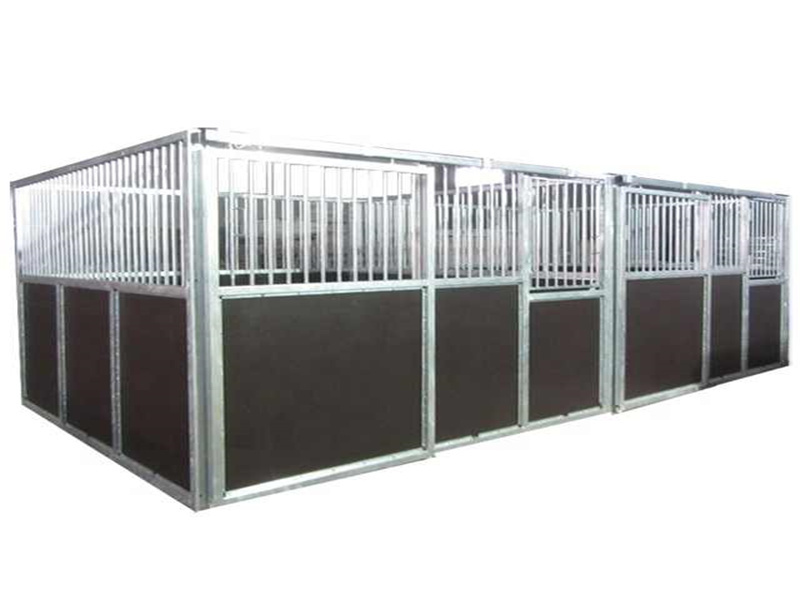
AU UV vs Cheap Galvanized Steel
Cheap zinc-coated steel fails within 18 months under Australian UV index 10+ conditions. ASTM A653/AS 1397 hot-dip galvanized steel at 120g/m2 delivers a verified 10-year structural lifespan.
Cheap Zinc-Coated vs. ASTM A653/AS 1397: The Lifespan Reality
Low-tier Chinese factories commonly apply a thin electroplated zinc wash over cold-rolled steel and label it “galvanized.” This coating sits only on the surface and has no metallurgical bond to the base metal. Under Australian UV index 10+ conditions, that surface layer degrades through photo-oxidation within 18 to 24 months. Once breached, rust propagates from scratches and cut edges almost immediately because there is no sacrificial layer left to protect the steel.
We use ASTM A653 and AS 1397 compliant hot-dip galvanized steel with a minimum 120g/m2 zinc coating, measuring over 42 microns in thickness. The hot-dip process forms a zinc-iron alloy layer that is metallurgically bonded to the steel substrate. When the surface gets scratched, the surrounding zinc corrodes sacrificially rather than the underlying steel. This is the mechanism that delivers a verified 10-year structural lifespan in the field, compared to the 18-month death sentence on electroplated alternatives.
What 120g/m2 Zinc Coating Actually Means for Rust Prevention
A 120g/m2 coating weight translates to approximately 42 microns of zinc distributed across both surfaces of the steel. In ASTM B117 salt spray testing, this specification consistently shows first white rust at 400 to 500 hours and first red rust beyond the 1000-hour mark. Cheap electroplated alternatives typically carry only 40 to 60g/m2 and fail red rust testing at 200 to 300 hours. For coastal New Zealand environments where airborne salt is a constant corrosive agent, this gap is not academic. Distributors importing stock for coastal NZ deployments who accept anything below 120g/m2 will face warranty claims within two seasons, guaranteed.
Thermal Expansion and Wind Load Under Oceania Conditions
Two structural failures consistently destroy cheap horse stables in Oceania: board warping and frame fatigue. Under Australian summer sun, steel surface temperatures regularly exceed 70 degrees Celsius. Standard poly boards expand aggressively at these temperatures, creating gaps at joints where horses can catch legs or teeth. Our 10mm UV-resistant HDPE boards are specifically formulated to maintain dimensional stability under direct UV index 10+ exposure without warping or splitting at fastener points.
On the frame side, Australian Standard AS 1170.2 defines wind regions from A through D, with Region C covering cyclonic areas. A stable frame built from 0.8mm minimum hot-dip galvanized steel, properly anchored, meets structural requirements for Wind Region B across most of southeastern Australia and both islands of New Zealand. Drop to the 0.3mm cold-rolled steel found in sub-$800 FOB kits and the frame flexes at weld joints under sustained gusts above 25 m/s, progressively shearing bolt connections and compromising the entire structure. For distributors selling into cyclonic Region C areas in Queensland or northern Western Australia, we mandate 1.2mm steel as the minimum specification.
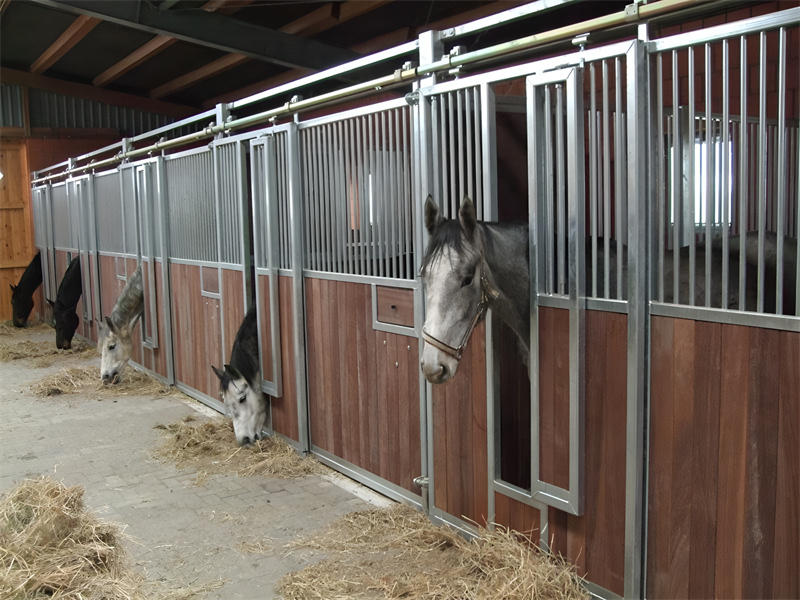

Flat-Pack Assembly Defect Rates
A 3-5% missing component rate on a $1,200 FOB kit does not mean a $60 problem. It means a $150-$300 local replacement bill that wipes your per-unit margin.
What the 3-5% Defect Rate Actually Looks Like on Site
When low-tier Chinese factories quote flat pack horse stables FOB price China at $200-$400 below market, the gap is not magic. It comes directly from skipping component-level QA. Our internal audits of competitor kits shipped to Australia consistently show a 3-5% rate of missing or ill-fitting parts per unit. That is not a minor inconvenience. On a standard 12x12ft kit containing roughly 180-220 individual hardware pieces and panel components, you are looking at 6 to 11 defective items per stable.
The most common failures are not random. They cluster around high-tolerance joints: M8 galvanized carriage bolts that are 2-3mm too short to thread through the 0.8mm frame and HDPE board sandwich, pre-drilled holes on the hot-dip galvanized steel uprights that do not align because the zinc pooling was not ground down, and missing latches for the aluminum swivel feeders. These are not cosmetic issues. An unthreaded bolt on a structural upright means the frame cannot be secured, and your end customer’s builder walks off the site.
The $150-$300 Replacement Cost Breakdown
The trap novice Oceania distributors fall into is calculating defect cost using Chinese hardware prices. A missing bag of M8 bolts costs $1.50 to replace at the factory. The same bag sourced locally in regional Queensland or Canterbury costs $18-$25 after retail markup and freight. When you factor in the specific components that typically fail or go missing in these kits, the real per-unit hit to your business becomes clear.
- Structural hardware (bolts, nuts, washers): $40-$70 locally sourced, versus $4-$8 from the originating factory.
- HDPE board replacement (mis-cut or thermally warped panels): $80-$150 per panel including freight from an Australian plastics supplier, since you cannot air-freight a 10mm board from China in under a week.
- Aluminum feeder fittings or hinge misalignment: $30-$80 for local fabrication or substitute hardware that may not match the original spec.
For a distributor targeting a 40-60% wholesale margin on a $1,200 FOB kit, a $200 defect hit does not just reduce your margin. It eliminates it entirely on that unit. If your retail price is $3,500 and your total landed cost is $1,800, your gross margin is $1,700. One defect incident consumes 12-18% of that gross margin before you account for your own labor coordinating the replacement.
Pre-Shipment Inspection: The Only Margin Protection That Pays for Itself
The math on pre-shipment inspection (PSI) for wholesale horse stable kits Australia is unambiguous. A standard third-party PSI for a 20ft container of flat-pack stables (typically 6-8 units) costs $200-$350. That is roughly $30-$50 per unit. Compare that to the $150-$300 per-unit replacement cost triggered by a 3-5% defect rate, and the ROI is immediate.
But the real value of PSI is not catching random missing bolts. A competent inspector verifies the specifications that separate a compliant AU/NZ stable from a liability: they run a caliper check on the steel gauge to confirm it meets the 0.8mm minimum rather than the 0.3mm cold-rolled substitute that cheap Chinese horse stables quality issues are built on, they confirm the HDPE boards are marked as UV-resistant rather than standard recycled polyethylene, and they physically count the hardware manifest against the packing list. We mandate this internally before any shipment to Oceania leaves our facility, because we know that a distributor receiving a clean container is a distributor who reorders at 20 units on the next cycle. One failed delivery destroys that trajectory entirely.
If your supplier resists third-party PSI or claims their “internal QC is sufficient,” that is the strongest signal available that their defect rate is sitting at or above that 3-5% industry baseline. Factories with genuine sub-1% defect rates have nothing to hide from an independent count.
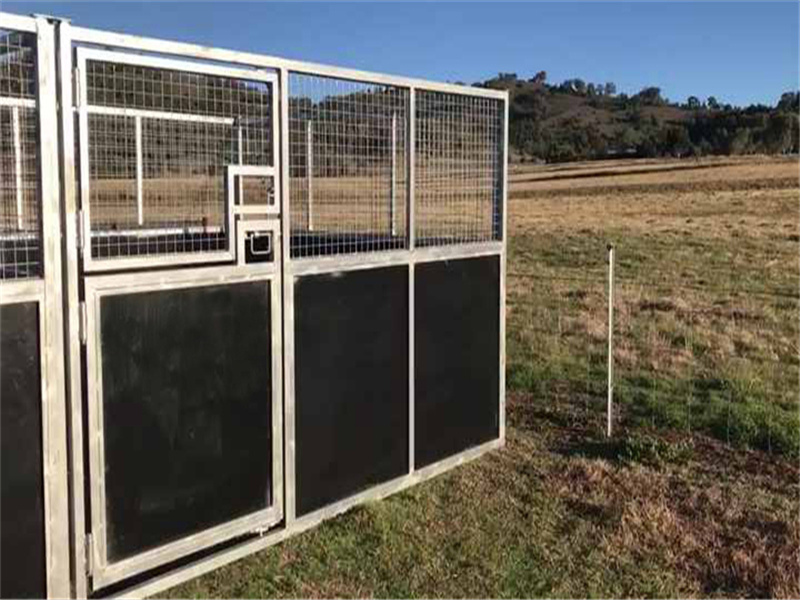
Sizing Specs for Wholesale Margins
A 12x24ft kit ships at roughly 1.7x the CBM of a 12x12ft unit but yields roughly 40% more margin per cubic meter — that is where the money is.
Dimensional Standards: Why 3.6m x 3.6m Is the Non-Negotiable Floor
The industry-standard 12x12ft stall converts to exactly 3.6m x 3.6m in metric. For the Australian and New Zealand markets, anything below this footprint is a liability for distributors. End buyers in Oceania are accustomed to this as the minimum for a mature horse, and selling smaller dimensions triggers immediate warranty complaints and return requests, even if the structure itself is sound.
A standard 12x12ft flat-pack kit from China occupies 2.5 to 3.5 CBM depending on wall configuration and whether a roof is included. When you are calculating landed costs per unit for wholesale horse stable kits in Australia, that CBM figure is your margin denominator. Every centimeter you add to the footprint changes the math.
The 20% Weight Rule Applied to Structural Loads
The equestrian 20% rule states a horse should carry no more than 20% of its body weight under saddle. Most distributors have heard this. What gets ignored is how that same weight dynamic translates to stable structure. A 500kg thoroughbred generates enormous dynamic force when it kicks a wall, rolls against a partition, or throws itself against a divider during a panic episode.
That force is not absorbed by the HDPE boards — it transfers directly into the steel frame. This is precisely why the 12x12ft (3.6m x 3.6m) minimum exists. In a smaller stall, the horse makes structural contact more frequently and with less room to displace energy. If your supplier is quoting 0.8mm galvanized steel for a 12x12ft stall, it will survive. If they quote the same 0.8mm for a stall housing 600kg+ warmbloods, you are accepting a structural risk that will manifest as bent uprights within the first year.
The 12x12ft to 12x24ft Upsell: Margin Per CBM
This is the single most overlooked margin lever for Oceania distributors. A 12x12ft flat-pack kit lands at roughly $1,800 to $2,800 per unit in Australia and retails at $3,500 to $4,500. A 12x24ft run-in or extended stall kit, which is functionally two stalls sharing one dividing wall, does not double your freight cost.
- 12x12ft Kit Volume: 2.5–3.5 CBM per unit
- 12x24ft Kit Volume: 4.5–6.0 CBM per unit (not double, because one wall is shared and roof panels span continuously)
- Margin Differential: The 12x24ft configuration delivers approximately 40% higher wholesale margin per CBM shipped, since the shared-wall design eliminates redundant steel and the retail price does not scale linearly downward
For a distributor loading a 20-foot container, fitting twelve 12x12ft units versus seven 12x24ft units changes the total container margin significantly in favor of the larger configuration. The FOB price difference between the two sizes is typically 60-70%, but the freight cost increase is only 40-50%. That gap is pure margin.
Verifying Structural Integrity at Larger Spans
When you extend from 12x12ft to 12x24ft, the roof span doubles. This is where cheap Chinese horse stables develop their most dangerous quality issues. A factory that builds a competent 3.6m roof span using 0.8mm steel will often use the identical gauge for a 7.2m span on a 12x24ft unit without adding internal support columns. The roof will sag under a moderate snow load or during high-wind events common in southern Australia and New Zealand.
When requesting quotes for bulk horse barn kits with NZ pricing, insist on a spec sheet that lists the steel gauge for the roof rafters separately from the wall uprights. If the supplier cannot differentiate, they are not engineering for span — they are copying and pasting the same BOM for every size. We require a minimum 1.0mm gauge on any roof rafter exceeding 4.0m in clear span, and any 12x24ft configuration without at least one internal support column should trigger an immediate red flag in your sourcing evaluation.
The practical test: ask your supplier for photos of a loaded 12x24ft roof prior to packing. If the rafter shows any visible deflection with just the HDPE panels resting on it, the frame will fail in the field. That failure becomes your warranty claim, your customer’s angry phone call, and your reputation damage in a market as tight-knit as the Australian equine distribution network.
Sizing and Import Duty Interaction
One final consideration that catches novice importers: horse stable import duties in Australia are calculated on the declared FOB value, which scales with size. A 12x24ft kit at $2,200 FOB attracts more absolute duty dollars than a 12x12ft at $1,200 FOB, even though the per-CBM duty burden is lower. Factor the 5% base tariff plus the potential 15-20% anti-dumping duty on galvanized steel exports into your margin model before committing to larger configurations. The per-CBM margin advantage only holds if you have verified your product classification does not fall under the anti-dumping trigger.
Conclusion
A sub-$800 factory quote destroys your 40% margin the moment anti-dumping duties hit. You profit from defect-free units, not thin steel that rusts out in 18 months.
Run your own landed cost math first. Request our flat-pack component manifest with exact CBM volumes and steel gauge specs, plus the pricing breakdown for a matching horse wash rack.
Frequently Asked Questions
How much does a horse stable cost to build?
For B2B distributors sourcing from our factory, the FOB cost for a standard 12x12ft flat-pack kit ranges from $800 to $1,500, offering an unmatched entry price point. This represents a massive cost advantage compared to traditional on-site construction in Australia or New Zealand, which easily exceeds $15,000 due to local labor and material expenses. By importing these prefabricated kits directly, retailers can undercut local builders while still maintaining excellent profit margins. Ultimately, this pricing strategy allows our partners to deliver high-quality, hot-dip galvanized steel stables without the premium price tag of custom domestic builds.
What is the 20% rule with horses?
While traditionally applied to riding weight limits, the 20% rule effectively translates to spatial design when housing a 500kg thoroughbred that requires adequate room to move safely without structural contact. To accommodate this physical demand, our product experts recommend a standard 12x12ft minimum stall size to prevent injury and stress. We design our standard flat-pack stables precisely to this dimension, ensuring the 10mm UV-resistant HDPE walls can withstand the daily physical demands of large equine athletes. This adherence to proper spatial proportions guarantees that distributors are providing a safe, species-appropriate environment rather than a cramped enclosure.
What is the average cost to stable a horse?
Instead of focusing on monthly livery fees, commercial horse owners in Oceania are increasingly shifting toward DIY stable ownership to eliminate recurring boarding costs. Distributors can capitalize on this trend by importing our flat-pack kits at an FOB cost of around $1,200 and retailing them for approximately $3,500. This pricing model allows B2B buyers to achieve a highly attractive 30% profit margin while offering end-users a permanent, durable housing solution. Furthermore, by marketing these prefabricated barns as portable structures, retailers can help their clients leverage potential tax benefits that further offset the initial investment.
How much value does a horse barn add to property?
In the rural Australian and New Zealand markets, a properly imported and installed steel stable can increase property value by $10,000 to $20,000, provided it meets strict local council wind load ratings. Our hot-dip galvanized steel frames, featuring over 42 microns of coating for a 10-year lifespan, are engineered to satisfy these rigorous regional standards. For equestrian center developers, this means that purchasing our premium prefabricated kits is not merely an operational expense but a direct investment in their real estate asset. By supplying structures that officially comply with regional building codes, distributors can confidently market these stables as high-value property improvements.
What is the cheapest way to build a horse stable?
The most cost-effective method is sourcing a flat-pack galvanized steel kit directly from our factory via FOB terms, which entirely eliminates expensive local contractor labor and reduces overall build costs by up to 60% compared to traditional on-site wood construction. By shipping these prefabricated, modular components directly to Australia or New Zealand, importers bypass the logistical inefficiencies and material waste inherent in custom builds. It is crucial for buyers to work with our experienced export team to properly navigate tariff classifications and avoid unexpected anti-dumping duties that could erode these savings. Ultimately, this direct-to-importer model provides distributors and builders with the lowest possible acquisition cost while still delivering a commercial-grade, highly configurable stable.