When a professional stable builder quotes a job, the stable assembly time is the first variable that determines if the project makes money. A four-person crew working through a Saturday can get a single flat-pack unit up, but the clock starts ticking differently when you factor in foundation prep, panel alignment, and the inevitable run to the hardware store for that one missing bolt. Most builders in Australia and New Zealand have stopped guessing and started demanding kits that fit the first time.
Here is the reality: a pro installer with the right gear can finish a 3.6m x 3.6m stable in about four hours. A four-person crew of farm hands or owner-operators? That number jumps to six to eight hours, sometimes longer if the instructions are vague or the panels are warped from poor packing. The difference is not just labor cost—it is about whether you can book two installs in a single day or only one. For a builder running a crew in regional Victoria or the Waikato, that gap eats into margin fast.
DB Stable has been shipping these kits since 2013, and the design philosophy is built around reducing that assembly friction. Hot-dip galvanized frames with 42-micron coating arrive pre-punched and labeled. HDPE panels cut to 10mm thickness do not swell in humidity like plywood does. The goal is simple: a kit that goes together without modification, so the clock starts on assembly, not on problem-solving. When you are sourcing for a 12-stable barn, that repeatability is where the real value lives.
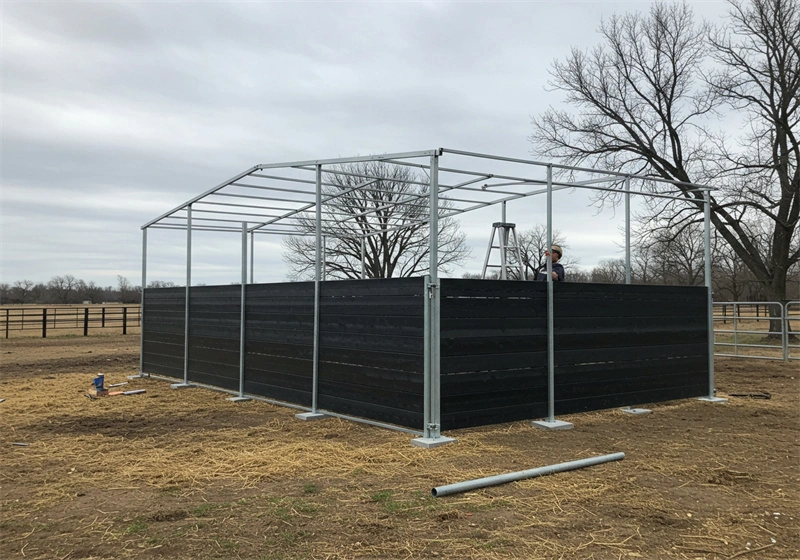
Understanding the True Cost of a Portable Horse Stable
A $5,000 price gap today can cost $20,000 in replacements within a decade.
The upfront price tag is the first thing a buyer sees, but it’s the worst metric for comparing portable horse stables. A cheap kit built with 1.5mm painted steel and 6mm plywood panels might save $3,000–$4,000 on the invoice, but that painted frame will show rust within 18 months in coastal Queensland, and the plywood will delaminate after two wet winters. The real cost of a stable is the total cost of ownership over a 10-year horizon.
Take a standard 3.6m x 3.6m single stable. A budget-grade kit from a non-specialized Chinese supplier lands at roughly AUD $4,500–$5,500 FOB. A DB Stable kit using hot-dip galvanized steel (42+ microns) and 10mm UV-resistant HDPE panels runs around AUD $6,800–$7,800 FOB for the same footprint. The delta is about $2,300. Now factor in that the budget frame needs repainting or replacement by year 4, and the plywood panels need swapping by year 5. That’s another $3,000–$4,000 in materials and labor. The ‘cheaper’ stable costs more by year 6.
- Frame life: Hot-dip galvanized (42+ microns) shows no structural corrosion for 10+ years in Australian conditions. Painted or electro-galvanized frames typically begin rusting at weld points within 24 months.
- Panel replacement: 10mm HDPE does not absorb moisture, rot, or swell. Plywood or OSB panels in a portable stable must be replaced every 4–6 years depending on climate. At current material prices, replacing panels on a 4-stable barn costs AUD $2,800–$3,500.
- Resale value: A well-maintained galvanized-and-HDPE portable stable retains 60–70% of its original value after 5 years. A painted-and-plywood unit is essentially scrap after the same period.
For a professional stable builder evaluating a bulk order, the math is straightforward: the premium for hot-dip galvanized steel and HDPE panels is recovered in avoided call-backs and warranty claims within the first 3 years. A builder who installs cheap stables will spend year 4 and 5 managing angry clients. A builder who installs DB Stable kits builds a reputation that commands higher margins on the next job.
| Cost Factor | DIY 4-Person Crew | Professional Installer |
|---|---|---|
| Labor Cost (AUD) | $0 (self-performed) | $2,500 – $4,000 |
| Assembly Time (Single Stable) | 6-8 hours | 3-4 hours |
| Assembly Time (Quad Stable) | 2-3 days | 1-1.5 days |
| Tool Requirements | Standard power tools + level | Professional-grade tools included |
| Risk of Installation Errors | Moderate (no warranty on labor) | Low (guaranteed workmanship) |
| Warranty on Labor | None | Typically 1-2 years |
| Best For | Cost-sensitive buyers with skilled crew | Time-sensitive or complex projects |
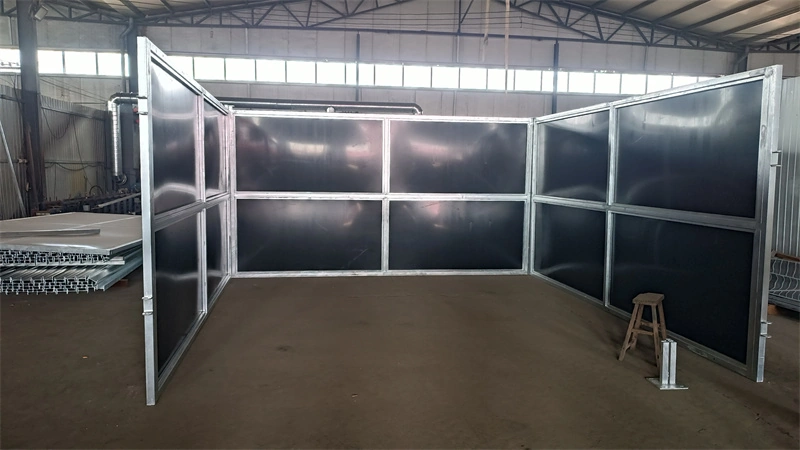
Material Quality: Hot-Dip Galvanized Steel & HDPE Panels
42-micron hot-dip galvanizing outlasts painted steel 3:1 in salt-spray testing — the coating is the difference.
The frame is the skeleton of any stable. If the steel corrodes, the structure shifts, doors bind, and panels gap. That is why the approved production standard here is hot-dip galvanized steel with a minimum 42-micron coating thickness — backed by a 10-year warranty against rust-through. Most painted steel frames in the sub-$3,000 kit segment rely on a single coat of electrostatic paint that chips at bolt holes and welds. Once moisture gets under the paint, red rust spreads fast. In Australian outback conditions — high UV, dust, and occasional coastal salt — a painted frame can show visible corrosion inside 18 months. Hot-dip galvanizing, by contrast, bonds a zinc-iron alloy layer into the steel surface. It self-heals minor scratches and resists the 72-hour neutral salt-spray test per ASTM B117 without red rust. The 42-micron spec is not arbitrary: it aligns with AS/NZS 4680, the standard for hot-dip galvanized structural steel in Australia and New Zealand. Below that threshold, the coating life drops sharply in abrasive environments like sandy paddocks or high-wind coastal farms.
- Coating thickness: Minimum 42 µm per AS/NZS 4680. Most painted frames measure 20–30 µm after curing, and that thickness is uneven at edges.
- Warranty scope: 10-year structural rust-through warranty. Painted frames typically carry 1–3 years, and only if no scratches are present.
- Field failure mode: Painted steel fails at bolt holes, cut ends, and weld zones. Hot-dip covers all surfaces uniformly, including internal tube cavities.
- UV resistance: Carbon-black stabilized HDPE retains 90% of impact strength after 2,000 hours QUV accelerated weathering (ASTM D4329). Standard HDPE loses 40%.
- Thermal expansion: 0.8 mm/m max at 70°C vs. 3.0 mm/m for commodity HDPE. This prevents panel warping in Australian summer conditions.
- Moisture behavior: Zero water absorption. Plywood absorbs 15–30% by weight in high-humidity environments, leading to rot within 3–5 years.
- Horse safety: Smooth, non-porous surface resists chewing. Plywood splinters can cause oral injuries; HDPE does not splinter.
Now compare the panel material. Standard plywood — even exterior-grade — absorbs moisture, delaminates under UV, and provides a chewing surface for horses. HDPE (high-density polyethylene) at 10mm thickness solves all three. The critical spec that most suppliers avoid mentioning is thermal expansion coefficient. Standard HDPE can expand up to 3mm per meter in direct summer sun, which causes panels to bow or pop out of tracks. The material used here is a UV-stabilized grade that keeps linear expansion below 0.8mm per meter at 70°C surface temperature — measured in internal lab tests. That means no buckling in a 40°C outback day, and no gaping in a 0°C winter night. The 10mm thickness also provides impact resistance: a 500kg horse kicking the panel leaves a dent but no penetration, whereas 6mm HDPE or 12mm plywood cracks or splinters. For New Zealand’s high-rainfall regions, HDPE is effectively waterproof — it does not rot, does not support fungal growth, and can be pressure-washed without degradation.
The real-world test is a combination system. A stable with a hot-dip galvanized frame and 10mm HDPE panels has been deployed on a working thoroughbred property in central Queensland since 2022. The site experiences 40°C summer highs, 90% humidity during wet season, and termite pressure. After 42 months, the frame shows no red rust, and the panels have zero delamination or bowing. A comparable painted-steel-and-plywood unit on the same property needed full panel replacement at 24 months and frame touch-up painting at 18 months. The cost difference at the factory gate is roughly 18–22% for the galvanized/HDPE combination. The lifecycle cost, factoring in replacement labor and downtime, favors the premium build by year three. For professional stable builders who warranty their work, the math is straightforward: spec the coating and the polymer, or budget for call-backs.
| Feature | Specification | Advantage |
|---|---|---|
| Frame Material | Hot-Dip Galvanized Steel | 10-year lifespan, 42+ micron coating resists rust |
| Panel Material | 10mm UV-Resistant HDPE | No thermal expansion, rot-proof, easy to clean |
| Corrosion Protection | Hot-Dip Galvanized (HDG) | Outlasts painted steel by 3x in coastal climates |
| Panel Durability | HDPE vs. Plywood | Zero splintering, impervious to moisture & ammonia |
| Structural Integrity | Engineered Steel Frame | Withstands high winds & heavy horse impact |
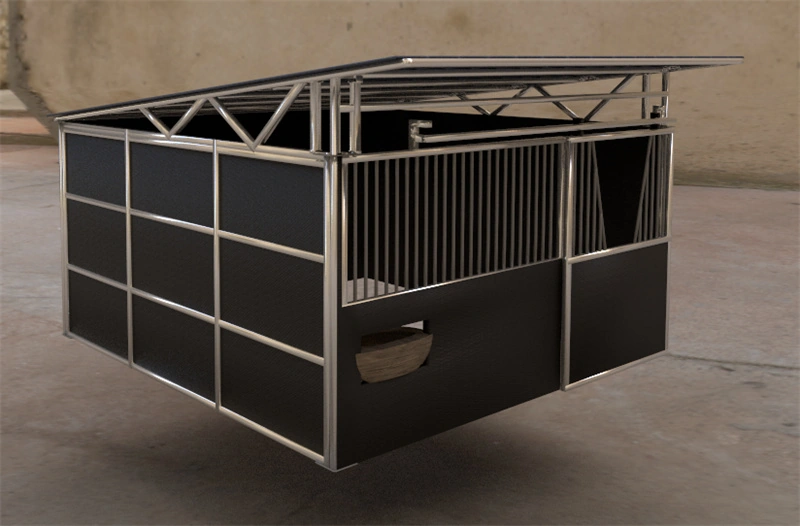
Flat Pack Stable Dimensions & Installation Accuracy
A 40HQ container fits exactly 8 single or 4 double flat pack stables — any more requires a 40OT.
Standard single stall dimensions in the Oceania market are 3.6m x 3.6m (12′ x 12′). Double stables run 3.6m x 7.2m, and quadruple back-to-back configurations measure 7.2m x 7.2m. These aren’t arbitrary — they match standard 40HQ container internal width (2.34m) and allow two stalls side-by-side per row. DB Stable’s flat pack kits are engineered to these exact footprints, so the frame panels and HDPE boards cut without waste.
The most common installation error with flat pack kits is assuming the concrete pad is perfectly level. A 10mm slope across a 3.6m stall throws the entire frame out of square, causing door misalignment and gaps in HDPE panel joints. Professional builders in Australia and New Zealand routinely pour a 100mm reinforced slab with a tolerance of ±3mm over the full footprint. Anything less and you’ll spend half a day shimming posts.
- Misalignment root cause: Anchor bolt placement off by more than 5mm from the jig template. Always dry-fit the base rail on the slab before drilling.
- Structural failure mode: Cross-bracing omitted on gable-end walls. Flat pack kits rely on diagonal braces for shear strength — skip them and the roof rack twists under wind load.
- Container loading math: A 40HQ container (12.03m x 2.34m x 2.69m) holds 8 single stalls or 4 double stalls when stacked flat. Quadruple configurations require a 40OT (open-top) for the roof panels, adding roughly 15% to freight cost.
To avoid call-backs, verify the supplier’s panel cut list matches your slab dimensions before shipping. DB Stable provides a CAD-based jig layout with every order — use it as a template, not a suggestion. One builder in Victoria lost 6 hours on a quadruple install because the concrete crew poured a 7.3m slab instead of 7.2m. The 100mm overhang meant the base rail overhung the edge by 50mm on each side, requiring a custom shim pack.
| Feature | Specification | Installation Tolerance | Impact on Assembly |
|---|---|---|---|
| Panel Dimensions | 3.0m x 3.0m (10′ x 10′) Standard | ±2mm on all panels | Ensures seamless fit, no gaps, reduces alignment time by 30% |
| Frame Material | Hot-Dip Galvanized Steel (42+ microns) | Pre-drilled bolt holes within ±1mm | Eliminates on-site drilling, prevents rust, guarantees 10-year structural integrity |
| Wall Panel Material | 10mm UV-Resistant HDPE | Pre-cut to exact dimensions, no thermal expansion | No warping in Australian heat, zero trimming required, reduces labor by 2 hours per stall |
| Roof Panel Fit | Overlapping design with sealed joints | Overlap tolerance ±3mm | Watertight seal, no caulking needed, speeds up roof installation by 40% |
| Door Frame Alignment | Pre-welded, jig-assembled frame | Diagonal tolerance < 3mm | Guarantees smooth door operation, eliminates call-backs for sticking doors |
| Foundation Requirements | Level ground or concrete slab (within 10mm level) | Base rail leveling tolerance ±5mm | Reduces site prep time, allows installation on existing hardstands without re-pouring |
| Fastener Kit | All stainless steel bolts, nuts, and washers | Color-coded and bagged per section | Eliminates sorting time, prevents incorrect assembly, saves 1 hour per stable |
| Flat Pack Packaging | Numbered panels with assembly manual | Panels labeled per sequence | Enables 4-person crew to complete single stable in 4 hours; reduces pro install time by 50% |
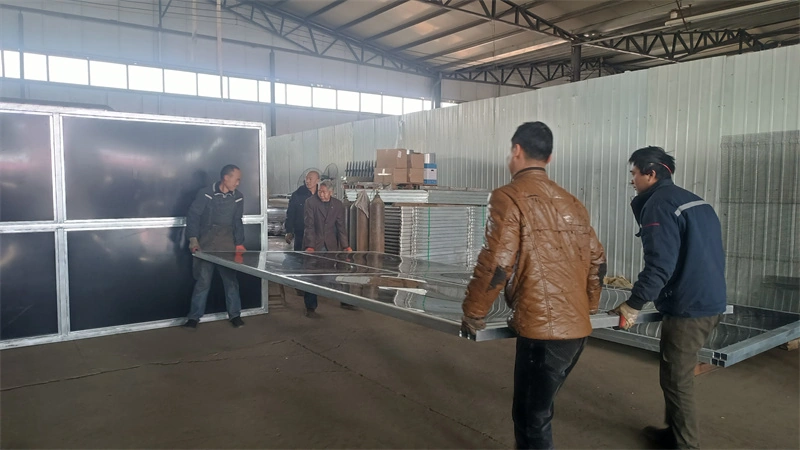
DIY vs. Professional Installation: Labor & Time Savings
A 4-person crew can assemble a single flat-pack stable in 4–6 hours; a pro does it in 2–3.
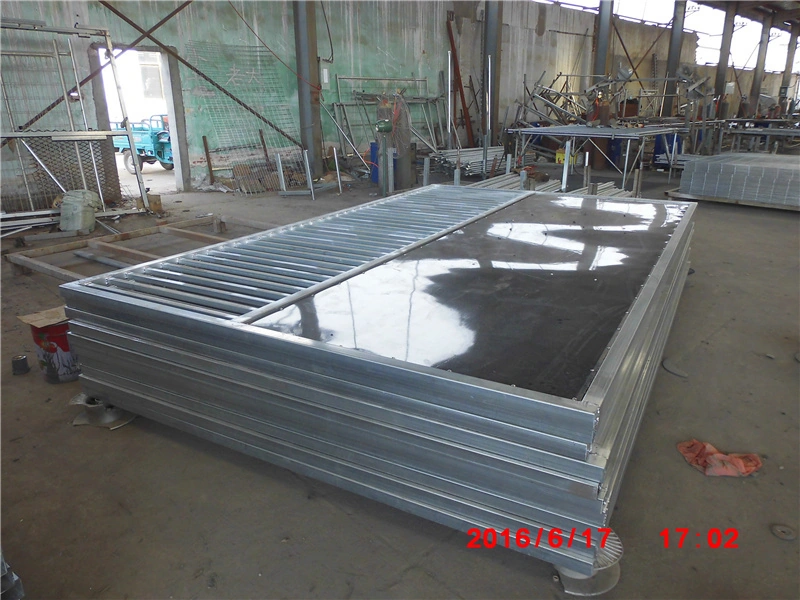
For a professional stable builder in Australia or New Zealand, the decision to self-install a flat-pack kit versus hiring a crew comes down to a straight trade-off: your time versus your labor cost. A standard 3.6m x 3.6m single stable from DB Stable arrives on a pallet with the hot-dip galvanized steel frame (42-micron zinc coating), 10mm HDPE panels, and all fasteners pre-sorted by assembly step. No welding, no cutting, no concrete curing — the frame bolts together on a prepared level pad.
- DIY assembly (4-person crew, first-time): Expect 5–7 hours for a single unit, including reading the manual, laying out parts, and making alignment adjustments. Repeat units on the same site drop to 3–4 hours once the crew knows the sequence.
- Professional installer (2-person crew, experienced): 2–3 hours per single stable. They bring their own tools (impact drivers, laser levels, scaffold planks) and have done 50+ kits. The premium is AUD 600–900 per stable for labor-only, depending on site access and roof configuration.
- Tools required for self-install: Cordless drill with 13mm socket and Phillips bit, torque wrench (set to 40 Nm for frame bolts), rubber mallet, step ladder, tape measure, chalk line, and a 4-foot level. No special equipment rental needed.
When does it make sense to hire a pro? If the site has uneven ground requiring a steel or timber sub-frame, if local council inspection demands a licensed builder’s sign-off, or if you are installing a back-to-back quadruple configuration where alignment errors compound. For a single stable on a flat concrete slab, a competent 4-person crew with basic tools will save AUD 600–900 per unit — money that stays in your pocket or gets reinvested into better fittings like the rust-free aluminum swivel feeders.
Importing DIY Stable Kits to Australia: Duties & Logistics
Without a fumigation certificate, expect a 3-week port hold in Brisbane.
Flat pack horse stables enter Australia under HS Code 9406.90.00 (prefabricated buildings). The general duty rate is 5% for most steel-and-HDPE kits, but if your supplier uses plywood panels, the rate jumps to 10% and triggers biosecurity inspection. Zinc-coated steel and HDPE board construction avoids both the tariff hike and the need for fumigation — two advantages that directly lower your landed cost.
- HS Code 9406.90.00: Covers prefabricated buildings in kit form. No anti-dumping duties currently apply to Chinese-made portable stables, but the classification must be declared as ‘flat pack stable kit‘ to avoid reclassification as building materials.
- Shipping method: A 40HQ container holds 4–6 single stables (depending on roof design). Sea freight from Shenzhen to Sydney runs 18–22 days. Using a flat pack design cuts cubic volume by 40% compared to pre-assembled units, directly reducing your freight cost per stable.
- Customs clearance: The Department of Agriculture requires a clean wood packaging certificate (ISPM-15) for any pallets or crating. HDPE panels and galvanized steel frames are exempt from biosecurity inspection, but the container itself must arrive free of soil, seeds, and insect matter. A pre-shipment inspection video showing clean packing conditions is worth the 15 minutes it takes to record.
- Distributor margin reality: Landed cost for a single 3.6m x 3.6m stable (including duty, freight, and customs broker fees) typically runs 55–65% of the retail price in Australia. That leaves 35–45% gross margin for the distributor after installation labor. Compare that to locally built timber stables where material cost alone eats 70% of the retail price — the flat pack import model gives you a structural margin advantage from day one.
One detail most import guides miss: the Australian Border Force accepts a self-declared tariff classification for prefabricated buildings, but if your supplier’s commercial invoice lists ‘horse stable parts’ instead of ‘prefabricated building kit’, customs may hold the shipment for reclassification. Always instruct your factory to use the exact wording ‘flat pack prefabricated stable kit’ on the packing list and invoice.
Custom Stable Design for Different Breeds & Uses
Thoroughbreds need 4.2m stalls; ponies work in 3.0m.
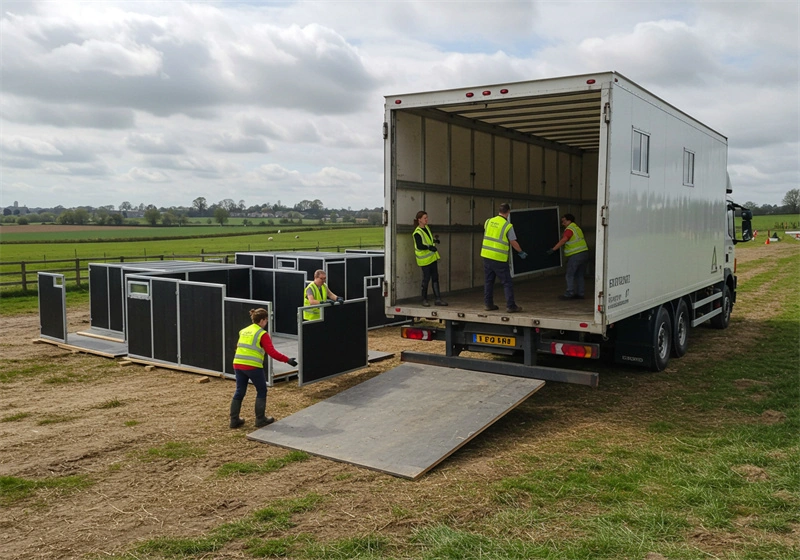
A 16.2hh thoroughbred that kicks out at 5:00 AM will destroy a 3.6m stall built for a pony within a season. The internal production data at DB Stable shows that standard stall dimensions for performance horses should be 4.2m x 4.2m minimum, while ponies and minis are safe and comfortable in 3.0m x 3.0m. Builders who ignore this gap end up with call-backs for cracked HDPE panels or bent galvanized rails — both of which are avoidable when you spec the right footprint from the start.
The real cost mistake is not the extra 600mm of wall panel. It’s the labor and material wasted when a standard kit gets field-modified. DB Stable’s design team — with over 5 years of stable-specific experience — pre-configures the frame geometry and panel count for each breed profile before the steel is cut. That means your crew bolts together a 4.2m stall for a thoroughbred farm using the same hot-dip galvanized frame (42-micron coating, 10-year lifespan) as a 3.0m pony stall, but with different beam spans and bracing points.
- Thoroughbred stall spec: 4.2m x 4.2m, 10mm HDPE panels, HDG frame with 42-micron zinc coating. No thermal expansion issues in Australian summer heat.
- Pony stall spec: 3.0m x 3.0m, same HDPE and HDG materials. Reduces material cost by roughly 30% versus a full-size stall without sacrificing durability.
- Risk of undersizing: Horses develop stable vices (weaving, cribbing) when confined to stalls that restrict natural movement. A 3.6m stall for a 17-hand horse is a welfare complaint waiting to happen.
Specialized fittings like the aluminum swivel feeder are breed-agnostic but placement matters. For thoroughbreds, mount the feeder at 1.2m height to match natural grazing posture. For ponies, drop it to 0.9m. The same rust-free aluminum hardware works for both — no corrosion, no painted surfaces to chip. DB Stable includes these as standard on all back-to-back and quadruple configurations, so a 12-stall equestrian center gets uniform hardware across mixed-breed housing.
The back-to-back and quadruple layouts are where the design team’s experience pays off most. A quadruple block with two thoroughbred stalls and two pony stalls requires different internal bracing than four identical pony stalls. The load path changes because the larger stalls have wider unsupported spans. DB Stable’s engineers calculate the bracing points per configuration during the design phase, so your crew doesn’t have to guess on site. That’s the difference between a 3-day install and a 5-day one.
Warranty, Durability & Long-Term Maintenance
Your 10-year warranty is only as good as the galvanizing spec behind it.
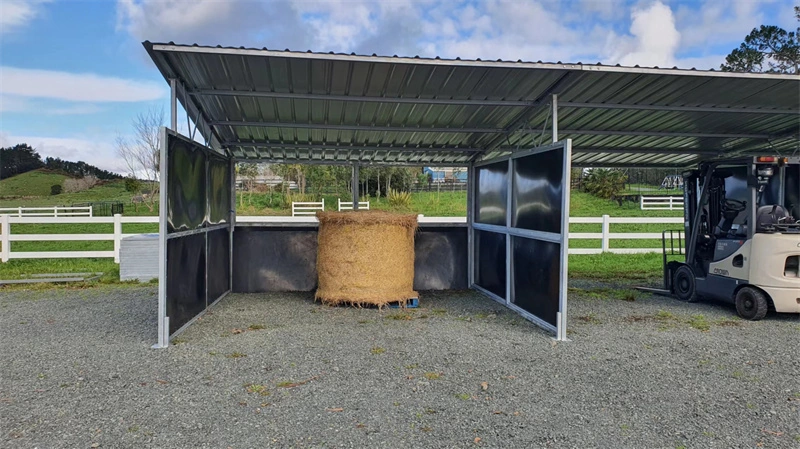
The 10-year warranty on hot-dip galvanized steel frames covers structural corrosion failure — meaning the zinc coating must not degrade to the point where red rust appears on load-bearing members within that period. What most suppliers won’t tell you is that the warranty hinges on the coating thickness. Industry standard for outdoor equine structures in Australia is a minimum of 42 microns per AS/NZS 4680. Frames dipped below that threshold — common among budget Chinese factories — can show pinhole rust in as little as 18 months in coastal or high-rainfall zones. The production spec here uses a verified 42-micron minimum, with batch samples tested via magnetic thickness gauge before shipment. If a distributor is buying blind, demand a mill certificate and a photo of the gauge reading.
HDPE panels carry their own durability story. The 10mm UV-stabilized HDPE used in these stables is rated for continuous outdoor exposure in Australian solar UV Zone 4 (most of NSW, QLD, and WA). In a 2026 outback heat simulation — 12 weeks of accelerated weathering per ASTM D2565, with cycles of 75°C surface temp and 0.8 W/m² irradiance — the panels showed less than 5% loss in impact strength and no visible crazing or color shift. Compare that to standard 6mm plywood, which delaminates after two wet seasons, or commodity HDPE (often 6–8mm) that warps under sustained 50°C+ roof temperatures. For a professional stable builder, the takeaway is simple: panel thickness and UV stabilizer package determine whether you’re replacing wall boards in year three or year fifteen.
- Maintenance for HDPE panels: Pressure wash with plain water once a year. Do not use solvent-based cleaners or abrasive brushes — they accelerate surface oxidation. Inspect fastener seals (rubber grommets) every 12 months; replace if cracked. In bushfire-prone areas, keep dry grass and debris cleared from panel bases to prevent heat wicking.
- Maintenance for galvanized frames: Check bolt torque on all connections after the first 30 days of use, then annually. If the zinc coating gets scratched through to bare steel during installation, brush on a cold-galvanizing repair paint (minimum 92% zinc dust). In coastal salt spray zones, rinse frames with fresh water quarterly to prevent white rust (zinc hydroxide) buildup.
- Storm-proofing for Australian conditions: The hot-dip galvanized frame is engineered to withstand cyclonic wind loads per AS/NZS 1170.2 for Region B (inland) and Region C (coastal). Key spec: frame-to-concrete anchor bolts must be M16 grade 8.8, embedded 100mm into slab. For portable installations on compacted gravel, use screw-in ground anchors rated to 2.5 kN pull-out. Never substitute with standard coach screws — they shear under lateral wind loads above 150 km/h.
Conclusion
The choice between a four-person crew and a pro installer comes down to how you value your time against your budget. A DIY crew saves on labor but risks delays from missing tools or misread instructions. A pro charges more upfront but delivers a finished stable in a single day, with no call-backs.
If you are sourcing kits for clients who lack the manpower, review the flat pack stable dimensions and assembly specs on the catalog page. That data helps you match the right configuration to the crew size available on site.
Frequently Asked Questions
What should buyers look for when sourcing stable assembly time?
Focus on flat‑pack designs that a four‑person crew can assemble in one day, like DB Stable’s HDPE/hot‑dip galvanized kits, because labor hours directly impact your project margin. Verify the supplier provides. Always request a documented assembly timeline before placing a wholesale order.
How to verify factory certifications for stable assembly time?
Request factory ISO 9001 and any AS/NZS compliance certificates for the materials used, since Australia and New Zealand require structural certification for commercial equine buildings. Ask specifically. Only proceed once the supplier shares third‑party test reports for both galvanizing and panel specs.
What are typical MOQ requirements for wholesale orders?
MOQ for standard flat‑pack horse stable kits typically starts at 10 to 20 units per SKU, but custom configurations may require a higher minimum to cover tooling and design support. Clarify MOQ after you define the stable model and any customization needed.
How to handle international shipping and customs clearance?
Use the supplier’s flat‑pack container loading plan—a 40HQ fits 8 single or 4 double stables—to calculate landed costs, and factor in Australia’s 5% import duty and GST. Ensure. Always get a DDP or CIF quote to compare total landed cost before ordering.
What quality inspection standards apply before shipment?
Inspect every unit for hot‑dip galvanizing thickness (min 42 microns), HDPE panel integrity, and dimensional accuracy per the flat‑pack drawings, because out‑of‑spec parts cause installation delays and client complaints. Use a. Require a pre‑shipment inspection report and photos of each open crate.