stable container loading is the first checkpoint buyers should lock before they approve a supplier, budget, or production slot. The numbers are simple. A 40HQ gives you 76 cubic meters and about 26,000 kg of payload. A standard 3×3 meter flat-pack kit weighs 650 to 850 kg. Volume says you might fit 12. Payload says you stop at 10 or 11. Most generic calculators miss that mismatch. They treat your galvanized steel frames like cereal boxes. They don’t know an L-shaped roof panel can’t stack the same way a pallet of tiles does.
That’s the gap. A pre-validated loading plan from a factory that builds these stables—like DB Stable—pushes utilization from the industry average of 75 percent up past 92 percent. For a single 40HQ shipment to Australia, that difference covers your customs clearance and inland freight. For ten containers a year, it’s the difference between a healthy margin and a break-even headache.
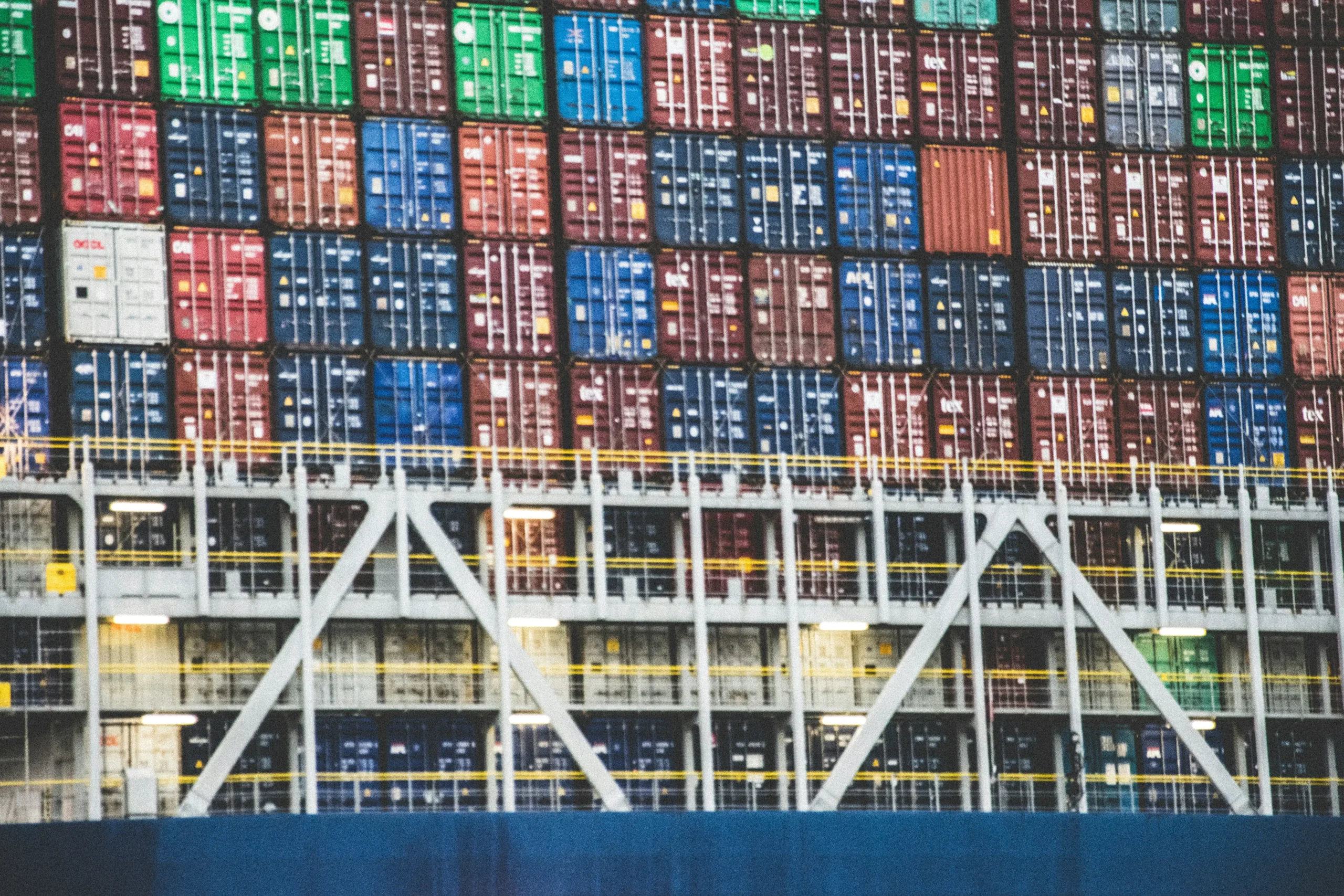
Why Container Loading Math Matters for Importers
A 2% container waste across 10 shipments = one extra paid container per year.
Most distributors fixate on unit price and miss the variable that silently kills margin: container loading efficiency. A 40HQ container costs roughly $5,500–$6,000 for the same journey whether it holds 8 stable kits or 10. That 20% gap in utilization turns a planned 20% margin into 10% before the container even clears Australian customs. Run 10 containers a year with a mere 2% underfill, and you’ve effectively paid for an eleventh container — a $6,000 write-off that never shows on the invoice.
- Volume trap: Generic container software treats L-shaped galvanized frames and tall HDPE panels as boxes. Result: 75–80% utilization at best, leaving $1,200–$1,700 of paid freight per container as wasted space.
- Payload trap: A 40HQ volume suggests 12 stable kits can fit, but the 26,000 kg payload limit caps out at 10–11 kits (each ~750 kg). Ignore the payload and you face demurrage, re-stacking fees, or a second container — erasing any margin gain from a low factory price.

40HQ Container Dimensions & Payload Limits
Payload, not volume, is the binding constraint for 40HQ stable loads.
A standard 40HQ container gives you 12.03 m × 2.35 m × 2.69 m of internal space — roughly 76 CBM usable. The maximum payload is ~26,000 kg. For a 3×3 m flat-pack stable kit weighing 650–850 kg, that payload ceiling is where most distributors get burned.
Volume math alone suggests you could fit 30–32 stables per container. But the steel frames — hot-dip galvanized at 42 microns — are heavy. At ~750 kg per kit, 30 units would hit 22,500 kg, leaving only 3,500 kg for packaging, dunnage, and pallets. Push past 30 and you risk exceeding the 26,000 kg limit, which triggers overloading fines and delays at Australian wharves.
- Volume capacity: 76 CBM allows stacking ~32 stable kits if cargo were perfectly box-shaped. Real flat-pack geometry cuts that to 28–30.
- Payload limit: 26,000 kg max. At 750 kg per kit, 30 kits = 22,500 kg. Add 1,500 kg for pallets and strapping, and you are at 24,000 kg — safe but tight.
- Real-world cap: Most loads top out at 28–30 stables per 40HQ. Any supplier claiming 32+ is ignoring weight or using lighter materials.
The consequence of ignoring payload limits is not just a fine. If your container is flagged as overweight at the port, you pay demurrage while the load is split into a second container — doubling your freight cost per stable. That $5,500–$6,000 freight bill suddenly becomes $11,000, and your margin evaporates.
DB Stable’s pre-validated loading plans account for both volume and weight. The factory’s CAD simulations place every component — nested steel frames, stacked HDPE panels, roof sections — to hit 92% utilization while staying under payload. Generic cargo software cannot do this because it treats all cargo as uniform boxes. It has no concept of an L-shaped galvanized frame or a 2.4 m tall HDPE board.
| Feature | Specification | Impact on Loading |
|---|---|---|
| Internal Dimensions | 12.03m (L) × 2.35m (W) × 2.69m (H) | Defines the maximum physical space for stable components |
| Usable Volume (CBM) | ~76 m³ | Theoretical space; actual utilization depends on component nesting |
| Maximum Payload | ~26,000 kg | Often the binding constraint; limits total stable kits to ~30–31 units |
| Tare Weight | ~3,800 kg | Subtract from gross vehicle weight to find net cargo capacity |
| Door Opening | 2.34m (W) × 2.58m (H) | Must accommodate tall HDPE panels and roof sections during loading |
Step-by-Step Calculation: Stables Per 40HQ
Payload caps often bind tighter than volume — know both before you quote.
Start with the container itself. A 40HQ gives you 12.03 m length, 2.35 m width, and 2.69 m height — roughly 76 m³ of usable space. The maximum payload is 26,000 kg. Those two numbers define your upper limit, and whichever you hit first is your binding constraint.
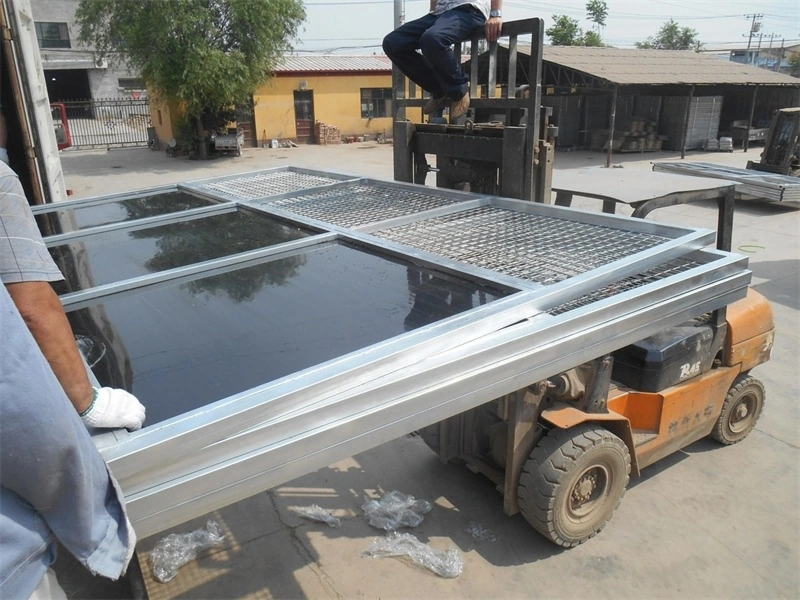
For a standard 3×3 m flat-pack stable kit, the steel frame components — hot-dip galvanized posts, beams, and roof trusses — are nested into bundles no taller than 1.2 m. This lets you stack 4 to 5 tiers of frame bundles along the container length. Base panels (typically 2.4 m × 1.2 m × 0.15 m) stack flat, 40 deep, consuming only about 0.15 m of vertical space. HDPE wall panels stand vertically side by side along the container’s width, each 2.4 m tall, fitting neatly within the 2.69 m internal height.
- 3×3 m single stable: Typical load: 10 kits per 40HQ. Frame bundles take 4 tiers, base panels stack flat, HDPE boards line the walls. Total weight ~7,500 kg, well under the 26,000 kg payload.
- 3×6 m quadruple unit: These share walls and roof sections, so fewer loose components. Typical load: 4–5 units per 40HQ. The longer roof panels (6 m) must be loaded lengthwise, reducing the number of tiers possible.
- Payload trap: A 40HQ can theoretically hold 12 stables by volume alone, but at ~750 kg per kit, that’s 9,000 kg — still fine. The real trap is when you mix in heavy accessories like concrete panels or steel doors. Always weigh your full BOM before finalizing the loading plan.
The most common mistake distributors make is trusting generic volume calculators. A 76 m³ container divided by 6 m³ per stable suggests 12 units. But the irregular shapes — L-shaped frames, tall HDPE boards, and long roof panels — create voids that generic software can’t optimize. DB Stable’s CAD-based loading simulations place every component precisely, achieving 92% utilization versus the industry average of 75–80%. That 12–17% gain translates directly to lower per-unit freight cost.

The Hidden Cost of Generic Loading Plans
Generic planners lose 12–17% volume on irregular stable frames.
Most container loading software — Cargo-Planner, EasyCargo, or any generic cube-out tool — is built for grocery pallets and boxed consumer goods. It assumes every item is a neat rectangular carton. Your flat-pack stable kit is not. L-shaped galvanized steel frames, tall HDPE wall boards, and roof panels with angled edges create irregular voids that standard algorithms cannot nest. The result: the software leaves 25–28% of your 40HQ empty, and you pay for that dead space.
- The software blind spot: Generic loaders treat each stable component as an independent box. They cannot rotate, interlock, or stack nested frames because they have no geometric model of an L-bracket or a 2.4 m HDPE plank. DB Stable’s CAD-based loading simulation knows the exact footprint of every part — from the 42-micron hot-dip galvanized upright to the 10 mm HDPE divider — and places them in a 3D puzzle that hits 92% utilization.
- The dollar impact per container: A 40HQ from China to Australia costs roughly $5,500–$6,000 in 2026. At 72% utilization you fit 8 stable kits. At 92% utilization you fit 10 stable kits. That is 2 extra stables per container with zero additional freight cost. Spread across 10 containers per year, the savings exceed $12,000 — equivalent to almost two free containers annually.
- The payload trap: Volume is only half the equation. A 3×3 m kit in hot-dip galvanized steel weighs ~750 kg. The 40HQ payload cap of ~26,000 kg limits you to ~34 kits. Volume says you could fit 12; payload says 10. Generic software flags neither constraint because it does not know your material density. DB Stable’s plan accounts for both, so you never hit the wharf with an overweight container and face demurrage or re-stow fees.
| Cost Factor | Generic Loading Plan | DB Stable Pre-Validated Plan |
|---|---|---|
| Volume Utilization | 75% (industry average) | 92% (CAD-optimized) |
| Wasted Space Per 40HQ | ~19 CBM (25% of 76 CBM) | ~6 CBM (8% of 76 CBM) |
| Stable Units Per 40HQ | 8–9 units (3×3 m) | 10–12 units (3×3 m) |
| Freight Cost Per Stable Unit | $611–$688 | $458–$550 |
| Hidden Risk | Payload miscalculation & demurrage fees | Pre-validated weight distribution & fumigation cert placement |

How to Request Your Loading Plan
A validated loading plan is your insurance against biosecurity delays at Australian and New Zealand ports.
You’ve settled on the stable configuration, confirmed the unit price, and agreed on delivery terms. The next variable that determines whether your margin holds — or evaporates — is how those stables sit inside a 40HQ. This is where most distributors lose money not on the product, but on the plan.
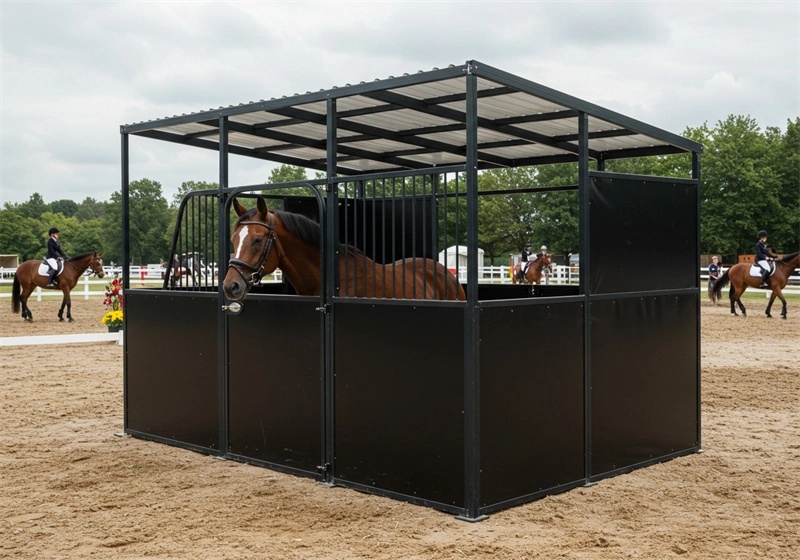
Requesting a loading plan from DB Stable is a straightforward process, but it requires three inputs from you: the stable type (single, back-to-back, quadruple, or conjoined), the quantity per container, and the container type (typically a 40HQ). Without these three parameters, the factory cannot generate a plan that respects both volume and payload constraints.
- Stable type: Conjoined configurations (like the 10-unit back-to-back with roof and splint) share walls and roof sections, reducing loose components and improving nesting density. A single 3×3 m kit has a different footprint than a quadruple 3×6 m unit. Specify the exact model.
- Quantity: The factory needs the target number of stables per container. For a 40HQ, the validated range is 8–12 units for 3×3 m kits, depending on frame nesting and panel stacking. Over-requesting (e.g., 14 units) triggers a payload violation — the 26,000 kg limit caps you at roughly 10–31 stables.
- Container type: A 40HQ (76 CBM, 2.69 m height) is the standard for flat-pack stables because the extra 300 mm allows an additional tier of HDPE panels or taller roof frames. A standard 40ft container (2.39 m height) reduces usable volume by about 12%, dropping capacity by 1–2 stables.
Once you provide these details, DB Stable’s design team runs a CAD-based loading simulation. This is not a generic cargo calculator that treats your cargo as uniform boxes. The simulation accounts for the L-shaped galvanized steel frames, the tall HDPE wall panels, and the irregular roof sections. The output is a 2D visualization that shows the exact position of every component inside the container, including the weight distribution across the floor to avoid axle overload.
The plan also marks the precise location for the timber fumigation certificate. This is a legally required document for Australian biosecurity (Department of Agriculture, Fisheries and Forestry). Without it, your container sits at the wharf for inspection — typically 3 to 5 business days, costing $200–$400 per day in demurrage fees. A pre-marked certificate placement ensures customs can locate it without unpacking the container.
That loading plan is not just a packing diagram — it serves as part of your import documentation. Australian and New Zealand customs accept a validated loading plan as evidence of proper cargo stowage, reducing the likelihood of physical inspection. For a distributor importing 10 containers per year, avoiding one inspection per container saves roughly $1,500–$2,000 annually in inspection fees and delays.
Conclusion
You now have the math to validate any supplier’s loading claim. Volume and payload are the two levers that determine your real per-unit freight cost. Ignore either one, and you risk splitting a shipment across two containers — doubling your logistics cost before the stable reaches your yard.
Review the 10-conjoined back-to-back configuration on the product page to see how a factory-designed loading plan achieves 92% utilization. That’s the difference between paying for 10 stables per container or 12.
Frequently Asked Questions
What is the loading capacity of a 40HQ container?
A 40HQ container offers about 76 CBM of usable volume and a maximum payload of roughly 26,000 kg. For flat-pack horse stables, payload usually becomes the binding constraint before volume does. Always check payload limits before quoting stable counts.
How to calculate container loading capacity?
Start with the 40HQ’s internal dimensions (12.03m x 2.35m x 2.69m) and subtract 5-10% for bracing and irregular shapes. Then divide usable CBM by the packed volume of one flat-pack stable. Run both volume and weight checks before finalizing your load plan.
How many CBM is in a 40ft HQ?
A 40ft HQ container has approximately 76 CBM of usable internal space. Actual loading efficiency for flat-pack stables typically reaches 90-92% due to frame nesting and panel stacking. Use 76 CBM as your baseline, then adjust for packing efficiency.
What is the difference between 40hq and 40 container?
A 40HQ is one foot taller than a standard 40ft container, with 2.69m internal height versus 2.39m. That extra 30cm of vertical space is critical for stacking HDPE panels and galvanized. Always spec a 40HQ for flat-pack stables to maximize vertical stacking.
How much weight can a 40 flat rack hold?
A 40ft flat rack typically has a maximum payload of 30,000-40,000 kg, depending on the carrier and rack type. However, for flat-pack horse stables, the 40HQ container is the standard. Confirm the specific flat rack rating with your freight forwarder before booking.