For distributors in Australia and New Zealand, the profitability of flat pack horse stables is determined long before the first unit reaches the showroom floor—it is dictated by how efficiently you fill a 40ft container. While many novice importers focus exclusively on the factory price per stall, the real margin killer is the cost of “shipping air,” which can easily erase 15-20% of your wholesale profit if you choose the wrong structural design.
The difference between a standard welded cage and a precision-engineered flat pack kit is not just assembly time; it is a fundamental shift in volume density. By utilizing interlocking 5.8m steel beams that act as internal container ribbing, you can load 45 sets into a single High Cube container, compared to only 12-15 sets of welded units. This 3x increase in capacity is the only way to neutralize rising ocean freight rates and protect your landed cost against margin erosion.

Flat Pack vs Welded Freight Costs
Flat-pack horse stables are not just a shipping preference; they are a margin-protection tool. By utilizing a 5.8m beam interlock system, you can load 45 sets per 40HQ container, slashing freight costs by over 60% compared to welded units.
When importing to Australia and New Zealand, your “Landed Cost” is determined by two factors: the factory price and the freight cost. Most novice buyers fixate on the former, ignoring the latter. In reality, shipping “air” inside rigid welded cages is the silent margin killer. Flat-pack horse stables solve this by disassembling into high-density kits, allowing you to maximize the cubic meter (CBM) of every container.
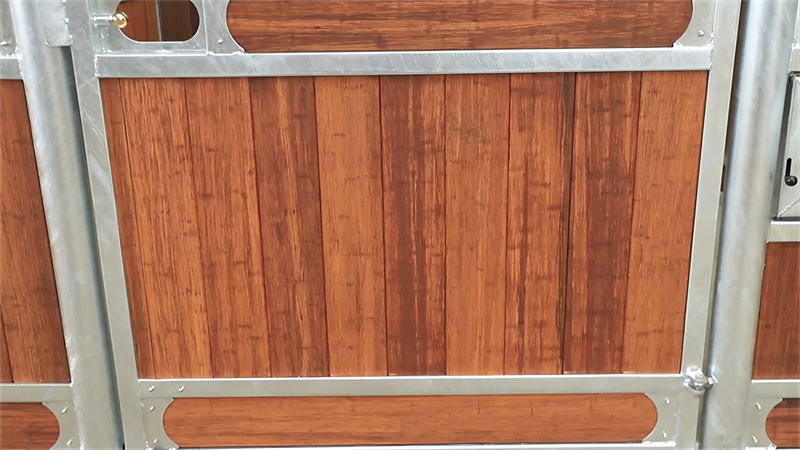
Container Loading: 20ft vs 40ft HC Efficiency
While 20ft containers (33 CBM) can hold 5-6 flat-pack kits, the 40ft High Cube is the strategic choice for Oceania imports. Ocean freight rates do not scale linearly; a 40HQ is rarely double the cost of a 20ft, yet it offers more than double the volume. For high-volume distributors, the 40HQ is the economic winner.
However, loading a 40HQ requires precision. You must adhere to the 60/40 weight distribution rule to comply with Australian road safety regulations. Placing 60% of the weight (the heavy steel beams) in the front half of the container and 40% in the rear prevents “tail-heavy” penalties.
- 20ft Container (33 CBM): Holds 5-6 kits. Better for small-scale testing or low-volume routes.
- 40ft High Cube (76 CBM): Holds 45 kits. The optimal choice for margin protection and volume density.
- Weight Rule: 60% forward / 40% rear distribution is mandatory to avoid AUD $500+ axle fines per truck.
Ignoring this rule risks severe fines and potential safety hazards. DB Stable’s engineering ensures that the heavy galvanized steel frames naturally align with this weight distribution when loaded correctly. See our Stable Container Loading Efficiency guide for a specific weight distribution chart.
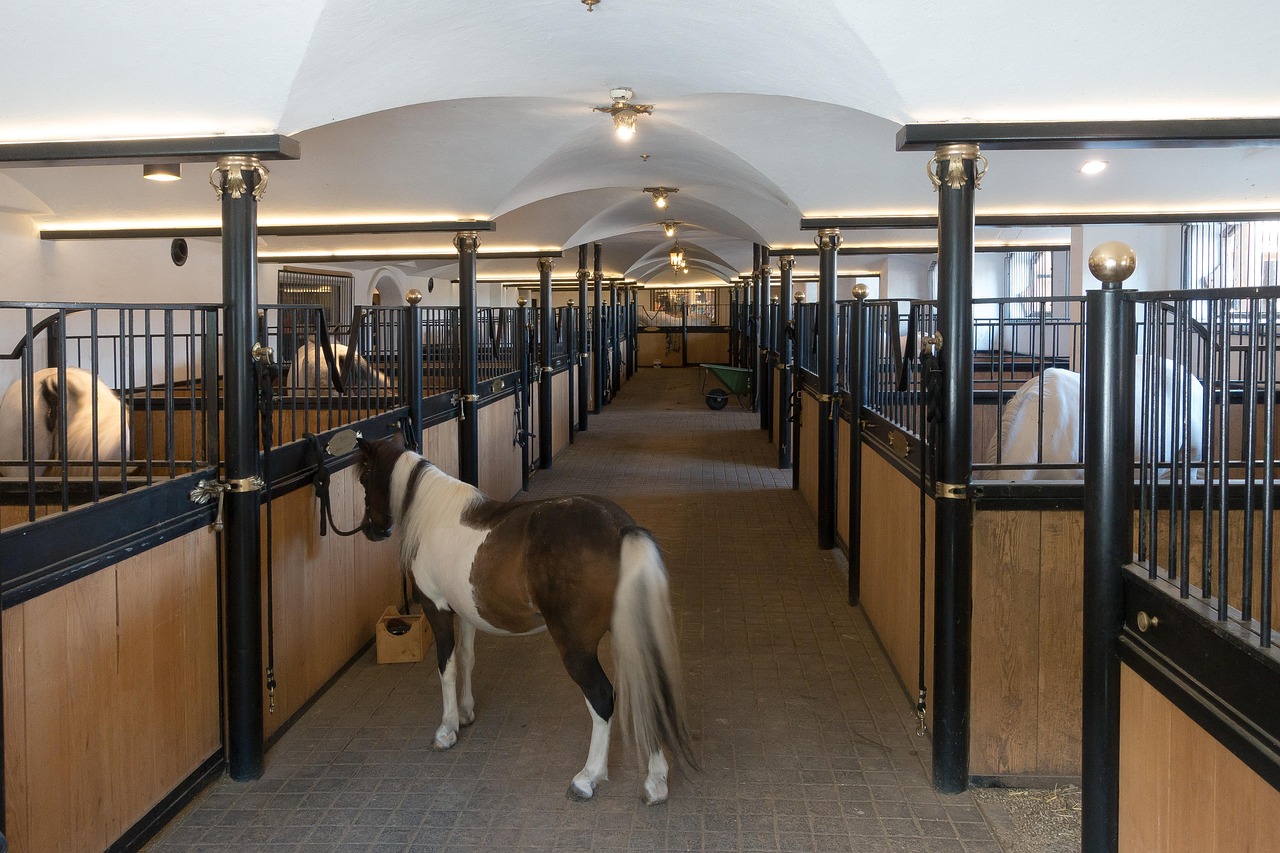
Steel Beam Engineering: The Interlock Method
Generic factories often ship flat-pack kits with random beam lengths, requiring bulky dunnage and wooden pallets to stabilize the load. This adds dead weight and wastes valuable container space. DB Stable utilizes a proprietary 5.8m precision-cut beam designed specifically for standard container widths.
This length allows the steel beams to act as internal structural ribs against the container walls. When stacked, they create an “interlock” friction that prevents shifting during ocean transit. This engineering secret eliminates the need for pallets, increasing your effective volume capacity by an additional 10%.
- 5.8m Beam Cut: Precision-engineered to span container widths, creating structural rigidity.
- Interlock Friction: Steel beams lock against container walls, eliminating the need for pallets and 30% more dunnage.
- Damage Prevention: This rigid framework protects the fragile HDPE stable panels vs plywood infill from crushing under the weight of the container.
Floor loading beats palletizing not just for space, but for stability. The interlocking steel skeleton ensures that your hot dip galvanized flat pack stable kit Australia arrives intact, ready for immediate assembly.

Weight Distribution: Preventing Axle Fines
Compliance is a margin protector. In Australia, tail-heavy trucks incur fines exceeding AUD $500 per violation. The heavy galvanized steel used in DB Stable kits (42+ microns thickness) acts as natural ballast. By following the correct stacking order, you ensure legal compliance and product safety.
The optimal loading sequence is critical. Place the heaviest components—the structural steel frames—at the bottom and towards the front of the container. This anchors the load. Place the rafters in the middle, and stack the HDPE infill boards for flat pack horse stables on top. Because the steel frames are stacked first, they protect the HDPE boards from crushing during transit.
- Steel Beams (Bottom/Front): Provide the anchor and weight balance. 60% of total weight here.
- Rafters (Middle): Layered efficiently to fill vertical space without adding excessive weight to the rear.
- HDPE Boards (Top): Protected by the steel skeleton. 10mm UV-resistant boards arrive scratch-free.
This method ensures that your quadruple horse stable kit with roof flat pack components are delivered in pristine condition, ready for your local distributors.
Cost Savings: Landed Price vs Factory Price
Negotiating a lower factory price is often less impactful than reducing freight costs. A 15-20% reduction in freight cost per unit is frequently higher than a 5% factory discount. For distributors, logistics is the “silent margin killer.”
Flat-pack kits also support portable horse stable tax benefits Australia by keeping structures clearly movable and asset-classified. This distinction can have significant implications for depreciation schedules and import duties in New Zealand and Australia.
- Freight Efficiency: Higher container yield reduces per-unit landed cost more effectively than factory discounts.
- Tax Benefits: Portable, flat-pack designs often qualify for favorable tax depreciation in Australia.
FAQ: Flat Pack Horse Stable Container Loading
How many flat pack horse stalls fit in a 40ft container?
A standard 40ft High Cube (40HQ) container can hold approximately 45 sets of flat-pack horse stable kits, compared to only 12-15 fully welded units. This high-density loading is possible because the components disassemble into thin, stackable frames and infill boards, maximizing cubic meter (CBM) utilization.
Flat pack vs welded horse stall freight cost difference?
Flat-pack kits typically reduce freight costs by 60% or more per unit. Since welded frames are rigid and bulky, they force you to pay for ‘air’ space. Flat-pack kits allow you to fit 3x more units in the same container, significantly lowering the landed cost per stall and protecting your wholesale profit margins.
What is the best container size for importing horse stables to Australia?
The 40ft High Cube (40HQ) is the best container size for most commercial imports. It offers 76 CBM of space, allowing for 45 sets of flat-pack kits. This maximizes the economies of scale, as the ocean freight rate for a 40HQ is not double that of a 20ft container, yet it holds triple the payload.
How to prevent damage to HDPE boards during shipping?
Use the ‘Interlock Method’ with 5.8m beams to create structural rigidity against container walls. Follow the 60/40 weight rule: place 60% of the weight (heavy steel beams) in the front half of the container. Stack HDPE boards on top, protected by the steel frame, to prevent crushing during transit.
Do flat pack horse stables require hot-dip galvanizing?
Yes, for Oceania markets, ISO 1461 Hot-Dip Galvanizing is critical. It requires a zinc coating thickness of at least 42 microns. This ensures the steel frames are completely sealed against rust, which is essential for the harsh UV and humidity conditions in Australia and New Zealand.
| Feature | Specification | Advantage |
|---|---|---|
| Container Capacity | 45 sets (40HQ) | 60% freight savings vs. welded units |
| Steel Coating | ISO 1461 Hot-Dip Galvanized | 42+ micron rust protection for Oceania |
| Panel Material | 10mm UV-Resistant HDPE | Zero maintenance, crush-resistant |
| Structural Design | 5.8m Interlocking Beams | Eliminates pallets, increases volume by 10% |
| Logistics Compliance | 60/40 Weight Distribution | Prevents AUD $500+ axle fines in Australia |

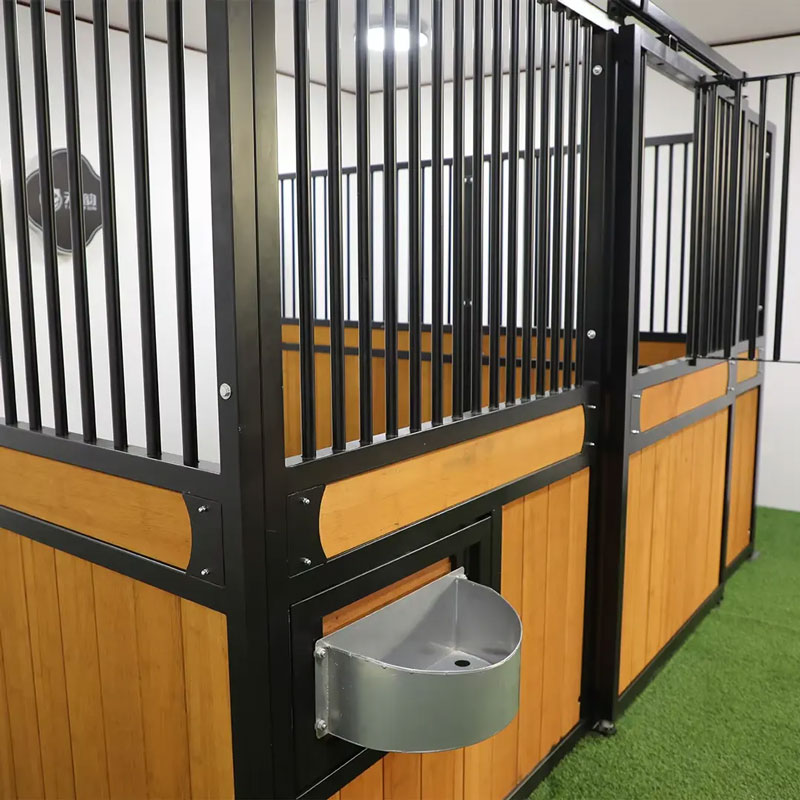
Conclusion
Optimizing container loading for flat pack horse stables is the definitive strategy for protecting wholesale margins in the Oceania market. By transitioning from welded units to flat-pack kits, distributors can achieve a 60% reduction in freight costs, fitting 45 sets per 40HQ container while ensuring compliance with Australian axle weight regulations and ISO 1461 corrosion standards. This engineering-led approach eliminates the hidden costs of shipping air and fragile packaging, delivering a durable, high-margin product that outperforms local wooden alternatives.
Review the full technical specifications for our hot dip galvanized flat pack stable kits and explore the available configurations to calculate your potential landed cost savings.
Frequently Asked Questions
How many flat pack horse stalls fit in a 40ft container?
A standard 40ft High Cube (40HQ) container can hold approximately 45 sets of flat-pack horse stables. This density is three times higher than welded units, significantly reducing per-unit freight costs for importers. Maximize container volume to protect wholesale margins.
What is the difference in freight cost between flat pack and welded horse stalls?
Flat-pack kits typically reduce freight costs by 60% or more per unit compared to welded alternatives. This savings comes from eliminating the ‘shipping air’ premium associated with rigid, pre-assembled structures. Choose flat-pack to lower landed costs.
What is the ISO 1461 standard for flat pack horse stables?
ISO 1461 defines the requirements for hot-dip galvanizing, ensuring the steel frames meet corrosion resistance standards. For horse stables, this guarantees a durable, rust-free structure suitable for long-term outdoor use. Verify galvanizing thickness for durability.
How do I load a container for horse stable kits to prevent damage?
Use the ‘Interlock Method’ with 5.8m beams to create structural rigidity against container movement. This eliminates the need for excessive pallets and dunnage, protecting HDPE boards during transit. Interlock beams to secure the load.
Is flat pack installation difficult for local distributors?
No, flat-pack kits are designed for bolt-together assembly without welding. Each kit includes clear instructions, allowing local teams to assemble units quickly without specialized labor. Bolt-together design simplifies local assembly.