Nobody counts stables. Ask for a stable market outlook for Australia and New Zealand in 2027 and you will be handed participation figures for horses, structure counts that include garden sheds, or a percentage with no source. None of those describe what an importer actually buys.
The countable numbers sit on the supply side and in your own order book: weekly output, minimum order quantity, the specification buyers have started to insist on, and the shape of the freight. That is the outlook worth planning around.
Key Takeaways
- Stated capacity is about 20 sets a week and the minimum order is 10 sets, so one order at that minimum consumes roughly half a week of output.
- Specification is the honest demand signal: 10 mm HDPE sheet, 50×50×2.0 mm welded frame, 4.0 mm wire at 50×50 mm mesh are now asked for as standard.
- The paperwork bar is moving. A factory coating minimum of 42 microns with the process run to AS/NZS 4680 is a different statement from the standard’s own 45 micron local and 55 micron average.
- Flat pack sizing is what makes ocean freight viable on a stall structure; air remains an extra-cost valve, not a plan.
- Trade terms, payment arrangements and bulk production lead time are not published by anyone in this category — the importer who writes them down first has the advantage.
What the numbers do not cover
Equine participation studies count horses and riders. Building approvals count sheds. Import statistics count tariff lines that bundle stabling with other steel structures. Every one of those is used to sell forecasting decks, and none of them separates a 3.6 m galvanised bay from a garden shed of the same footprint.
The category is also young in export terms. This manufacturer’s portable stable line runs from 2013, on top of engineering work dating from 2009 in Anping. A decade of selling into two markets looks like that from the inside: a great deal of specification conversation, and no market census behind any of it.
Treat any precise demand growth rate in this category as marketing until you see the methodology. The information gain available to an importer is not a forecast. It is reading the constraints that sit either side of one.
The supply side is the indicator
Start with two published figures. Stated capacity is about 20 sets a week. Minimum order quantity is 10 sets. Those two numbers tell you more about 2027 than a demand curve: at the 10-set minimum, one order consumes roughly half a week of output, and two fill it.
That is the queue arithmetic a buyer should watch. Capacity is not elastic in the way a sales deck implies; galvanising, welding and panel handling typically run to a set shift pattern, so stated capacity is a ceiling rather than a switch. What the plant does outside production is equally fixed — enquiries get a reply inside six hours and drawing-based quotes inside 24, which is a quoting capability, not a delivery promise. How the real line absorbs an order is described in what a production line actually looks like, from tube to flat pack.
Third-party inspection is offered in plant, and inspection reports and test documents can be provided. The specific list of what those reports cover is not published, so a buyer planning for a 2027 tender should ask for the scope in writing rather than assume it covers coating thickness, section and weld.
Specification is the signal
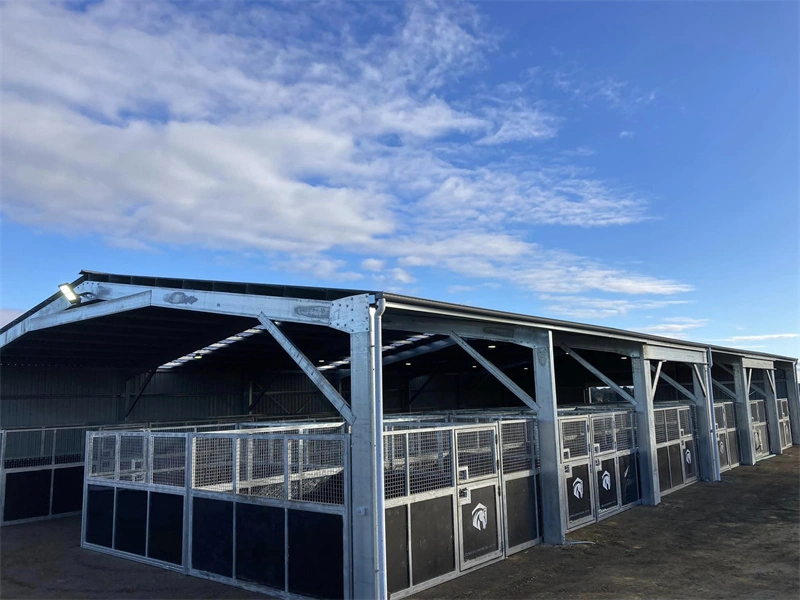
Ask what buyers are requesting, and you have a market report that needs no forecast. The published specification set is the answer, and its shape is instructive: 10 mm high-density polyethylene sheet in 2844×1194×10 mm or 3494×1194×10 mm, fully welded Q235 frames in 50×50×2.0 mm square tube, 4.0 mm wire at 50×50 mm mesh, panels close to 200 kg each.
HDPE is specified as rot-proof, UV-resistant, washable and chew-resistant, and it cushions a kick rather than transmitting it into a hoof. That is a materials argument that appears largely won in this category, though timber keeps its niches; the interesting part is what happened to the alternative.
The pressure lands in the middle of the range, not at either end. Buyers asking for documented coating, 10 mm sheet and a configuration table have moved up; much timber-and-tin work tends to stay with local fabricators, where flat-pack freight economics are less likely to apply. The growth story importers should plan for is that middle band widening, not a sudden new class of customer.
Two published configuration numbers show where the conversation is going. Six bays back-to-back need 11 side panels and 6 gates, and the raised steel roof option stands 2.65 m high and runs 4.6 m long with a 700 mm front overhang. Both are layout and durability questions rather than price questions — which is what a maturing market buys.
Freight shape and your own book
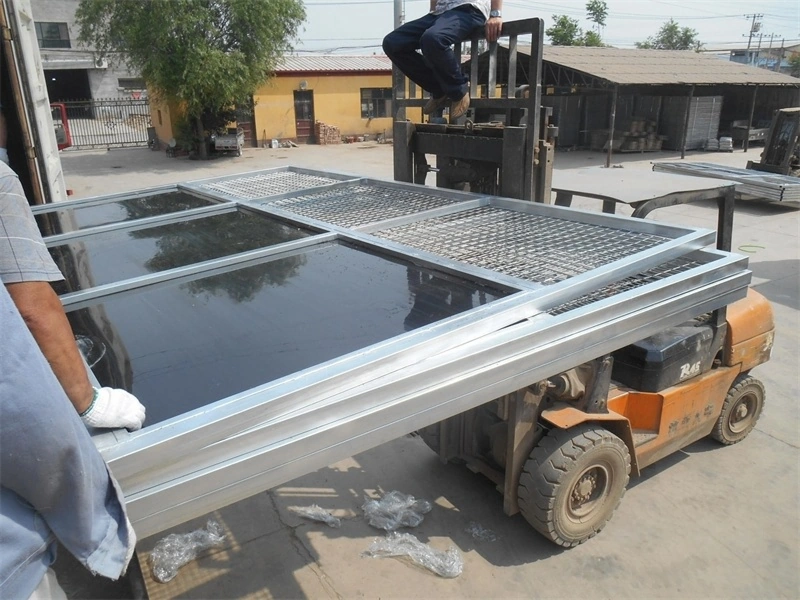
The second countable signal is how the product travels. Flat pack exists because a welded stable is mostly air otherwise, and reducing the volume each set occupies is what makes an ocean shipment to Australia or New Zealand worth sending. Air freight is offered for urgent items at extra cost — a valve for a missing gate or a replacement panel, not a supply strategy.
Input cost is the third. Steel and zinc move on their own cycle and pass into a quote whether or not anyone forecasts it, which is why a price sheet older than a season is a liability rather than a reference. The mechanics are laid out in how steel and zinc markets reach your stable quote, and the specification end of the same story — recyclable material and green spec requests — in sustainable equine construction.
Then count your own book, because it is the only demand data you will ever hold honestly. Three ratios tell you where 2027 is going: enquiries that become orders, the specification content of those enquiries, and the interval before a customer returns. A buyer who tracks those three needs no outlook report.
Who buys also shapes the year, and the four buyer types in this category read the same signals differently. A distributor imports flat pack to resell locally and watches minimum order, the price ladder and how many mixed sets fit a container. An equestrian centre or farm owner asks what the wall does under a thoroughbred’s kick and how long it stays washable. A professional stable builder buys components — galvanised frames, HDPE sheet, the aluminium rotary feeder — and sells the installation on top. A commercial owner may plan around depreciation on a portable structure, which is an accountant’s question rather than an engineer’s, and worth settling before the order goes in.
Frequently Asked Questions
Is there reliable demand data for horse stables in Australia?
Not for stabling specifically. Participation studies count horses, building data counts structures by class, and customs lines bundle stabling with other steel goods. Plan against capacity, specification requests and your own reorder interval instead.
What is the smallest order worth planning around?
Ten sets is the published minimum, against stated output of about 20 sets a week. That pairing defines both your entry size and the queue you join, which is why order timing matters more than chasing a lower unit price.
Which certificates should an importer expect to see?
Hot-dip galvanising is executed to AS/NZS 4680, and ISO and EN compliance is claimed at supplier level. Certificate numbers are not published and should be verified before a tender relies on them, and structural claims such as ISO 1090 are worth checking against the original document.
Will freight costs make 2027 orders more expensive?
Freight and metal prices move on their own cycles, so treat any quote with a date on it as conditional. Flat pack sizing is the durable lever because it lowers the volume each set ships at; payment terms and bulk lead time should be fixed in writing before you commit a season.
Conclusion
A usable stable market outlook for 2027 is built from constraints, not forecasts: weekly output against minimum order, the specification buyers now request, how the product ships, and what your own enquiry log says when you measure it.
Write those four down for every supplier you are comparing. The one that answers them precisely is the one worth a season’s orders.