Calculating the import duty horse stables requires more than a simple factory quote. It demands a precise understanding of HS codes, destination port fees, and GST implications specific to Australia and New Zealand. For distributors, the difference between a profitable margin and a loss is often hidden in the landing costs that standard supplier quotes ignore.
Most competitors focus on US or UK tariff rulings, leaving Oceania buyers exposed to local customs penalties and climate-specific warranty failures. A 42-micron hot-dip galvanized frame is not just a quality metric; it is a financial safeguard against the ‘white rust’ that destroys cheap imports in coastal environments. Correct classification under HS 7308.90 and understanding how flat-pack logistics reduce dimensional weight directly protects your bottom line.
HS Codes and Tariff Breakdown
Correct HS classification prevents 50% customs penalties and protects your distributor margins.
When importing prefabricated horse barns to Australia or New Zealand, treating the shipment as a single ‘structure’ is a costly error. Customs authorities require strict separation of metal frames (HS 7308.90) and non-metal HDPE panels (HS 3926). A commercial invoice that lumps these together invites random audits, potential reclassification penalties, and immediate margin destruction.
The distinction between a ‘structure’ and ‘agricultural machinery’ dictates your final duty rate. Metal frames fall under HS 7308.90.9090, which typically attracts a 5.7% duty in the US, but in Oceania, rates fluctuate based on the China-AFTA or China-ANZTEC Free Trade Agreements. By ensuring your supplier provides a split-line invoice, you can apply these specific FTAs to the metal components, potentially reducing your duty to 0%.
Beyond immediate duties, correct invoicing directly impacts your end-user’s depreciation schedules. Commercial horse investors in Australia treat portable stables as depreciating assets. If your invoice clearly lists the ‘portable asset’ components, your retail customers can claim faster tax write-offs, making your flat-pack kit significantly more attractive than competitors offering permanent, non-depreciable structures.
- HS 7308.90 (Metal Frames):: Applies to the hot-dip galvanized steel structure. Target duty rate is 5.7% unless a Certificate of Origin triggers a 0% FTA rate.
- HS 3926 (HDPE Panels):: Applies to the 10mm UV-stabilized plastic boards. Often taxed differently than steel, requiring a separate line item on the invoice.
- Hidden Landing Costs:: Destination port handling charges average $300-$600 per 40HQ container. These are paid before customs clearance and are non-negotiable.
- Warranty Liability Risk:: Electro-galvanized steel fails in coastal AU/NZ climates. Insist on 42-micron hot-dip galvanization to prevent ‘white rust’ and subsequent margin-killing returns.

The ‘Landed Cost’ Trap for Distributors
A $5,000 FOB order often becomes a $7,500 landed asset due to hidden AU/NZ logistics and GST.
Most distributors calculate margin based on the factory FOB price, ignoring the ‘hidden’ costs that destroy profitability in the Oceania market. The gap between a factory quote and the final shelf price is rarely 20-30%; it is often 50% or more when you factor in destination port handling, container unloading, and GST.
In Australia and New Zealand, GST is typically payable before customs clearance. This means you must liquidate cash to release your inventory before you have sold a single unit. If your supplier provides a loose ‘FOB’ quote without a full logistics breakdown, you are effectively gambling with your cash flow.
- Destination Port Charges: Handling and terminal fees average $300-$600 per 40HQ container, regardless of how much space you fill.
- GST Timing: 10% (AU) or 15% (NZ) GST is due immediately upon import. This cash outflow occurs before your first retail sale.
- Container Unloading: Third-party labor or forklift fees at the destination port can add another $200-$400 to your per-unit cost.
- The $5k to $7.5k Trap: A $5,000 FOB order typically incurs ~$1,500 in freight, port, and tax costs, turning a $5,000 asset into a $7,500 landed cost.
To mitigate this, insist on a landed cost calculation that includes flat-pack logistics. DB Stable’s flat-pack design maximizes container cube utilization, directly lowering the freight cost per unit. This efficiency is the only way to absorb the fixed costs of port handling and GST while maintaining healthy distributor margins.
| Component | Specification | Advantage |
|---|---|---|
| Steel Frame | 42-micron Hot-Dip Galvanized | Prevents ‘white rust’ in coastal AU/NZ climates, eliminating warranty returns |
| Panel Material | 10mm UV-Stabilized | Resists thermal expansion in 40C+ heat, ensuring structural integrity |
| Logistics Format | Flat-Pack Kit | Maximizes 40HQ container cube utilization, lowering landed cost by up to 15% |
| Customs Classification | HS Code 7308.90 | Accurate tariff classification prevents 50%+ customs penalties and delays |
| Documentation | Certificate of Origin | Leverages China-ANZTEC FTA to reduce or eliminate import duties |
Maximizing Tax Write-Offs for Resellers
Portable assets allow faster depreciation, giving your retail customers immediate tax relief and boosting your kit’s sales appeal.
For distributors targeting commercial horse investors in Australia and New Zealand, the ability to offer tax write-offs is a powerful margin protector. Unlike permanent concrete foundations, which are depreciated over decades, portable structures classified as movable assets can often be expensed or depreciated much faster under local tax laws. This distinction turns a simple hardware purchase into a financial strategy for your end-users.
To maximize these benefits, your retail customers need precise documentation from you. The key is ensuring the commercial invoice and product specifications clearly define the structure as a ‘portable’ or ‘modular’ unit rather than a permanent building. This classification supports the argument that the asset is not fixed to the land, allowing for accelerated depreciation schedules that improve cash flow for farm owners.
The ‘Hidden Win’ in this process is the ‘Portable Asset Certificate’ or similar technical declaration. By providing this document, you arm your B2B clients with the proof they need to claim these benefits. This reduces friction in the sales cycle, as commercial investors can immediately calculate their ROI based on tax savings, making your flat-pack kits significantly more attractive than competitor options that lack this administrative support.
- Documentation Requirement: Request a formal ‘Portable Asset Declaration’ or ‘Non-Permanent Structure Certificate’ from the factory. This must explicitly state the kit is designed for disassembly and relocation without structural damage.
- Invoice Clarity: Ensure the final commercial invoice separates the ‘Flat Pack Kit’ (movable asset) from any optional ‘Concrete Anchors’ or ‘Permanent Foundations’ (fixed assets). Mixing these categories can trigger higher duty rates and complicate tax deductions.
- Depreciation Advantage: Portable stables often qualify for immediate expensing or shorter depreciation periods (e.g., 5-10 years) compared to permanent barns (20+ years). This allows retail customers to deduct a larger portion of the cost in the first year, improving their net profit margins.
- Accountant Tools: Provide your customers with a simple ‘Landed Cost & Tax Deduction Calculator’ spreadsheet. Pre-fill it with your factory’s FOB prices and standard freight estimates. This tool helps them present a clear tax benefit case to their accountants, accelerating their purchasing decision.

Why Galvanization Dictates Profit Margins
Rust-related warranty claims are the primary hidden cost that destroys distributor profit margins in the Oceania market.
For distributors, the true cost of a horse stable kit is not just the FOB price; it is the landed cost plus the inevitable expense of handling customer complaints. In the coastal climates of Australia and New Zealand, ‘white rust’ (zinc carbonate) is a common failure mode for steel frames that do not meet specific thickness requirements. When a frame fails within the first 12 to 24 months, the distributor absorbs the cost of replacement shipping, local labor, and the permanent loss of retail trust.
Many budget manufacturers use electro-galvanized steel to lower their initial unit cost. While this looks acceptable in a factory showroom, it provides a microscopic zinc layer that offers almost zero protection against the high salinity and humidity of an Australian coastal environment. This material choice is a direct trap for distributors, as it shifts the long-term liability of corrosion entirely onto the local business.
To protect your margins, the structural steel frame must undergo hot-dip galvanization with a minimum thickness of 42 microns. This specific thickness creates a metallurgical bond that resists the aggressive environmental factors found in NZ and AU. By insisting on this specification, you prevent the 15-20% margin loss typically eaten away by warranty returns, returns processing, and negative reviews from angry retail customers.
- Electro-Galvanized Steel: Provides a thin, surface-level zinc coating. Highly susceptible to rapid corrosion in coastal AU/NZ climates, leading to high warranty claim rates.
- 42-Micron Hot-Dip Galvanized: Offers deep zinc penetration and superior corrosion resistance. This is the required standard to prevent white rust and ensure a 10-year structural lifespan.
- Margin Impact: Switching from electro-galvanized to hot-dip galvanization prevents the 15-20% profit erosion caused by customer complaints, returns, and replacement logistics.
Logistics: Flat-Pack Kits for Margin Protection
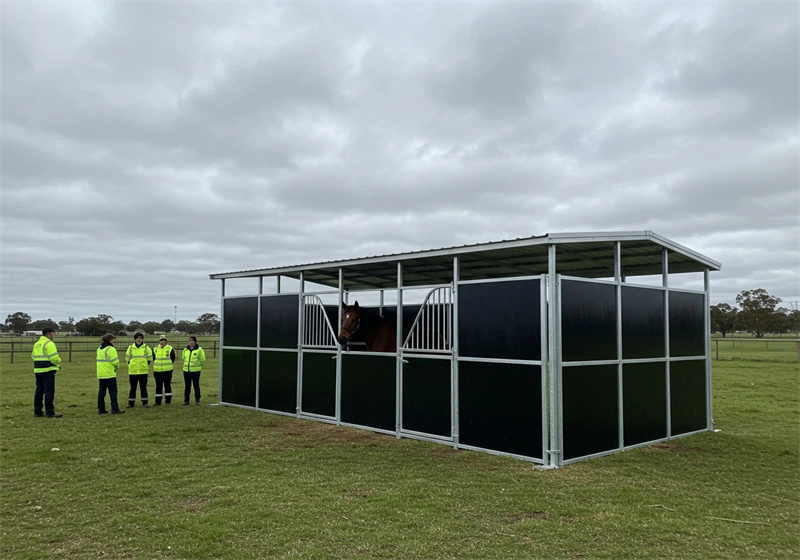
Flat-pack architecture reduces dimensional weight, directly lowering landed cost per unit by up to 15% compared to assembled units.
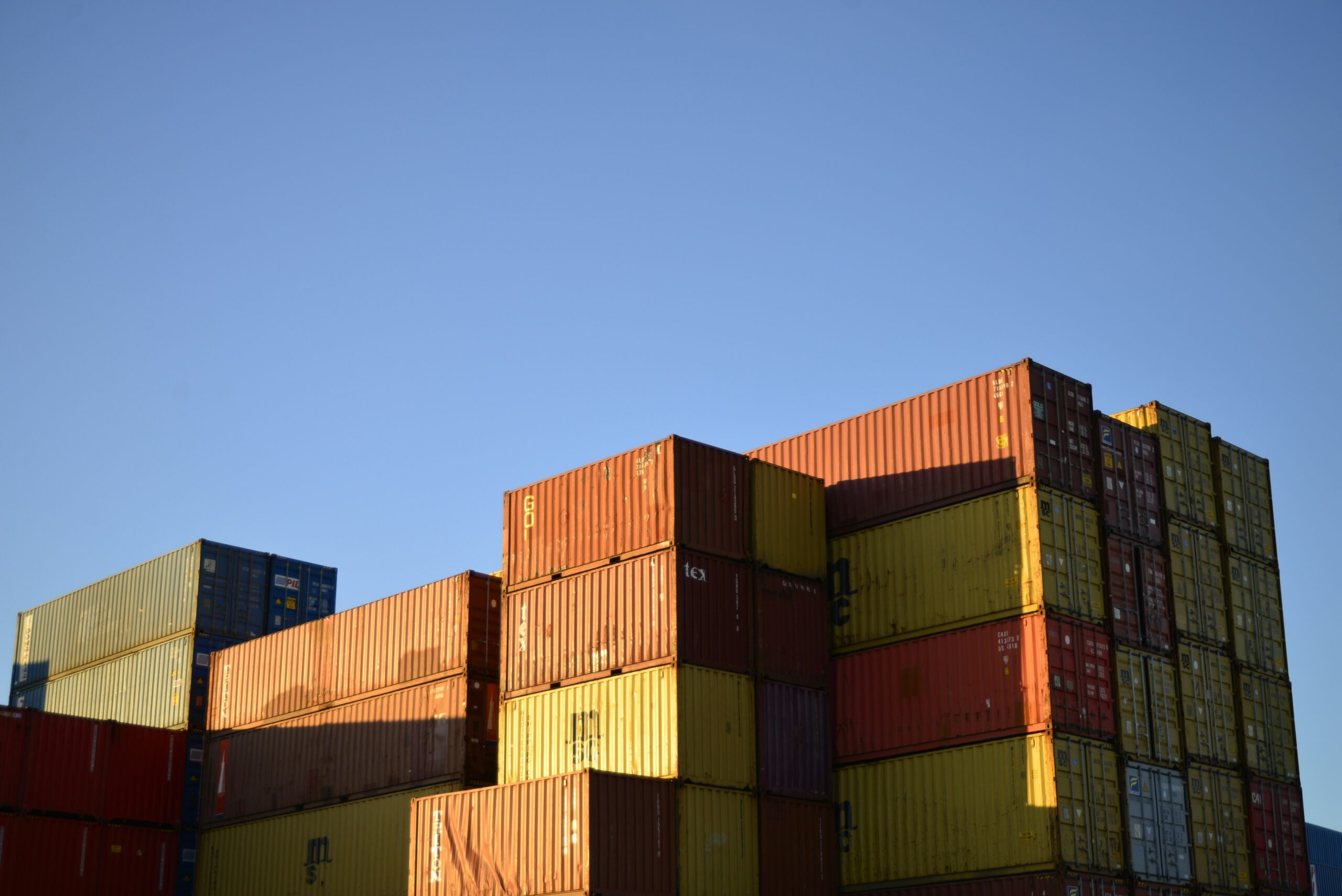
Most distributors unknowingly pay for ‘air’ in their shipping containers. When you import prefabricated horse barns in a pre-assembled or partially assembled state, the dimensional weight of the metal frames and 10mm UV-stabilized HDPE panels creates massive void space. This inefficiency destroys your margin, as you are paying ocean freight rates for empty volume rather than sellable inventory.
The flat-pack kit model is the only proven method to maximize container cube utilization. By deconstructing the hot-dip galvanized steel frames and nesting the HDPE boards, we compress the volumetric footprint significantly. This allows you to load more units into a single 40HQ container, effectively diluting the fixed costs of destination port handling ($300-$600 per container) across a larger number of sellable stalls.
- Assembled Units: High dimensional weight creates empty void space, severely limiting the total quantity per 40HQ container and inflating the freight cost per individual unit.
- Flat-Pack Kits: Optimized component nesting maximizes container cube utilization. This architectural choice directly lowers the landed cost per unit, protecting your distributor margins against volatile freight rates.
Conclusion
Protecting your distributor margin in Australia and New Zealand requires precise HS code classification under HS 7308 and strict adherence to 42-micron galvanization standards. Ignoring destination port fees or settling for inferior materials leads to margin erosion through GST overpayments and rust-related warranty claims.
Frequently Asked Questions
What are the current import duty rates?
Metal frame horse stables typically attract a 5.7% import duty, though specific rates vary by country and component classification. Distributors must verify the weighted average duty rate based on the separation of. Verify the weighted average duty rate via your commercial invoice.
Are import duties tax deductible?
Yes, import duties are generally deductible as a cost of acquiring trading stock for your business. This deduction helps offset the landed cost, improving your overall margin on resold stables. Treat duties as a deductible cost of acquiring trading stock.
What is the HS code for horse stables?
Metal frame horse stables are typically classified under HS code 7308, while HDPE components may fall under HS 3926. Correct classification is vital to avoid customs penalties and ensure accurate duty. Classify metal frames under HS 7308 and HDPE under HS 3926.
How to calculate the import duty?
Calculate duty by applying the tariff rate to the customs value, which includes the product cost, insurance, and freight. You must also account for destination port fees and GST, which can significantly. Include freight, insurance, and port fees in your customs value.
What are the IRS rules for horse business?
The IRS allows deductions for business-related horse expenses, including stable construction and maintenance, if the activity is for profit. Portable structures may offer accelerated depreciation benefits, reducing your taxable income in. Consult a tax professional to maximize depreciation benefits for portable assets.