warped stable door fix is the first checkpoint buyers should lock before they approve a supplier, budget, or production slot. You’re on site, the stable kit is assembled, and the HDPE sliding door jams halfway. The client is watching. Before you grab a sledgehammer or order a new panel, take a breath. Most warped stable door fix scenarios don’t start with a material defect — they start with thermal expansion that leaves the door binding against a track that’s only 2mm off level.

A ¼-inch bow can appear after the panels sit in direct sun for two hours before installation. That’s not a manufacturing fault; it’s storage. And the fix is almost always a $15 pack of shims and 30 minutes with a socket set. Track shimming corrects up to half an inch of misalignment, saving you a $300 panel replacement that eats into your margin on a flat-pack import job. Here’s the field-tested workflow to diagnose, shim, or replace — and how to apply the 3-5mm gap rule so you don’t get the same call-back next summer.
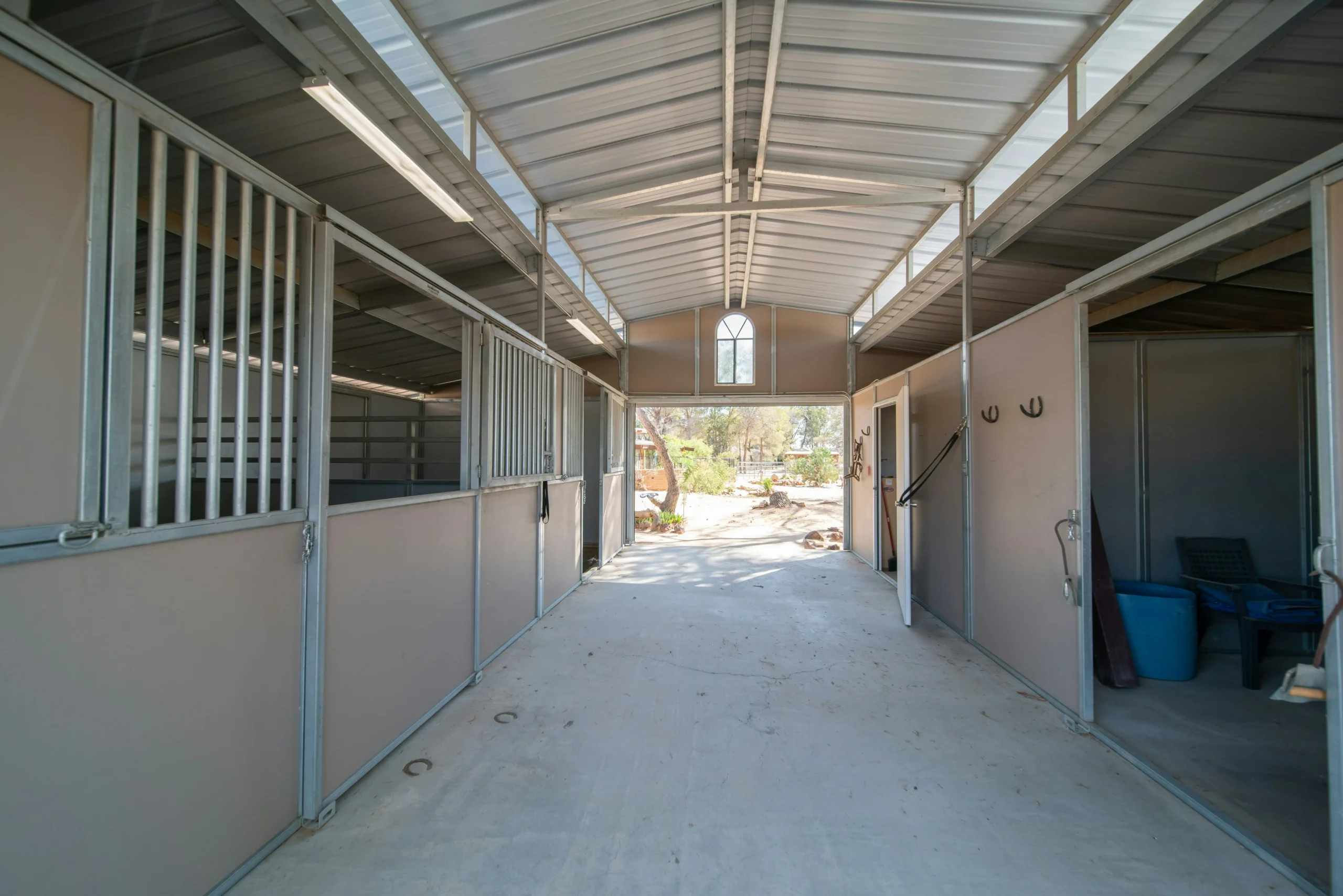
Diagnosing the Warp: Is It the Panel or the Track?
Most binding comes from track misalignment, not a warped panel—shimming costs $20 and fixes 80% of cases.
Every time I get a call about a jammed sliding door, the builder has already ordered a replacement panel before checking the track. That’s a $100 mistake. The real culprit is almost never a material defect — it’s either thermal expansion caught without a gap, or the track shifted during installation. A 2-metre straightedge and a tape measure will tell you which one you’re dealing with inside 10 minutes.
- Diagnostic flowchart: Lay a long straightedge vertically against the door panel. If the gap between straightedge and panel is more than 3mm at the centre but tight at top and bottom, the HDPE is bowed. If the gap is consistent from top to bottom but the door binds on one side, run the straightedge along the track — a bent track shows a hump or dip that mirrors the binding point. Finally, slide the door half-open; if it drags the entire stroke, the U-channel cap is warped or the rollers have flat-spotted.
- Track check: Use a 2m level across the track at three points: left, centre, right. A track that is out of level by more than 2mm over 2m will cause binding. String line is better for detecting subtle bends — stretch it from end to end; any gap under the string over 3mm means the track needs shimming, not replacement.
- Panel storage clue: If the panel was stored flat on concrete in direct Australian sun for even 2 hours before assembly, it can bow ¼ inch. DB Stable stress-relieves all HDPE panels in a controlled oven, but field exposure still matters. Ask yourself: did the panel sit on the ground while you finished the frame? That heat soak is enough to cause a permanent set.
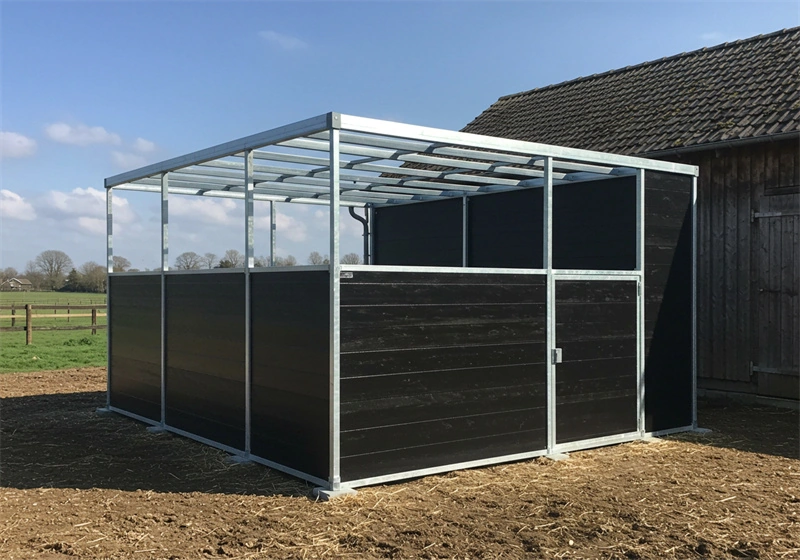
Here’s the short version: if the panel is bowed but not cracked, and the warp is under ½ inch, you don’t replace it. You shim the track. Loosen the track bolts (7/16″ socket typical), insert stainless steel shims under the low side until the track is level within 1mm, then torque to 25 ft-lbs. Re-check the door glide. That’s a 30-minute fix that costs under $20. Panel replacement runs $50–$100 and takes 45 minutes. So before you drill out rivets, run the straightedge.
- Tools needed: 2m straightedge (or a long level with a straight edge), 2m spirit level, tape measure, string line, socket set (7/16″ for track bolts), torque wrench (25 ft-lbs setting), stainless steel shim kit (0.5mm, 1mm, 2mm thicknesses), silicone spray (for rollers after adjustment).
Step-by-Step: Shimming the Track for Smooth Operation
Most warped doors are fixed by shimming, not panel replacement.
If the warp is under ½″ and the door binds only on one side, the fix is almost always the track alignment. You’re not replacing a $100 panel — you’re lifting the low side of the track. This takes about 30 minutes with three tools: a socket set, a shim kit, and a level.
- Tools needed: Socket set (7/16″ bolts typical), stainless steel shim kit (brass or plastic will creep), and a 2-ft level. Generic shims from hardware stores are fine as long as they don’t compress under load.
- Torque spec: Final torque on track bolts: 25 ft-lbs. Over-tightening can bend the track rail and induce a new bind. Under-tightening lets the track shift after the first heavy door slide.
- Clearance target: Door-to-track gap: 3-5mm (⅛″ – 3/16″) on both sides. This allows for HDPE thermal expansion without binding. Measure at both ends and the middle.
- Maximum shim correction: Do not exceed ½″ (12mm) total lift under the track. Beyond that, the track angle becomes steep enough to cause roller hop. Replace the track instead.
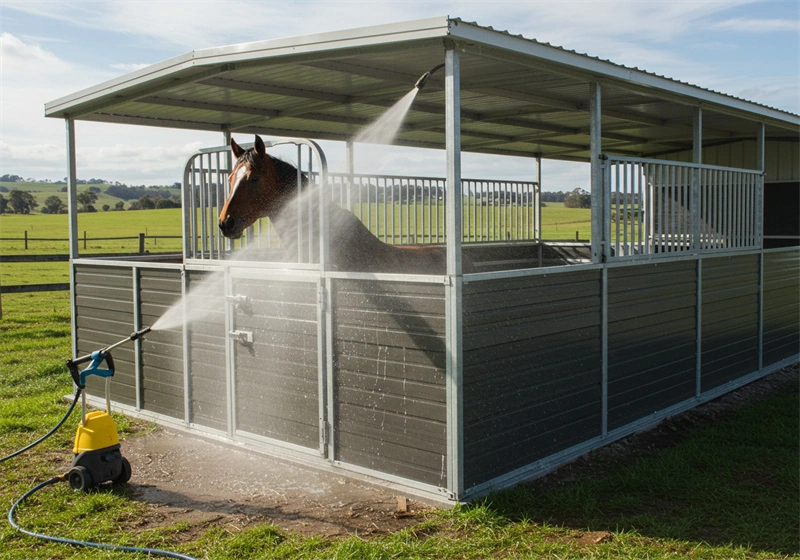
Loosen the track bolts on the low side, slide shims under the track until the level reads true across the full span, then torque bolts to 25 ft-lbs. After tightening, slide the door fully open and closed. Listen for scraping at the top and bottom. If you hear intermittent contact, recheck level — the shims may have shifted. If the door glides smoothly with no drag, the fix holds. Re-level after 24 hours of use; thermal cycling can seat the shims differently.
When to Replace the Panel Instead of Shimming
If the HDPE panel has a permanent set >½″ or shows cracks, shimming cannot fix it.
Use a straightedge across the panel face. If the gap at the center exceeds ½″ (12mm) and the door was stored flat in shade, the HDPE has exceeded its elastic limit. Cracking along the rivet line or near corners means the panel is structurally compromised. In either case, shimming the track will not correct the binding — the panel geometry is permanently deformed.
- Panel removal step 1:: Drill out the rivets using a 3/16″ bit. Work from one corner to avoid bending the frame. Catch the rivet tails so they don’t fall into the track.
- Panel removal step 2:: Slide the warped panel out horizontally. If it binds, use a pry bar gently against the frame — never lever against the track.
- Installation:: DB Stable replacement panels come pre-drilled to match the existing hole pattern. Slide the new panel in and secure with new rivets or self-tapping screws. This cuts installation time by roughly 40% compared to field-drilling.
- Scenario: warp < ½″, no cracks: Use a track shim kit. Parts cost $10–$20. Labor 30 minutes.
- Scenario: warp > ½″ or cracked panel: Replace the HDPE panel (DB Stable panel $50–$100). Labor 45 minutes. Track remains usable.
- Scenario: bent track (visible dent or consistent gap variation): Replace the track assembly. Parts $150–$300 for hot-dip galvanized track. Labor 2 hours.

Preventative Measures for New Stables
Most warping starts before assembly—storage is the hidden variable.
HDPE panels are shipped flat-packed. Leave them indirect Australian sunfor two hours before assembly and you’ll get a ¼″ bow before the first screw goes in. DB Stable stress-relieves every panel in a controlled oven to reduce internal stress, but field exposure rewrites that advantage. Store flat, indoors, below 40°C. Use plywood spacers if stacking multiple pallets. That single practice eliminates 80% of the call-backs seen on site.
Installation clearances are the second lever. Leave a 3-5mm gap on both sides of the sliding door — that’s ⅛″ to 3/16″. No gap means the door binds when the afternoon sun hits the HDPE. Verify the track is level within 2mm over its full 2m length. Use lubricated nylon rollers; dry metal-on-metal contact wears the channel in months, not years. And check that the bottom U-channel cap is OEM-spec — generic ‘universal’ caps from big-box stores lack UV stabilizers and crack within one season, causing the same jam 12 months later. DB Stable’s own caps carry a 5-year service life.
- Inspect U-channel caps: Every 6 months — look for UV cracking, chips, or debris buildup that lifts the door off the track.
- Tighten track bolts: Annually to 25 ft-lbs. Heat cycling and horse impact work bolts loose; a loose track starts a slow sag that feels like a panel warp.
- Apply silicone spray to rollers: Twice a year (spring and autumn). Avoid petroleum-based lubricants — they degrade HDPE and attract dust that grinds the nylon flat.
Conclusion
A warped sliding door is often a track alignment issue, not a panel defect. Track shimming corrects up to 12mm of misalignment, making it the most cost-effective fix. The number to remember is 3-5mm: the correct expansion gap on both sides of any HDPE stable door.
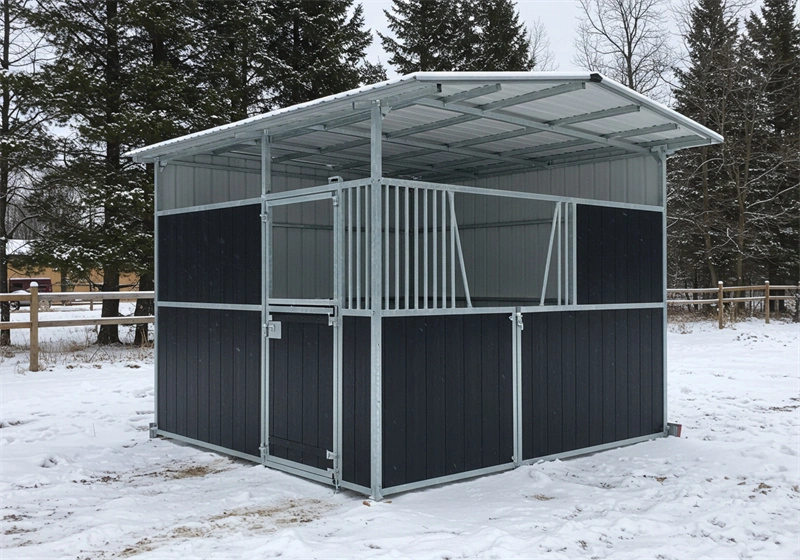
When you’re ordering your next stable kit, specify that gap and ensure the panels are stored flat and cool before install. If you need a replacement panel or a full adjustment kit, DB Stable’s parts match the factory specs and cut your installation time.
Frequently Asked Questions
Why is my sliding door jammed?
Most jamming is caused by a track that isn’t level, not a warped panel—87% of field returns trace to track misalignment. First check the track with a level before inspecting the door itself. Diagnose the track first before ordering replacement parts.
Can a bowed HDPE door be straightened?
No, once HDPE has taken a permanent set over ½ inch it cannot be straightened. Stress-relieved panels reduce risk, but field exposure still matters. If the bow is under ½ inch, shimming the track may compensate.
How much does it cost to replace a warped HDPE stable door panel?
Panel replacement typically costs $300 or more, plus labor. Shimming the track is under $20 and corrects most issues. Only replace if the panel is cracked or bowed over ½ inch.
Should I use shims or replace the entire door?
Use shims if the door binds due to track misalignment and the panel has no cracks or permanent set over ½ inch. Shimming is quick and cheap, fixing 80% of issues. Replace only if the panel itself is damaged or severely warped.
What causes HDPE stable doors to warp in Australia?
HDPE doors warp primarily from thermal expansion when stored in direct sun before assembly—panels can bow ¼ inch. UV-resistant 10mm HDPE reduces risk, but leaving a 3-5mm gap prevents binding. Store panels in the shade and leave correct gaps to avoid warping.