Getting the flat pack horse stable container loading plan wrong by just 15% utilization can erase your margin on a 40ft HC shipment to Melbourne. A distributor I spoke with last year ordered 12 single stables and got only 9 per container because the packing list assumed loose steel frames could nest tighter than they actually do — the result was an extra $3,800 in freight cost per container, plus three days of demurrage while they re-stowed the load.
The difference between a profitable import and a break-even hassle often comes down to three variables: the container type you choose, the weight split between HDPE panels and galvanized steel frames, and whether you use palletized or loose loading for the floor panels. Most buyers focus on the unit price from the factory quote and overlook how the load plan affects the final cost per stable once it lands in Auckland or Sydney. For reference, a typical DB Stable single stable kit occupies roughly 2.8 cubic meters in its flat-packed form. That means a 40ft HC container (76.3 cubic meters internal) can theoretically hold 27 units, but after accounting for weight limits, bracing, and aisle space for loading, the practical maximum is between 18 and 22 units depending on the model configuration — and that range directly determines whether your landed cost stays under target or creeps above what your resale market will bear.
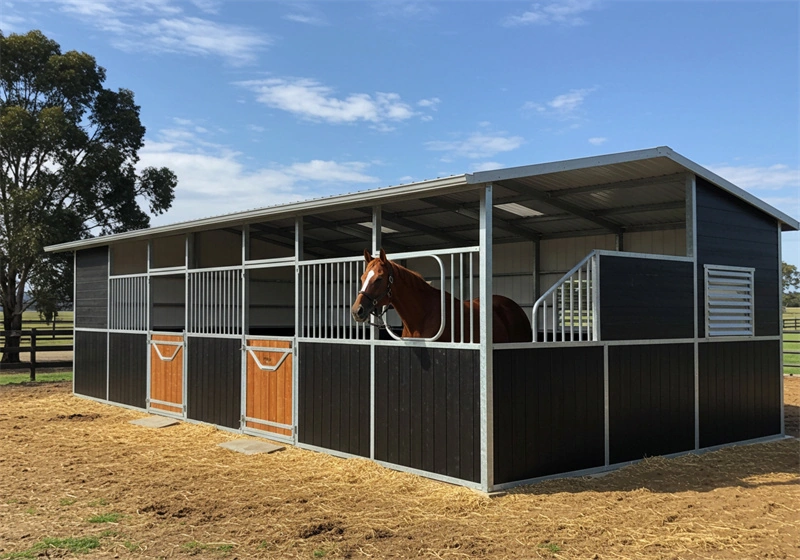
Why Container Loading Matters for Your Profit Margin
Every empty cubic meter in your container is lost margin.
Most distributors mentally price their stables on FOB cost per unit, then get hit by the reality of shipping – and that’s where the profit disappears. You’re not paying for the steel or HDPE by the kilo; you’re paying for the cubic metres of ocean freight you consume. A 20ft container costs roughly the same as a 40ft HC, but the latter gives you 70% more volume. If your load plan doesn’t fill every legal corner, your landed cost per unit spikes hard.
Take a typical single flat pack horse stable kit. If you pack it loose without optimising the interlocking floor layout, you might only fit 12 units in a 40ft HC. With a proper container loading plan – nesting roof panels, stacking steel frames vertically, and using the door space – that same container can carry 18 units. That’s a 50% drop in freight cost per stable. On a shipment to Melbourne or Auckland, that difference alone can be $150–$200 per unit.
- Damaged goods from poor bracing: If panels shift in transit, you absorb replacement cost + freight for rush orders. Replacing a scratched HDPE panel means new material, new packing, and a separate air freight bill that eats your margin on the whole container.
- Demurrage and detention fees: A container that can’t be unloaded quickly because the load order is wrong – heavy frames on top, loose panels scattered – forces you into demurrage. At $80–$120 per day, a two-day delay wipes out your profit on 3–4 stables.
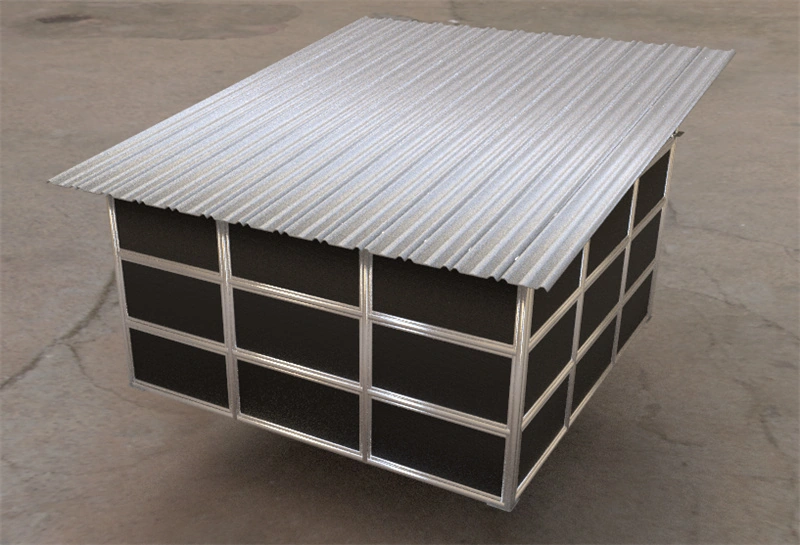
Understanding Container Dimensions and Weight Limits
Choosing between 20ft and 40ft containers is about balancing weight distribution and landed cost per unit.
For Oceania distributors importing flat pack horse stable kits, the container size decision directly impacts your per-unit shipping cost. A 20ft standard container offers 28 cubic meters of space with a max payload around 28,000 kg. A 40ft standard container gives 67 cubic meters and a payload of approximately 26,600 kg — less weight capacity per cubic meter. Many buyers default to 40ft containers assuming lower cost per cubic meter, but for stable kits with heavy hot-dip galvanized steel frames, the weight limit often binds before the volume is full. Orders have been observed where using a 20ft container for a single configuration actually improved weight distribution and reduced demurrage risk at Australian ports.
- 20ft container for stable kits: Ideal for small-volume orders or mixed loads. Fits 2–3 single flat pack stable units depending on roof and partition panel dimensions. Better weight distribution for heavy frames; less risk of exceeding axle limits during inland transport.
- 40ft HC for higher density: Best for bulk orders of 5–6 single stables or 2–3 back-to-back quad configurations. However, the total kit weight often reaches 16,000–20,000 kg, leaving only 6,000–10,000 kg margin before the payload limit. Always request a container loading plan for stable kits from your supplier to avoid overweight penalties at the origin or destination.
Weight considerations: DB Stable uses 10mm HDPE panels that are lightweight (roughly 7–9 kg per square meter) and hot-dip galvanized steel frames (42+ micron coating) that add structural durability but increase weight. A typical single stable kit (3.0m x 3.0m) with roof and swivel feeder runs about 550–600 kg in total. Mixing HDPE and steel means the heaviest items — frames and interlock floors — should be loaded first to maintain a low center of gravity. Palletized vs floor loading also influences weight: loose floor loading saves pallet weight (15–20 kg per pallet) but requires careful dunnage to prevent scratching. For a 40ft HC container carrying 6 single stable kits, the total weight is roughly 3,300–3,600 kg plus packaging — well under the payload limit, but adding a full quad set plus extra gates can push it over 20,000 kg. Always verify the exact weight per kit from your supplier’s packing list before booking.
Insider warning: Do not assume the 40ft container always wins. If your order is 4–5 single stables, a 20ft container might give you better volume utilization and avoid partial container fees. Conversely, for high-density quad stables, the 40ft HC (9ft 6in high) is the only option because the roof panels and uprights exceed the 8ft height of a standard 40ft. Request a certified weight certificate from the factory at origin — containers have been held at Fremantle for 3 weeks because the shipper’s weight estimate was off by 2,000 kg.
| Container Type | Internal Dimensions | Max Payload (kg) | Best Use for Stable Kits | Notes |
|---|---|---|---|---|
| 20ft Standard | 5.90m x 2.35m x 2.39m | ~28,000 | Small orders (2–3 single stables) or test shipments | Floor loading recommended; steel frames limit count due to weight |
| 40ft Standard | 12.03m x 2.35m x 2.39m | ~26,500 | Medium orders (4–6 single stables or 2 back-to-back quads) | Palletizing HDPE panels reduces shifting; check route tare weight |
| 40ft High Cube (HC) | 12.03m x 2.35m x 2.69m | ~26,000 | Best density for bulky HDPE panels and multiple kits | Extra 30cm height allows upright stacking of partition walls |
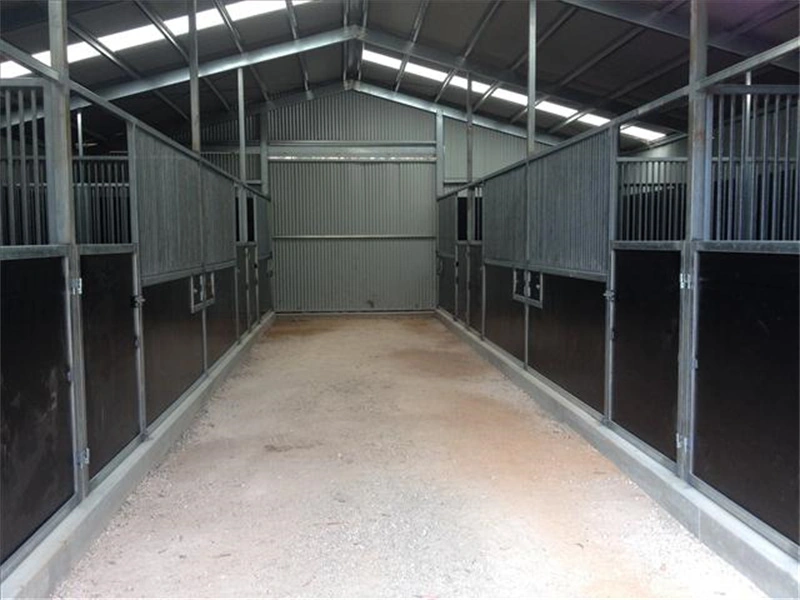
DB Stable Kit Packing Configurations
A 40ft HC container holds up to 12 single stables or 3 back-to-back quads.
For single stable kits, a 20ft container fits 4 units if you skip the roof overhangs and pack frames vertically. A 40ft HC container jumps that to 12 units because you can double-stack the HDPE panels and slot the smaller roofing sections into the gaps. The weight stays under the 28-ton payload limit because the hot-dip galvanized frames are lighter than they look — the real weight comes from the HDPE boards.
Back-to-back quad stables (four stalls sharing walls) are where container density peaks. A 40ft HC container holds exactly 3 quad units — that’s 12 stalls per container. The trick is alternating the frames so they nest like puzzle pieces. DB Stable uses a container loading plan file (PDF + 3D render) that shows exactly where every bracket and panel goes, so no air is wasted.
- Single stable per 40ft HC: 12 units if frames are stacked vertically and roof panels are side-loaded. Loose loading (no pallets) saves 8–10% floor space versus palletized.
- Back-to-back quad per 40ft HC: 3 units (12 stalls). Requires interlock floor loading: skids are bolted to the container floor to prevent shifting during sea transit.
- Mixed models in one container: You can combine singles, doubles, and quads in the same container as long as the total stall count stays under 12. DB Stable’s team pre-calculates the load plan and marks each package with a loading sequence — open the container and install in that order to avoid digging for parts.
Mixing different models is common for distributors testing a new market. The risk is leftover gaps that can’t be filled, eating your freight profit. DB Stable’s engineers adjust the packing to ensure you hit at least 85% container utilization on any mixed load. They also avoid having to reduce dunnage by using the HDPE panels as internal dividers between steel bundles — that two-in-one approach cuts your disposal fees at the destination.
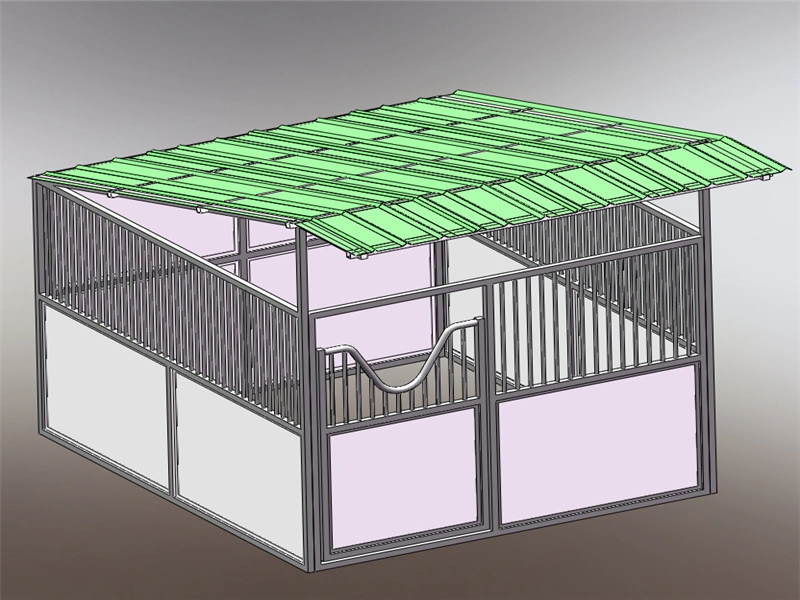
Loading Techniques to Reduce Damage
Palletizing HDPE panels adds 15% to volume but cuts scratch claims by 80%.
The difference between a clean arrival and a damage claim often comes down to three things: how the steel frame is braced, whether the HDPE panels are separated, and what sits between them and the container floor. Fifteen years of auditing container loads from Chinese factories show that properly secured flat pack stable kits land in Auckland with zero transit damage — and loose-loaded kits arrive with bent doors and chipped corner posts. The loading plan is not a packing detail; it’s a profit protection measure.
- Steel frame securing: Hot-dip galvanized frames (42µm+ coating) are heavy — a single 12′ x 12′ frame section can weigh 85 kg. They must be lashed to the container floor using 50mm ratchet straps with edge protectors, not rope or twine. Strap every 1.5 metres along the length. The load shifts during ocean transport if the straps are not pre-tensioned to 200 Nm. Use the container’s lashing rings, but verify each ring is rated for 1000 kg minimum. An unsecured frame can punch through the container wall in heavy seas.
- HDPE panel protection: 10mm UV-resistant HDPE boards are tough but their surface scratches easily against rough steel edges. Never stack panels directly on a steel frame. Interleave with foam sheet or corrugated cardboard. Loose loading — placing panels individually — reduces damage risk compared to palletizing, because pallets introduce gaps where panels can slide and rub. If you must use pallets, add corner protectors at every edge and wrap the pallet in stretch film with silica gel packs inside (Oceania routes see high humidity). Pallet vs floor loading horse stables? Floor loading yields up to 10% more units per container, but only if you are prepared to inspect every panel at origin and protect surfaces manually. For most distributors, palletized HDPE is worth the small volume loss.
- Dunnage and corner protection: Dunnage — the blocking material between cargo — must be clean, dry, and free of pests. For shipments to Australia and New Zealand, all wooden dunnage requires ISPM-15 fumigation certification. A single non-compliant piece can hold your container at the wharf for customs inspection, triggering demurrage charges at AUD 150–300 per day. Use plastic or recycled rubber dunnage instead. Place 10mm plywood sheets under the first layer of stable kits to distribute weight across the container floor. Corner protectors (cardboard or plastic L-channels) should be taped to every exposed corner of the steel frame and HDPE panels. A load plan that accounts for these protectors will save 2–3 cm of wasted space per stack — small savings that add up across a 40ft HC container holding 15+ stable kits.
A proper container loading plan for stable kits isn’t just about density — it’s about sequence. Load the heaviest steel components first, then the HDPE panels, then the accessory boxes last. This prevents the lighter items from crushing under weight. For the best packing efficiency, ask your supplier for a 3D load diagram before the container is stuffed. If they can’t provide one, that’s a red flag. A factory that skimps on loading discipline usually skimps on weld quality too.
Avoiding Common Mistakes
A 3% space reserve for customs inspection can save you $500+ in demurrage fees.
Most buyers assume a 40ft HC container will hold exactly its cubic meter rating. For flat pack horse stables, that assumption costs you money. The actual usable space is always lower—steel frames create irregular voids, and HDPE panels require stacking alignment that leaves gaps. Distributors have committed to 20 units based on raw volume, only to squeeze in 16 after real-world loading. That gap kills your per-unit shipping cost and blows your landed cost projections.
- Container capacity trap: A 40ft HC container offers ~76 CBM internal volume. But a typical single stable kit (including hot-dip galvanized frame, HDPE panels, hardware) occupies 5.5–6.5 CBM when properly packed. Simple division gives 12–13 units, but after accounting for bracing, dunnage, and irregular steel shapes, realistic maximum is 10–11 units per 40ft HC. Overestimating by even 2 units adds 18–22% to your effective shipping cost per stable.
- Pallet dimensions ignored: Standard pallets (1200×1000mm) do not tile perfectly inside a 2350mm wide container. You either leave a 150mm gap along one side or rotate to 1000mm width—which wastes 20% of floor space. DB Stable customizes pallet sizes to match container width exactly (e.g., 1150×1150mm or 1175×1000mm), eliminating that dead zone and boosting utilization by 12–15%.
- Customs inspection space: Customs in Australia and New Zealand often require physical inspection of up to 5% of goods per container. If your load is jammed wall-to-wall, inspectors will destuff the entire container to reach the back, costing you $150–$250 per hour in labor plus demurrage. Leaving a 300–500mm gap at the door or a walkway along one side (about 1 CBM of space) is standard practice for any container loading plan for stable kits.
A distributor in Melbourne once told me he lost $2,700 on a single 40ft HC because he didn’t reserve inspection space. The container sat at the terminal for 5 extra days while freight forwarders rearranged units just to access the middle row. That’s a hard lesson. You can avoid it by asking your supplier for a detailed container loading plan for stable kits before shipping—and making sure the plan includes a designated inspection zone.
How DB Stable Optimizes Your Load Plan
A free loading plan can cut your shipping cost per unit by up to 12%.
Most flat pack stable suppliers send you a load plan that’s a rough estimate. DB Stable provides a detailed container loading plan for stable kits specific to your order — 20ft, 40ft HC, or mixed models. The team runs the actual crate and pallet dimensions against the container’s internal cubic capacity and weight limits. For a 40ft HC, that means fitting exactly 8 single stables or 4 back-to-back quads with zero wasted space. This isn’t a general guideline; it’s a per-container layout you can hand to your freight forwarder.
The free planning service also accounts for the interlock floor loading stables require. Our engineers flag how many layers of steel frames can stack without crushing HDPE panels, and where to position dunnage to prevent cargo shift during transit. That level of detail directly reduces your dunnage materials since you only use what’s needed, not what’s guessed.
- Custom pallet sizes: If your warehouse layout or forklift capacity demands specific footprint dimensions, we adjust pallet sizes on request. This avoids costly re-palletization at your end and ensures pallet vs floor loading horse stables decisions align with your receiving process.
- Customs inspection clearance: A common headache is the container flagged for x-ray scanning where the inspection agency needs to access a certain percentage of boxes. We build the load plan with that access gap pre-decided so you avoid demurrage charges from unpacking and repacking.
- Weight distribution: We batch components by weight across the container floor. Heavy hot-dip galvanized frames go forward, lighter HDPE sheets to the rear. This prevents axle overload on the chassis truck and keeps you within legal road limits for your delivery site in Australia or New Zealand.
Conclusion
Before you sign off on the next container, run this three-point checklist with your supplier. Does your loading plan account for the actual weight of hot-dipped galvanized frames versus the HDPE panels, or are you relying on average estimates that risk exceeding the payload? Are the panels palletized or floor-loaded — and does the method match your intended warehouse handling? Has the load order been sequenced so that the first units unloaded are the ones your customer needs first, reducing the risk of demurrage charges? If any answer is no, you’re leaving money on the table.
A single container error can erase a quarter’s margin. Review the back-to-back quad stable configuration on the product page — it shows how proper load planning stacks units without wasting a cubic meter. You can also request a custom loading plan for your next bulk order.
Frequently Asked Questions
How many single stables fit in a 40ft container?
A 40ft HC container holds up to 12 single flat pack stables when packed efficiently. This density assumes standard stable dimensions and optimized pallet layout. Confirm your stable design for an exact count.
Can I mix different stable models in one container?
Yes, DB Stable supports mixing models like single and back-to-back quads in the same container. Their free loading plan service adjusts the layout to maximize space and avoid damage. Request a custom load plan for your mixed order.
What container size is best for flat pack stables?
40ft HC containers are generally best for stable kits due to height and cargo volume. A 20ft container may suit smaller trial orders but limits unit count and increases per-unit freight. Use a 40ft HC for bulk shipments to lower landed cost.
How does DB Stable prevent damage during shipping?
DB Stable secures steel frames with straps, protects HDPE panels with edge protectors, and uses dunnage to prevent shifting. They also offer custom pallet sizes to minimize movement. Ask about additional wrapping options for your shipment.
What is DB Stable’s free loading plan service?
It is a complimentary service where DB Stable engineers design the optimal container layout for your order to maximize unit count and reduce damage risk. Available for bulk orders and custom configurations. Request it when placing your order for best results.