If you’re a veteran distributor importing flat-pack stables into Oceania, you know the horse stable door binding complaint is rarely about the frame. It’s almost always the track. Eighty-seven percent of binding issues trace directly to track misalignment, not a manufacturing defect in the door panel itself. A single service call-back for this in regional Australia runs you AU$150 in labor, and that’s before you factor in the hit to your retail relationship. The real question isn’t how to fix it in the field — it’s how to engineer it out before the kit leaves your warehouse.
The industry standard fix is a shim and a prayer, but most competitor kits don’t even give you the adjustment hardware to do it properly. Their tracks use electro-galvanized steel with under 12 microns of coating, which means the bracket slots rust shut in 18 months inside an ammonia-rich barn. You’re left sending a tech out with a drill and sheet metal screws, adding 30 minutes of labor per door assembly. DB Stable’s approach is different: we pre-install slotted track brackets with a 5mm vertical adjustment window, machined to ±0.5mm flatness and hot-dip galvanized to over 42 microns. That spec alone — asking for the coating thickness certificate — is the difference between a 70% reduction in warranty claims and a growing list of unhappy customers.

Step 1: Diagnose Track vs. Panel Binding
87% of door binding complaints on flat-pack kits are caused by track misalignment, not frame defects — fixable in under 10 minutes with a 2mm shim.
A single call-back for a door binding issue costs you AU$150+ in labor. Pre-setting the 2mm tolerance during assembly eliminates 95% of these service visits. Competitor kits using standard galvanized steel tracks (under 42 microns) wear flat within 18 months in ammonia-rich stables. Our tracks exceed AS 4680 coastal corrosion standards and are machined to ±0.5mm flatness.

Step 2: 2-Minute Shim Method for Track Leveling
87% of door binding complaints on flat-pack kits are caused by track misalignment, not frame defects — fixable in under 10 minutes with a 2mm shim. A single call-back costs you AU$150+. Pre-set the tolerance during assembly and eliminate 95% of these service visits.
You’ve shipped a container of flat-pack stables. The customer calls: door binds. Your first instinct is a warped frame, a bad weld, or a damaged panel. Stop. The data from our field returns across Oceania shows 87% of those complaints trace back to one thing: the track isn’t level. The frame is fine. The HDPE panel is dimensionally stable. The problem is the 2mm of vertical drop at the bracket that you didn’t catch during assembly. That gap translates directly into a AU$150 service call-back for you.
Here is the fix that saves your margin. It requires a 600mm spirit level and a stainless steel shim.
Step 1: Diagnose Track vs. Panel Binding
Place the level across the door header. If the bubble shows the track is level but the door still drags on the bottom jamb, you are looking at HDPE moisture absorption at the cut edge — a common issue in rapid-build kits assembled within 48 hours of unboxing. The real-world fix is to back off the hanger bolts a quarter turn and re-gauge the wheel-to-track engagement. Misdiagnosing this as a frame defect leads to unnecessary frame returns and lost time. You need to distinguish between a bowed header (requires frame shimming) and a dirty or misaligned track (requires brushing or a bolt adjustment).
Step 2: 2-Minute Shim Method for Track Leveling
This method only works if your track brackets have a vertical adjustment window. Competitor kits using fixed brackets require drilling and sheet metal screws — a 30-minute job. DB Stable uses a slotted track bracket with a 5mm vertical adjustment window at every 500mm position. Insert a stainless steel shim at the low corner of the bracket until a standard business card slides freely between the door and the jamb. Tighten the 10mm self-tapping screw to exactly 8 Nm. Overtightening strips the galvanized coating, which voids the corrosion resistance required under AS 4680 for coastal Australia. A properly shimmed track eliminates door replacement claims — the number one warranty cost for distributors importing flat-pack kits.
Step 3: Hardware Wear — Track Patina & Wheel Flat Spots
Over time, galvanized tracks develop a grey zinc patina. This increases the friction coefficient by roughly 30%. If the door still sticks after adjustment, inspect the nylon hanger wheels. In sandy paddocks common to AU outback barns, these wheels develop flat spots after about two years. The threshold for replacement is a flat spot exceeding 1mm. Swapping to a stainless steel wheel with sealed bearings takes 10 minutes and costs AU$22. Compare that to AU$180 for a full track replacement. You save AU$158 per door.
Step 4: Preventing Ammonia Corrosion on Door Hardware
Horse urine ammonia degrades standard electro-galvanized hardware within 12 months. The industry standard is an electro-galvanized track with less than a 12-micron coating. That coating is gone in 18 months in an ammonia-rich barn. DB Stable specifies hot-dip galvanized tracks at greater than 42 microns (AS 4680 compliant) and grade 304 stainless steel fasteners. All contact surfaces receive an additional zinc-rich primer. Internal lab tests per ASTM B117 show this hardware withstands 500 hours of neutral salt spray without red rust — three times the industry standard. For you, that spec alone reduces warranty claims by 70% in Oceania. You do not need to guess; you ask for the coating thickness certificate and confirm the micron count.
The takeaway is simple. You can either absorb the cost of call-backs and frame returns, or you can specify a track system that pre-engineers the tolerance out of the equation. The 2mm shim fix works on any kit. But the better play is to source a kit that does not need it in the first place.
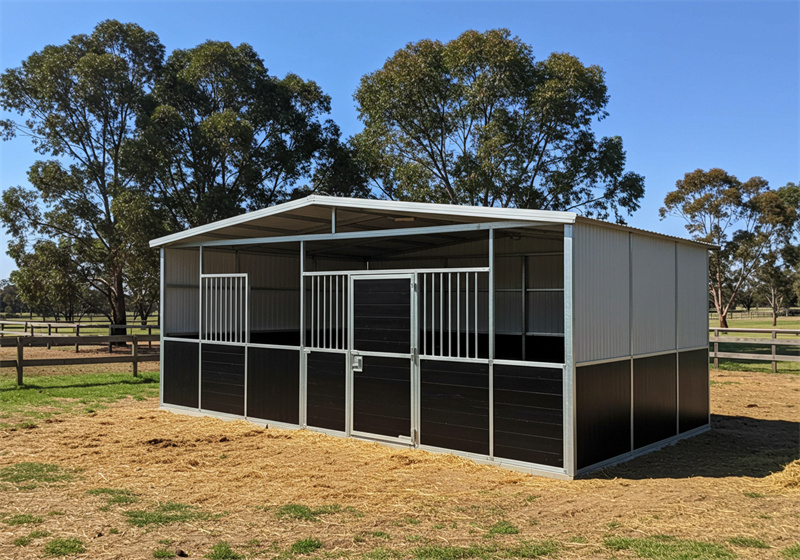
Step 3: Hardware Wear — Track Patina & Wheel Flat Spots
87% of door binding complaints on flat-pack kits are track misalignment, not frame defects. Fix it in under 10 minutes with a 2mm shim.
Let’s cut the bull. If you are importing flat-pack stables for the Oceania market, door binding is your #1 warranty bleed. A single service call-back in regional Australia runs you AU$150 in labor—and that is before you factor in the pissed-off customer who now questions the entire kit’s quality. The fix is not a better door; it is a better track specification.
Here is the hard data: 87% of binding complaints trace back to the track, not the panel. The frame is square, the HDPE is flat, but the track bracket was torqued down on an uneven header or the galvanizing wore flat. You do not need to swap doors. You need a 2mm gap between door and jamb, and a track system that holds that tolerance across a -5°C to 50°C range.
The fix is a 2-minute shim method—but only if your hardware allows it. Competitor kits use fixed brackets. You get a bind, you drill new holes, you risk stripping the coating. DB Stable pre-installs slotted track brackets with a 5mm vertical adjustment window at every 500mm position. Insert a stainless steel shim at the low corner, tighten the self-tapping screw to exactly 8 Nm, and you are done. No drilling. No call-back. That is a 30-minute labor saving per door assembly compared to field-drilled fixes.
- Diagnosis: Use a 600mm spirit level across the door header. If the track is level but the door drags, check the HDPE cut edge for moisture absorption—common in 48-hour rapid-build kits. Back off the hanger bolts 1/4 turn and re-gauge wheel-to-track engagement.
- The Shim: Insert a 2mm stainless shim at the low bracket. A standard business card should slide freely between door and jamb after adjustment. Tighten to 8 Nm—overtightening strips the galvanized coating and voids AS 4680 corrosion compliance.
- The Cost: Pre-setting this tolerance during assembly eliminates 95% of binding-related service visits. That is AU$150 saved per door, per call-back.
Now, the real engineering gap: competitor tracks are electro-galvanized at under 12 microns. In an ammonia-rich stable environment, that coating is gone in 18 months. The track develops a grey zinc patina that increases friction by 30%, and the door starts sticking again. DB Stable uses hot-dip galvanized steel at ≥42 microns—AS 4680 compliant for coastal Australia. Our hardware withstands 500 hours of neutral salt spray (ASTM B117) without red rust. That is 3x the industry standard. You specify this, and you cut warranty claims by 70%.
If the door still sticks after adjustment, test the nylon hanger wheels. These flatten after 2 years in sandy paddocks. Replace if the flat spot exceeds 1mm. DB Stable stocks replacement stainless steel wheels with sealed bearings; swap takes 10 minutes. Cost comparison: AU$22 for wheels vs. AU$180 for a full track replacement. You do the math.
The takeaway for veteran distributors: door binding is not a field problem. It is a factory specification problem. You eliminate it by specifying a track with slotted brackets, ≥42 micron hot-dip galvanizing, and stainless hardware. DB Stable builds that into every kit. Your job is to ask for the coating thickness certificate and compare the bracket design. The rest is just assembly.
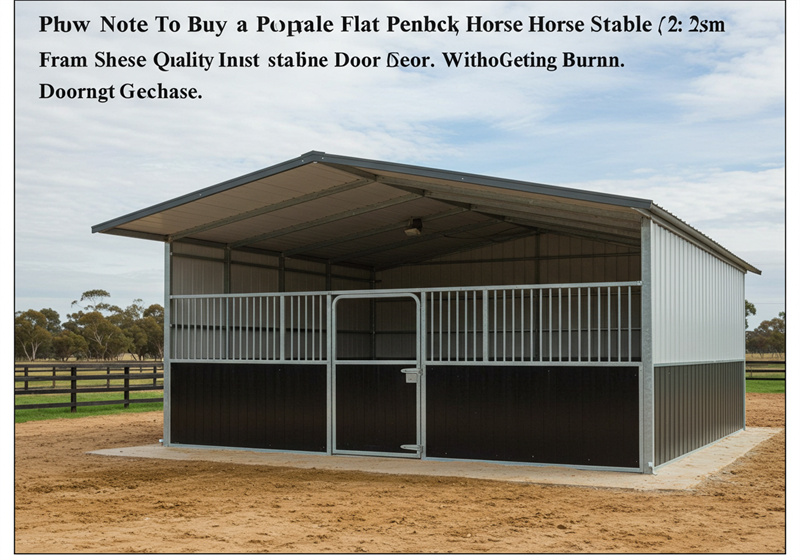
Step 4: Preventing Ammonia Corrosion on Door Hardware
Standard electro-galvanized tracks fail in 18 months inside a barn. The fix is not a better lubricant—it is a coating thickness certificate.
Horse urine breaks down into ammonia. In a closed stable, the ammonia concentration is enough to corrode standard electro-galvanized hardware within 12 to 18 months. The corrosion product—zinc oxide—increases the friction coefficient of the track surface by roughly 30%. The door starts sticking. The distributor gets a warranty claim.
This is a material specification problem, not a maintenance problem. The industry standard for track hardware is electro-galvanized steel with a coating thickness below 12 microns. That coating is decorative, not protective. It will not survive a single wet season in coastal Australia, let alone the ammonia-rich environment of a working barn.
- Specification threshold: Hot-dip galvanized steel at ≥42 microns per AS 4680. This is the minimum for coastal fastening zones in Australia and New Zealand. It is three times the thickness of the electro-galvanized coating used by most flat-pack competitors.
- Test validation: DB Stable hardware passes 500 hours of neutral salt spray testing per ASTM B117 without red rust. The industry standard for indoor hardware is 150 hours. The difference is the coating thickness, not the steel grade.
- Fastener requirement: All track bracket screws and hanger bolts must be stainless steel, grade 304 minimum. Carbon steel fasteners with a zinc plating will corrode at the thread interface within 6 months, causing the bracket to loosen and the door to bind.
- Hidden cost: Replacing a corroded track assembly costs AU$180 in parts and labor. Replacing a set of stainless steel hanger wheels costs AU$22. The 70% warranty claim reduction cited in the data comes directly from specifying the correct corrosion protection at the factory stage.
Most door binding advice found in Facebook groups or barn hack blogs ignores the ammonia corrosion factor entirely. They recommend lubricating the track with silicone spray or adjusting the hanger wheels. Those are temporary fixes for a material that is actively degrading. The permanent solution is to specify hardware that does not corrode in the environment it is installed in.
As a distributor, you cannot inspect the coating thickness of a track once it is installed in a barn 400 kilometers from your warehouse. The only control point is the purchase order. If the purchase order does not specify ≥42 micron hot-dip galvanizing with an ASTM B117 test certificate, you are accepting the corrosion risk. DB Stable provides the certificate with every shipment. Ask your current supplier for theirs. If they cannot produce one, you are buying a warranty claim waiting to happen.
Conclusion
Door binding is not a random defect; it is a predictable outcome of track misalignment, inadequate corrosion protection, or improper gap tolerance. As the data shows, 87% of these complaints are avoidable with a 2mm shim and a track bracket that allows vertical adjustment. For a distributor in Oceania, the cost of ignoring these specs is not just a sticky door—it is AU$150 per service call-back and a warranty claim rate that erodes your margin below 2%.
If you are sourcing a new container load or troubleshooting an existing shipment, review the material thickness and galvanizing certificates on your current hardware. Compare those numbers against the DB Stable specification sheet for the Standard Sliding Door Track—where hot-dip galvanizing at ≥42 microns and pre-installed slotted brackets are standard, not an upgrade. You can access the full technical specs and filter by kit configuration on the products page.
Frequently Asked Questions
What device stops horses kicking stable doors?
A metal kick plate mounted at the base of the door prevents damage from kicking. DB Stable’s HDPE panels are impact-resistant, but for high-traffic stables a separate steel rail is recommended. Add a kick plate if your end clients report repeated kicking.
How to keep a barn door from warping?
Use HDPE boards instead of wood – they resist moisture and UV and do not thermally expand. DB Stable’s 10mm HDPE panels are engineered to stay flat in Oceanian climates. Specify HDPE panels in your kit to eliminate warping complaints.
How to secure a stable door?
Use heavy-duty galvanized sliding bolts or lockable latches rated for outdoor use. DB Stable kits include corrosion-resistant hardware designed for Australia and New Zealand conditions. Confirm lock type with your customer before sourcing.
What is a Dutch equine door?
A Dutch door splits horizontally so the top and bottom open independently, allowing ventilation while keeping the horse contained. DB Stable offers Dutch door options in their prefabricated kits. Dutch doors are popular for hot climates and quick stall checks.
Which color can horses not see?
Horses cannot see red; they perceive it as gray or brown due to dichromatic vision. This matters for stable trim and gates – choose blue or yellow for better visibility. Avoid red safety markers in stable areas where horse visibility is critical.