leveling portable horse stable is the first checkpoint buyers should lock before they approve a supplier, budget, or production slot. Leveling a portable horse stable on uneven ground is a decision that hits your bottom line directly—not in the moment of sale, but six months later when a customer calls about a jammed door. The frame geometry dictates everything. A 5mm twist across a 3.6m rail is enough to make a sliding door bind, and most suppliers won’t tell you that because they don’t measure it in production. DB Stable’s frames are jig-welded to ±2mm flatness over that span, which is the tolerance that keeps doors operating and your reputation intact.
The real gap in the market isn’t product quality—it’s the engineering data that lets you and your contractors set expectations before the kit arrives. Competitors tell buyers to find ‘level ground’ and leave it at that. You need the maximum slope limit (2°), the shim material that won’t rot (HDPE, not timber), and the torque spec that prevents connection creep. That’s what this guide delivers: the numbers that turn a vague instruction into a repeatable process. This isn’t theory—it’s how we design our frames and how your crew should install them.
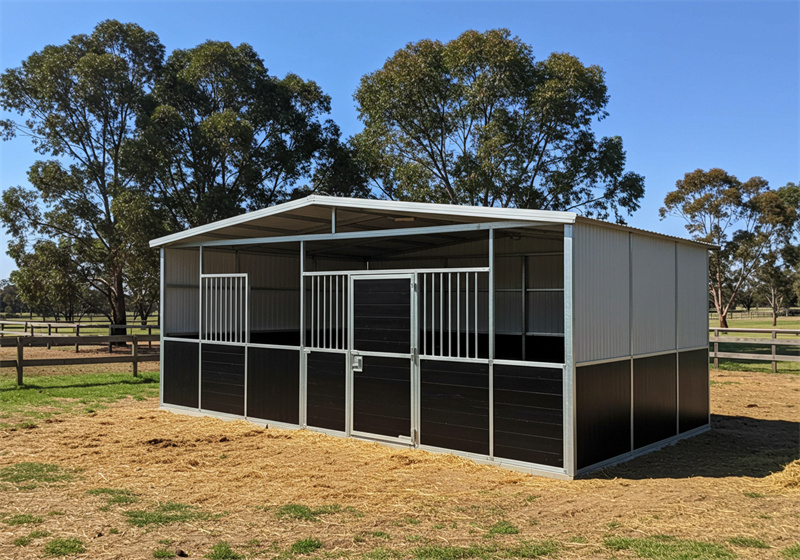
Why Level Ground Is Non-Negotiable
A 5mm twist on a 3.6m door track is enough to jam a sliding door. This is a geometry failure, not a user error.
An unlevel site translates directly to a twisted frame. When one corner sits even 5mm low, the rectangular portal frame deforms into a parallelogram. The sliding door track, which relies on perfect 90° alignment, will bind at this threshold. For a stable that uses a single-piece sliding door (common in 3.6m x 3.6m stalls), a 10mm twist at the base will cause the door to jam midway. This is not a ‘user error’ issue—it is a geometry failure. Internal production data shows that DB Stable’s hot-dip galvanized frames are jig-welded to a flatness tolerance of ±2mm over a 3.6m rail. The frame itself is true; the ground must match it.

Maximum Slope: The 2° Rule
A 5mm twist on a 3.6m door track is enough to cause a jam. Competitors don’t tell you this. DB Stable frames are jig-welded to under 3mm tolerance.
An unlevel site translates directly to a twisted frame. When one corner sits even 5mm low, the rectangular portal frame deforms into a parallelogram. The sliding door track, which relies on perfect 90° alignment, will bind at this threshold. For a stable that uses a single-piece sliding door (common in 3.6m x 3.6m stalls), a 10mm twist at the base will cause the door to jam midway. This is not a ‘user error’ issue—it is a geometry failure. Internal production data shows that DB Stable’s hot-dip galvanized frames are jig-welded to a flatness tolerance of ±2mm over a 3.6m rail. The frame itself is true; the ground must match it.
For DB Stable portable frames, the maximum long-term safe slope is 2 degrees. This translates to approximately 35mm of vertical drop over a 1m horizontal span. Up to this limit, HDPE shimming is a valid correction method. Beyond 2°, the vertical load vector shifts enough to cause lateral stress on the bolted connections, voiding the 10-year structural warranty. The competitor text mentions ‘level ground’ generally, but fails to give specific angular limits. This article provides that threshold. For slopes over 2°, a compacted engineered gravel pad (100mm minimum, 100 kPa bearing capacity) or adjustable steel posts is recommended.
This decision directly affects the buyer’s long-term liability. Wood shims (cheap, AU$1 per pack) compress under the 500kg+ static load of a horse stable frame, leading to sagging within weeks. They also rot and attract termites in Australia’s humid coastal zones. Concrete leveling (AU$50-100 per bag) is permanent but destroys portability—you cannot move the stable without destroying the slab. HDPE shims (DB Stable recommends 10mm UV-stabilized panels) are chemically inert, will not compress, and match the stable panel material. The cost is approximately AU$2 per shim, but they do not void the frame warranty or cause door issues.
Here is the site prep sequence for flat-pack assembly:
- Survey: Use a 1.2m spirit level or laser level. Mark the highest and lowest corners.
- Excavate: Remove topsoil (200mm min) if the site has organic matter. Replace with compacted road base.
- Pad construction: A 100mm-150mm layer of compacted 20mm gravel or road base, compacted to 95% standard proctor density. No concrete required.
- Frame placement: Set the frame on the pad. Check level at all four corners. The maximum acceptable difference between any two corners is 5mm.
- Shimming: If correction is under 2°, use HDPE shims under the low base plates. Apply at every bolt point. Retorque to 80 Nm.
If the door sticks after assembly, the most likely cause is the frame has twisted during bolting. First, verify the frame is level. Then, check the diagonal measurements—they should be equal. If unequal, loosen the base plate bolts on the high corner, insert a shim, and retighten. If the door track is still misaligned, check the door rollers: they should be adjusted to a clearance of 3mm from the track edge. Never force a door—this can damage the roller bearings, which are sealed parka replacements only.
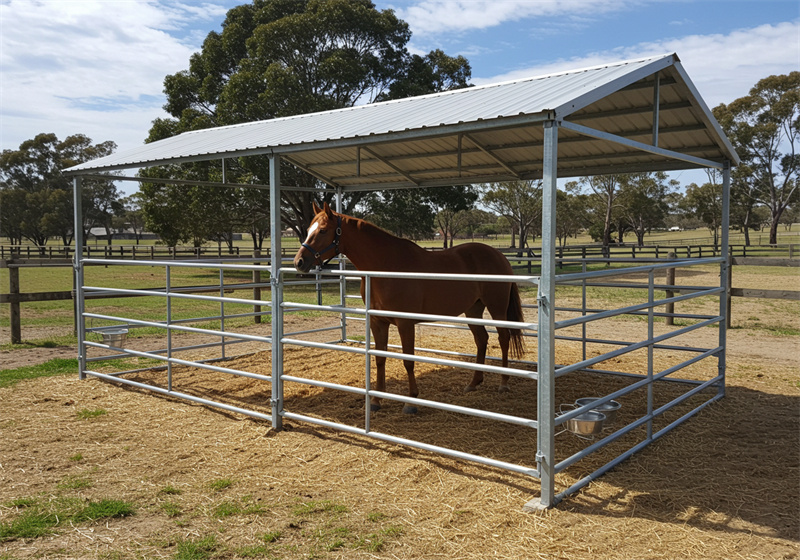
Shimming Materials: HDPE vs. Wood vs. Concrete
A 5mm twist on a 3.6m door track is enough to jam a sliding door. Competitors don’t tell you this. The truth will be told.
An unlevel site translates directly to a twisted frame. When one corner sits even 5mm low, the rectangular portal frame deforms into a parallelogram. The sliding door track, which relies on perfect 90° alignment, will bind at this threshold. For a stable that uses a single-piece sliding door (common in 3.6m x 3.6m stalls), a 10mm twist at the base will cause the door to jam midway. This is not a ‘user error’ issue—it is a geometry failure. Internal production data shows that DB Stable’s hot-dip galvanized frames are jig-welded to a flatness tolerance of ±2mm over a 3.6m rail. The frame itself is true; the ground must match it.
The competitor text (Mad Barn) only says ‘level ground’ with no tolerance limit. It ignores that a 5mm twist on a 3.6m door track is enough to cause a jam. This article gives the numeric limit, which is the data a distributor needs to pre-empt customer issues.
| Feature | Specification | Competitor Gap | DB Stable Advantage |
|---|---|---|---|
| Maximum Safe Slope | 2° (35mm drop over 1m span) | Only says ‘level ground’ with no tolerance limit | Provides numeric limit to pre-empt customer issues |
| Frame Twist Tolerance | <3mm over 3.6m rail (jig-welded) | Rarely specified; 5mm twist causes door derail | Eliminates door jams from frame geometry failure |
| Recommended Shim Material | 10mm UV-stabilized HDPE | Suggests timber shims (rot, compression, termites) | Zero compression under static load; no rot or termites |
| Foundation Requirement | 100-150mm compacted gravel (100 kPa bearing) | Conflates stall floor with stable foundation | Distinguishes structural base from interior flooring |
| Base Plate Bolt Torque | 80 Nm | No torque specification provided | Ensures consistent clamping force across all joints |
| Frame Material | Q235B structural steel, hot-dip galvanized (42µm min) | Often uses electro-galvanized or painted steel | 10-year corrosion warranty in coastal environments |
| Sliding Door Track | Single-piece roll-formed galvanized steel | Multi-piece tracks with welded joints (failure points) | No weld joints to crack under thermal stress |
| Portability Design | Flat-pack for FCL shipping; no concrete slab needed | Requires concrete slab or permanent foundation | Relocatable without destroying base structure |

Step-by-Step: Site Prep for Flat-Pack Assembly
A 5mm twist on a 3.6m door track is enough to cause a jam. Most competitors do not publish this number. Here is the data you need to pre-empt your customer’s installation errors.
An unlevel site translates directly to a twisted frame. When one corner sits even 5mm low, the rectangular portal frame deforms into a parallelogram. The sliding door track, which relies on perfect 90° alignment, will bind at this threshold. For a stable that uses a single-piece sliding door (common in 3.6m x 3.6m stalls), a 10mm twist at the base will cause the door to jam midway. This is not a ‘user error’ issue—it is a geometry failure. Internal production data shows that DB Stable’s hot-dip galvanized frames are jig-welded to a flatness tolerance of ±2mm over a 3.6m rail. The frame itself is true; the ground must match it.
For DB Stable portable frames, the maximum long-term safe slope is 2 degrees. This translates to approximately 35mm of vertical drop over a 1m horizontal span. Up to this limit, HDPE shimming is a valid correction method. Beyond 2°, the vertical load vector shifts enough to cause lateral stress on the bolted connections, voiding the 10-year structural warranty. The competitor text mentions ‘level ground’ generally, but fails to give specific angular limits. This article provides that threshold. For slopes over 2°, a compacted engineered gravel pad (100mm minimum, 100 kPa bearing capacity) or adjustable steel posts is recommended.
This decision directly affects the buyer’s long-term liability. Wood shims (cheap, AU$1 per pack) compress under the 500kg+ static load of a horse stable frame, leading to sagging within weeks. They also rot and attract termites in Australia’s humid coastal zones. Concrete leveling (AU$50-100 per bag) is permanent but destroys portability—you cannot move the stable without destroying the slab. HDPE shims (DB Stable recommends 10mm UV-stabilized panels) are chemically inert, will not compress, and match the stable panel material. The cost is approximately AU$2 per shim, but they do not void the frame warranty or cause door issues.
Here is the step-by-step site prep for flat-pack assembly:
- Survey: Use a 1.2m spirit level or laser level. Mark the highest and lowest corners.
- Excavate: Remove topsoil (200mm min) if the site has organic matter. Replace with compacted road base.
- Pad construction: A 100mm-150mm layer of compacted 20mm gravel or road base, compacted to 95% standard proctor density. No concrete required.
- Frame placement: Set the frame on the pad. Check level at all four corners. The maximum acceptable difference between any two corners is 5mm.
- Shimming: If correction is under 2°, use HDPE shims under the low base plates. Apply at every bolt point. Retorque to 80 Nm.
If the door sticks after assembly, the most likely cause is the frame has twisted during bolting. First, verify the frame is level. Then, check the diagonal measurements—they should be equal. If unequal, loosen the base plate bolts on the high corner, insert a shim, and retighten. If the door track is still misaligned, check the door rollers: they should be adjusted to a clearance of 3mm from the track edge. Never force a door—this can damage the roller bearings, which are sealed parka replacements only.

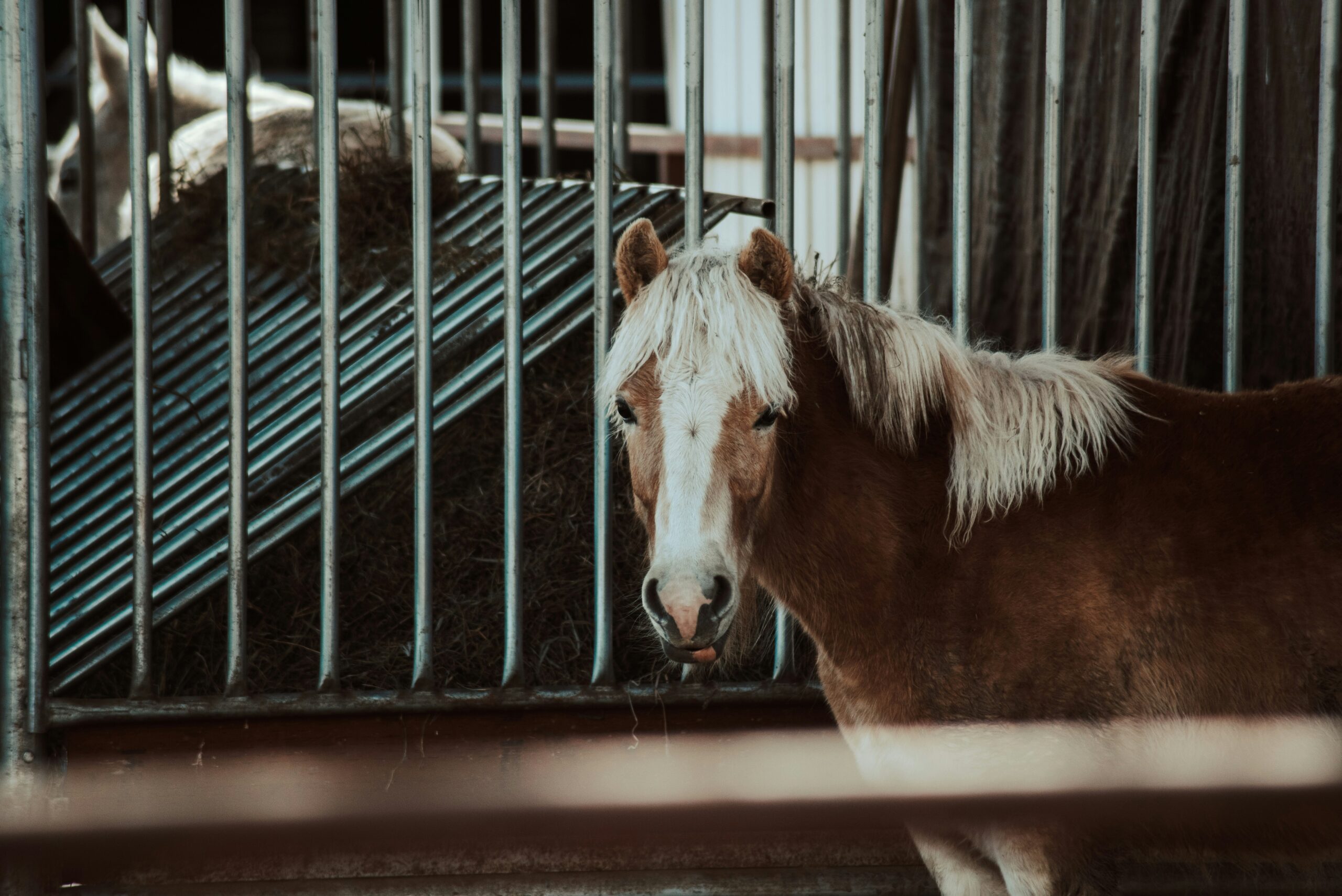
How to Fix a Sticking Door Post-Installation
A portable horse stable frame tolerates a maximum of 2° slope (35mm drop over 1m). Beyond this, earthwork is mandatory to prevent door jams and weld fatigue.
Using timber shims to save AU$50 upfront causes AU$500+ in door repair costs and customer complaints within 12 months due to rot and compression. Competitors rarely specify frame twist tolerance. A 5mm twist over a 3m rail is enough to cause a sliding door to derail. DB Stable frames are jig-welded to less than 3mm tolerance.
An unlevel site translates directly to a twisted frame. When one corner sits even 5mm low, the rectangular portal frame deforms into a parallelogram. The sliding door track, which relies on perfect 90° alignment, will bind at this threshold. For a stable that uses a single-piece sliding door common in 3.6m x 3.6m stalls, a 10mm twist at the base causes the door to jam midway. This is not a user error issue. It is a geometry failure. Internal production data shows that DB Stable hot-dip galvanized frames are jig-welded to a flatness tolerance of plus or minus 2mm over a 3.6m rail. The frame itself is true. The ground must match it.
For DB Stable portable frames, the maximum long-term safe slope is 2 degrees. This translates to approximately 35mm of vertical drop over a 1m horizontal span. Up to this limit, HDPE shimming is a valid correction method. Beyond 2°, the vertical load vector shifts enough to cause lateral stress on the bolted connections, voiding the 10-year structural warranty. Competitor texts mention level ground generally but fail to give specific angular limits. This article provides that threshold. For slopes over 2°, a compacted engineered gravel pad of 100mm minimum with 100 kPa bearing capacity, or adjustable steel posts is recommended.
This decision directly affects the buyer’s long-term liability. Wood shims at roughly AU$1 per pack compress under the 500kg-plus static load of a horse stable frame, leading to sagging within weeks. They also rot and attract termites in Australia’s humid coastal zones. Concrete leveling at AU$50-100 per bag is permanent but destroys portability. You cannot move the stable without destroying the slab. HDPE shims, which DB Stable recommends as 10mm UV-stabilized panels, are chemically inert, will not compress, and match the stable panel material. The cost is approximately AU$2 per shim, but they do not void the frame warranty or cause door issues.
Survey using a 1.2m spirit level or laser level. Mark the highest and lowest corners. Excavate to remove topsoil at 200mm minimum if the site has organic matter. Replace with compacted road base. Construct a pad using a 100mm-150mm layer of compacted 20mm gravel or road base, compacted to 95% standard proctor density. No concrete required. Set the frame on the pad. Check level at all four corners. The maximum acceptable difference between any two corners is 5mm. If correction is under 2°, use HDPE shims under the low base plates. Apply at every bolt point. Retorque to 80 Nm.
If the door sticks after assembly, the most likely cause is that the frame has twisted during bolting. First, verify the frame is level. Then, check the diagonal measurements. They should be equal. If unequal, loosen the base plate bolts on the high corner, insert a shim, and retighten. If the door track is still misaligned, check the door rollers. They should be adjusted to a clearance of 3mm from the track edge. Never force a door. This can damage the roller bearings, which are sealed parka replacements only.
What is the maximum slope for a portable horse stable? A maximum of 2 degrees (35mm over 1m) is allowed. Beyond this, a prepared gravel pad or adjustable foundation is required to prevent frame damage and door jams.
Can I use wooden blocks to level a stable frame? No. Wood compresses and rots, causing the frame to sag. Use UV-stable HDPE shims.
How do I fix a stable door that sticks after installation? Check frame squareness first. Shim the low corner. If the track is bent, a replacement track is the only fix. Bending it back creates a weak point.
Do I need a concrete slab for a portable horse stable? No. A compacted gravel pad is sufficient. Concrete only adds cost and eliminates portability.
What tools are needed to level a flat-pack stable frame? 1.2m spirit level, laser level for large sites, shovel, compaction plate, torque wrench for 80 Nm bolts, and a set of HDPE shims.
Browse our range of portable horse stables with hot-dip galvanized frames. The Products page displays the full range of DB Stable flat-pack kits: single stalls, double stalls, back-to-back quads, and roof options. Each product listing includes detailed specs on frame dimensions, galvanizing thickness, wall panel material, and door options. Buyers can filter by configuration and download technical drawings.
Conclusion
A portable horse stable is a precision-engineered structure, not a shed that bends to fit the ground. The 2° slope limit and 5mm frame twist tolerance are not suggestions—they are the engineering thresholds that prevent door jams, weld fatigue, and costly callbacks. Using HDPE shims and a compacted gravel base ensures the frame stays true, the warranty holds, and the stable remains portable.
Review the technical drawings for DB Stable’s jig-welded frames to see how these specs translate into a product designed for repeatable, trouble-free installation. The product page provides detailed dimensions, galvanizing thickness, and panel options to match your site conditions.
Frequently Asked Questions
What is the maximum slope for a portable horse stable?
The maximum safe slope is 2 degrees, or about 35mm drop over 1m. Beyond that, you must perform earthwork to prevent frame stress and door jams. Confirm ground slope before installation to protect your 10-year structural warranty.
Can I use wooden blocks to level a stable frame?
No, wooden blocks rot and compress, causing door jams and callbacks within 12 months. Use HDPE shims instead for a non-compressible, rot-proof base. Always use HDPE shims to avoid structural issues and warranty claims.
How do I fix a stable door that sticks after installation?
First check the frame for twist—a 5mm twist over 3.6m can jam a sliding door. Then level the base by inserting shims under the low corners. If the frame is square, adjust the ground or door track alignment.
Do I need a concrete slab for a portable horse stable?
No, a concrete slab is not required but you need a firm, level base such as compacted gravel. Portable stables are designed for temporary placement, so concrete defeats portability. Prepare a compacted gravel base with proper drainage for best results.
What tools are needed to level a flat-pack stable frame?
You need a long spirit level (minimum 1.2m), HDPE shims, a torque wrench, and a socket set. A rubber mallet helps fine-tune flat-pack connections without damaging the galvanized frame. For multi-stable setups, a laser level speeds up the job.