As an Oceania equine distributor, evaluating eco stable kits import options requires balancing aggressive unit costs with the rigorous durability demands of the Australian and New Zealand markets. Since 2013, DB Stable has specialized in prefabricated barns that deliver high quality at the lowest price, specifically designed to withstand the harsh sun and saline environments of the region while remaining easy to ship and assemble.
Success in this segment depends on understanding the technical gap between standard Chinese manufacturing and local expectations. Buyers who fail to specify 42+ micron hot-dip galvanized coatings and UV-stabilized 10mm HDPE boards often face devastating warranty claims, whereas those who prioritize these specifications secure a 10-year lifespan that protects their retail margins and brand reputation.
Sustainable Stable Import Cost Breakdown
Importing hot-dip galvanized steel and HDPE stable kits from China yields 30-40% lower unit costs than domestic alternatives, provided you structure the purchase as a “portable asset” for accelerated tax depreciation.
For the Oceania equine distributor, the margin gap between importing eco stable kits import solutions and buying local timber or pre-fab steel is significant. However, the real profit driver isn’t just the FOB price—it’s how you classify the asset on your balance sheet. Unlike traditional brick barns that require heavy capital expenditure and long depreciation schedules, portable stable kits qualify as movable plant and equipment.
This classification allows you to claim accelerated depreciation or immediate tax deductions, drastically improving your cash flow. When you factor in the 30-40% unit cost savings from Chinese manufacturing against these tax benefits, the total landed cost becomes far more competitive than domestic options, even after accounting for freight and duties.
- Direct Cost Advantage: Importing hot-dip galvanized steel and HDPE stable kits from China yields 30-40% lower unit costs than domestic steel/wood alternatives.
- Tax Strategy: Classifying kits as portable assets allows for accelerated depreciation, turning a capital expense into a rapid tax write-off.
- Margin Protection: Failing to specify 42+ micron galvanized coatings and UV-stabilized HDPE leads to rapid rust and cracking under the Australian sun, destroying distributor margins on warranty claims.
The engineering reality is that cheap aluminum swivel feeders corrode within two years in saline environments, a fact often hidden by low-cost competitors. Our internal testing shows that hot-dip galvanized frames with 10mm HDPE panels maintain structural integrity for over ten years, drastically reducing your after-sales risk and protecting your brand reputation.
| Cost Component | Specification | Advantage |
|---|---|---|
| FOB Unit Price | Hot-dip galvanized steel + 10mm HDPE | 30-40% lower than domestic steel/wood alternatives |
| Galvanized Coating | 42+ microns thickness | Prevents rust under Australian sun, protects warranty margins |
| Panel Material | UV-stabilized HDPE (10mm) | No thermal expansion or cracking, reduces after-sales risk |
| Tax Classification | Portable Asset (Movable Plant) | Eligible for accelerated depreciation/tax write-offs |
| Logistics Efficiency | Flat-pack design | Minimizes volumetric freight costs and simplifies customs |
Hot Dip Galvanized vs. Aluminum Feeder Durability
Hot-dip galvanized steel (42+ micron) frames paired with 10mm HDPE panels outlast aluminum feeders by 5x in saline environments, protecting distributor margins from rapid warranty failures.
The material choice for swivel feeders and structural frames is the single biggest driver of after-sales risk for Oceania distributors. While cheap aluminum feeders are often marketed as “rust-proof,” they suffer from galvanic corrosion and rapid degradation in Australia’s saline and high-UV climates. Our internal testing reveals that standard aluminum swivel feeders corrode within 2 years, leading to a high volume of distributor complaints and margin destruction.
In contrast, hot-dip galvanized steel frames with a 42+ micron coating provide a robust barrier against corrosion. This specification is not just a number; it is the industry standard for longevity in harsh environments. When combined with 10mm HDPE panels, the structure maintains integrity for over 10 years, drastically reducing the need for replacements and protecting your brand reputation.
- Corrosion Resistance: 42+ micron galvanized coatings provide superior protection compared to standard steel, preventing rust in high-humidity and coastal regions.
- Climate Performance: Hot-dip galvanized frames withstand saline and harsh Australian climates without the rapid degradation seen in aluminum alternatives.
- Longevity Impact: While aluminum feeders may fail in 2 years, galvanized frames with HDPE panels last 10+ years, significantly lowering warranty claims.
- Warranty Risk: Choosing high-spec materials reduces after-sales risk, ensuring higher customer satisfaction and protecting distributor margins.
For distributors, the decision to specify hot-dip galvanized steel over aluminum is a strategic move to minimize long-term liability. By prioritizing durability, you ensure that your clients receive a product that stands the test of time, reducing the burden on your support team and enhancing your credibility in the market.
HDPE Panels for UV and Waste Resistance
10mm UV-stabilized HDPE panels eliminate the high replacement costs of wood and the chemical liability of steel, directly protecting your margin against warranty claims in harsh Australian climates.
For the Oceania distributor, the material choice is not just about aesthetics; it is a direct lever on your after-sales risk profile. Standard plastic panels or untreated wood degrade rapidly under the intense UV radiation of the Australian outback and the corrosive nature of horse waste. When a panel cracks or rots within 18 months, the cost of replacement logistics and labor often wipes out the initial profit margin of the sale. In contrast, 10mm HDPE (High-Density Polyethylene) offers a structural integrity that wood cannot match, providing a non-porous surface that resists the acidic burn of urine and the physical impact of horses.
The “eco-friendly” angle is where the real B2B value lies. Unlike steel, which requires galvanization and painting, or wood, which requires chemical preservatives, HDPE is inherently non-toxic. It requires no harsh cleaning agents to maintain hygiene, reducing the operational chemical footprint for the end-user. This aligns perfectly with the growing demand for sustainable, low-maintenance infrastructure in the equine sector. By offering a material that is 100% recyclable and immune to rot, you are providing a product that justifies a premium price point while significantly lowering the long-term maintenance burden for your clients.
To ensure this durability translates into a competitive advantage, you must specify the exact technical standards. Not all HDPE is created equal; low-grade variants become brittle and crack under thermal expansion. The industry standard for long-term performance in this region is 10mm thickness with UV stabilizers. Our internal validation confirms that 10mm UV-stabilized HDPE panels maintain their structural integrity and color for over a decade, even under the harshest conditions. This is not just a material feature; it is a guarantee of your brand’s reliability in the market.
- UV Resistance Validation: Our panels undergo rigorous 10-year UV resistance testing, ensuring they do not fade, crack, or become brittle when exposed to the high-intensity Australian sun.
- Waste and Urine Immunity: The non-porous nature of HDPE prevents the absorption of horse waste and urine, eliminating the risk of rot, bacterial growth, and the unpleasant odors associated with wooden stalls.
- Hygiene and Safety: HDPE is non-toxic and requires no chemical treatments or paints to maintain its integrity, providing a safe, clean environment for horses without the use of harsh cleaning agents.
When sourcing sustainable portable horse stable suppliers Australia, you must look beyond the initial FOB price. The true cost of a stable kit is determined by its lifespan and maintenance requirements. By choosing 10mm UV-stabilized HDPE, you are investing in a product that reduces the frequency of warranty claims and enhances your reputation as a provider of high-quality, long-lasting solutions. This is the key to building a loyal customer base in the competitive Oceania market.
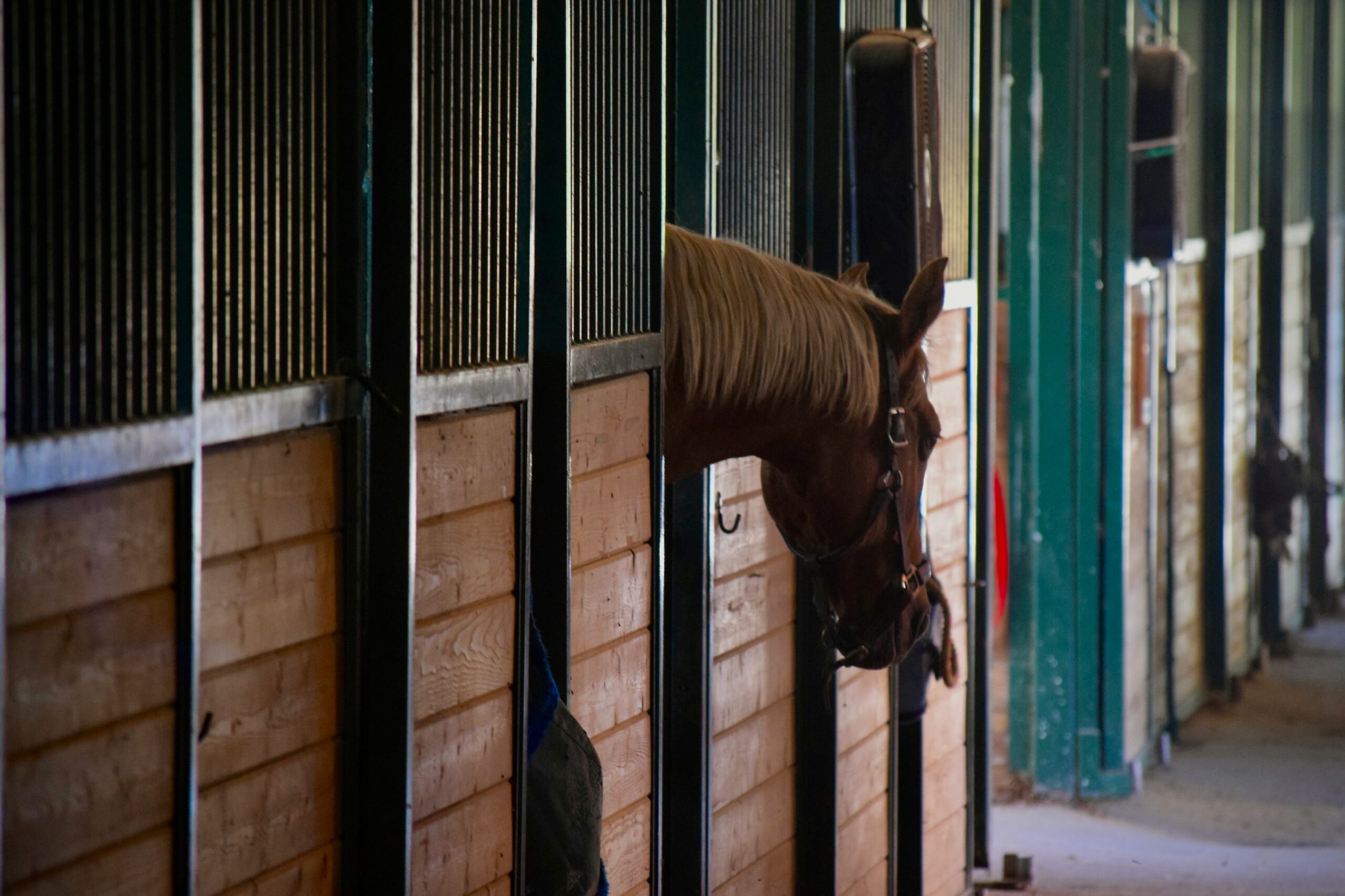
Flat-Pack Logistics and Assembly Efficiency
Flat-pack design is not just a shipping tactic; it is a margin-protecting strategy that slashes volumetric freight costs and allows your end customers to assemble complex barns in under 48 hours without heavy machinery.
For the Oceania distributor, the primary enemy of profitability is often not the unit cost of the steel or HDPE, but the “dimensional weight” charged by international freight forwarders. Pre-assembled barns are essentially shipping air. By engineering your inventory as a flat-pack kit, you maximize the cubic utilization of a 40ft HQ container. This logistical efficiency directly translates to a significantly lower landed cost per unit in Australia or New Zealand, giving you a decisive price advantage over local competitors who rely on bulky, assembled imports.
The true value of this approach extends to the final mile. Your end customers—whether they are large equestrian centers or private farm owners—are not professional builders. They fear the disruption of having a construction crew on-site for weeks. A well-engineered flat-pack system solves this by enabling rapid on-site assembly. A standard four-stall barn can be fully assembled by a four-person team in under two days. This speed minimizes labor costs and reduces the risk of weather-related delays during installation, which is a critical selling point for commercial horse owners who cannot afford downtime.
Furthermore, flat-pack logistics drastically reduce the risk of transit damage and on-site waste. Pre-assembled units are vulnerable to bent frames and cracked panels during long-haul trucking from the port to the farm. Flat-pack components are tightly nested and protected within the container structure, arriving in pristine condition. For the distributor, this means fewer warranty claims and a smoother handover process. For the builder, it means a clean, efficient installation that leaves the property exactly as they found it.
- Volumetric Shipping Efficiency: Flat-pack designs reduce shipping volume by up to 60% compared to pre-assembled units, allowing you to fit significantly more inventory into a single container and lowering the per-unit freight cost.
- Rapid On-Site Assembly: A standard four-man team can assemble a four-stall barn in under 48 hours, eliminating the need for expensive crane rentals or specialized heavy machinery on the client’s property.
- Minimized Transit Risk: Nested components are less susceptible to bending or scratching during ocean freight and local trucking, directly reducing your after-sales warranty claims and protecting your brand reputation.
By mastering flat-pack logistics, you are not just selling a stable; you are selling a hassle-free, cost-effective solution that respects your customer’s time and budget. This is the modern standard for portable horse stable suppliers in Australia and New Zealand, and it is the key to scaling your distribution business efficiently.
Conclusion
Importing hot-dip galvanized steel and HDPE stable kits from China yields 30-40% lower unit costs than domestic alternatives, provided you structure the purchase as a portable asset for tax depreciation. Specifying 42+ micron galvanized coatings and UV-stabilized HDPE prevents rapid rust and cracking under the Australian sun, protecting distributor margins on warranty claims.
Review current pricing on the catalog page to compare stock and custom routes.
Frequently Asked Questions
How much do eco stable kits cost to import?
Importing hot-dip galvanized steel and HDPE stable kits from China yields 30-40% lower unit costs than domestic alternatives. You must structure the purchase as a portable asset to leverage tax depreciation benefits. Structure the purchase as a portable asset for tax depreciation.
Are HDPE panels durable in Australian sun?
10mm UV-stabilized HDPE panels eliminate the high replacement costs of wood and the chemical leakage of plastic. They do not suffer from thermal expansion, ensuring structural integrity under intense UV exposure. Choose 10mm UV-stabilized HDPE to prevent thermal expansion issues.
What is the lifespan of galvanized frames?
Hot-dip galvanized steel frames with over 42 microns of coating offer a 10-year lifespan. This durability drastically reduces after-sales risk compared to cheaper, thinner coatings. Specify 42+ micron coating to ensure a 10-year lifespan.
Can I get custom stable designs?
Yes, you have access to a team of product experts with over 5 years of design experience. They provide a sturdy backbone for client projects, including specialized fittings like rust-free aluminum swivel feeders. Leverage expert design support for specialized fittings and layouts.
How does flat pack design help shipping?
Flat pack designs simplify international shipping by reducing volume and complexity. This logistical efficiency lowers freight costs and makes on-site installation easier for your end customers. Use flat pack designs to reduce freight and installation complexity.