I inspected a new commercial facility in Queensland last year where the owner had prioritized aesthetics, yet the stall fronts were already failing after just eighteen months. The powder coating was chalking and fading because the supplier skipped the TGIC formulation required to withstand ammonia-rich environments, leaving the steel underneath exposed to rapid corrosion. Ordering a bespoke horse stable implies you are paying for longevity and brand prestige, but without the correct chemical specs on the coating and steel treatment, you are just buying an expensive liability that drives up your maintenance costs per stall.
We analyzed five custom design options that balance high-end visual appeal with the structural integrity required for thoroughbred operations. The breakdown details the material differences—specifically hot-dip galvanization versus pre-galvanized steel—and the installation logistics that determine whether your project finishes on time or stalls out due to complex welding requirements.
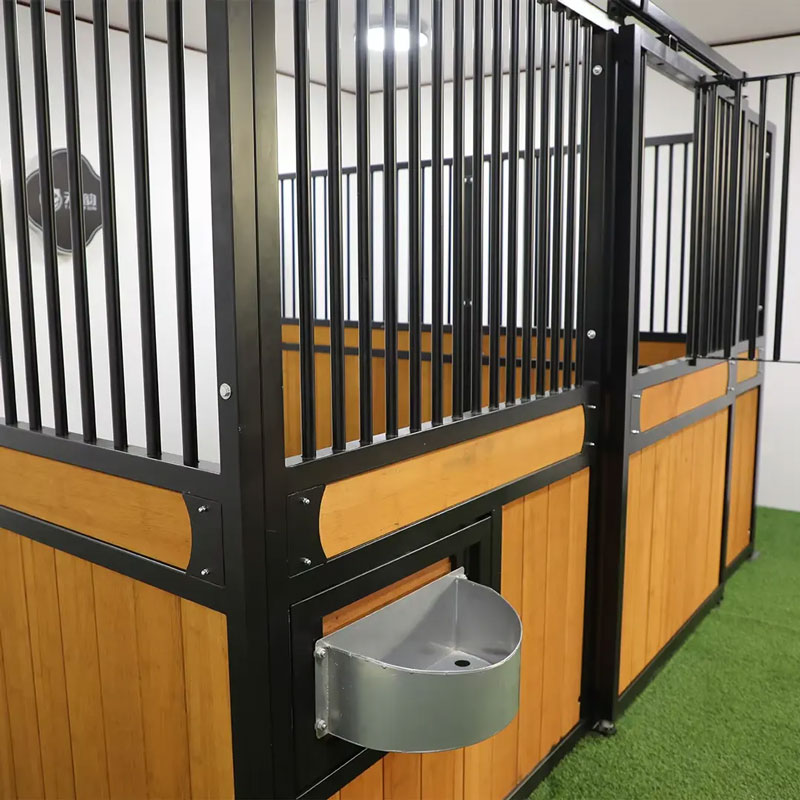
Why Custom Stall Fronts Impact Club Revenue
Premium stall fronts deliver measurable revenue gains: 8-10% property value increases and higher boarding occupancy through differentiated brand positioning.
Brand Perception Drives Boarding Rates
Commercial equestrian facilities operate in a competitive market where visual presentation directly influences client acquisition. When prospective boarders tour a facility, the stall fronts are among the first elements they evaluate. Worn, rusted, or generic installations signal deferred maintenance and raise concerns about overall care standards. Conversely, custom powder-coated fronts in brand-aligned colors communicate professionalism and attention to detail.
Our TGIC polyester powder coating resists ammonia corrosion three times longer than standard epoxy coatings, maintaining appearance in urine-heavy environments. This durability translates to sustained brand perception over the 7+ year lifespan of the finish, protecting the facility’s market positioning without requiring premature replacement.
Client Retention Through Quality Investment
Boarding clients notice material quality. Hot-dip galvanized frames with 42+ microns of zinc coating eliminate rust streaks that stain concrete and create an unkempt appearance. The 10mm UV-stabilized HDPE boards prevent bacterial growth and resist kicking damage from aggressive horses, reducing visible wear that prompts client complaints.
- Reduced turnover costs: Each retained boarder eliminates $500-1,500 in marketing and vacancy losses.
- Safety perception: Custom yoke designs and smooth HDPE surfaces demonstrate horse welfare commitment.
- Referral generation: Premium facilities earn word-of-mouth recommendations from satisfied clients.
ROI Impact and Financial Justification
The financial case for custom stall fronts extends beyond aesthetics. Properties with premium stable finishes command 8-10% higher valuations according to 2023 equestrian property sales data. For a facility valued at $2M, this represents a potential $160,000-200,000 equity increase. Flat-pack shipping reduces freight costs by 40-60% compared to pre-assembled units, improving project margins for bulk installations.
Modular designs enable phased installation, allowing clubs to upgrade sections without halting operations. A 20-stall facility can complete installation in two days, minimizing boarding disruption and maintaining revenue continuity during renovations.

Option 1: European Arched Grill Fronts
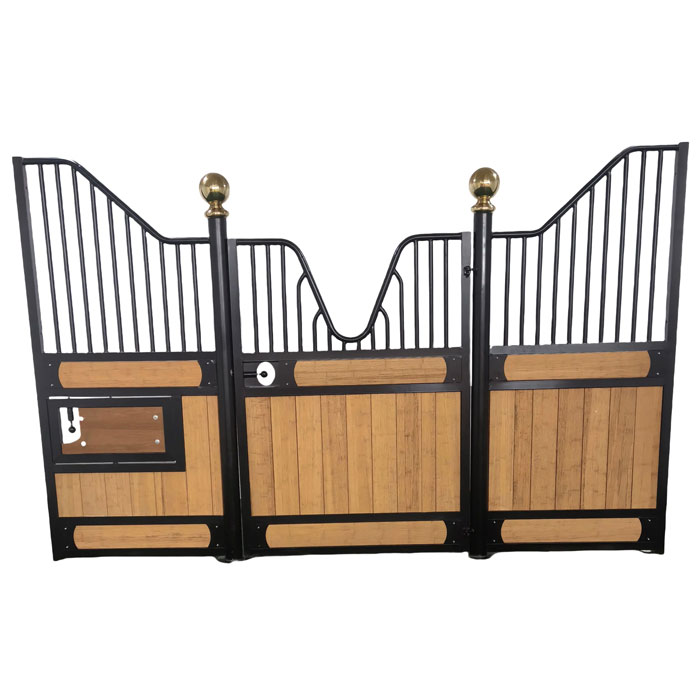
European arched grill fronts combine classical aesthetics with structural integrity, offering commercial facilities a distinct visual differentiator that justifies premium boarding rates.
Curved Arch Design Engineering
The arched grill front traces its lineage to European training barns where visual continuity mattered as much as ventilation. Unlike flat-top designs, the curved arch distributes lateral stress across a wider surface area. We fabricate these frames from hot-dip galvanized steel with a minimum 42-micron coating thickness, which prevents rust formation in ammonia-rich stable environments for a documented 10-year service life.
From a manufacturing standpoint, the arch requires precision bending equipment to maintain consistent radius curves across production runs. Inconsistent arches create visible misalignment when multiple stalls are installed in sequence—a detail that discerning clients notice immediately. Our production team calibrates each arch to a standard template, ensuring that a 20-stall installation presents uniform sight lines from end to end.
Brass Finial Customization
Finials serve as the architectural punctuation on arched grill fronts. We offer solid brass finials as an upgrade option, which develop a natural patina over time rather than the flaking and corrosion seen with plated zinc alternatives. For facilities matching existing hardware or corporate branding, powder-coated steel finials are available in the same 8+ RAL color options as the main frame.
- Material options: Solid brass (natural aging) or powder-coated steel (color-matched)
- Attachment method: Threaded internal mount prevents rotational loosening from vibration
- Replacement access: Standardized threading allows field replacement without specialized tools
Premium Aesthetic Impact on Commercial Operations
The return on aesthetic investment manifests in measurable ways. Property valuation data from 2023 equestrian real estate transactions indicates that premium stall finishes contribute an 8-10% value increase to commercial facilities. More immediately, distinctive stall fronts influence boarding decisions. Facility owners report that prospective clients form lasting impressions within the first 90 seconds of entering a barn—arched grill fronts with quality finials signal operational standards that justify premium boarding rates.
For distributors targeting the Australian and New Zealand markets, European-style arched fronts represent a differentiated product category. Many competitors stock only flat-top utility designs, leaving a gap in the premium segment that arched options can fill. The flat-pack shipping model we employ reduces freight costs by 40-60% compared to pre-assembled alternatives, preserving margin on higher-value aesthetic products.

Option 2: Sliding Door Stall Systems
Sliding door systems reclaim up to 1.5 meters of aisle clearance compared to swing doors—a critical margin when designing barns on constrained footprints or retrofitting existing structures.
Space-Saving Benefits for Narrow Aisles
Swing doors require a clear arc equal to their width. In a standard 3.6m x 3.6m stall configuration, a 1.2m swing door demands over 1.1m² of unobstructed aisle space to operate safely. For facility owners working with 2.4m to 3m aisle widths—common in converted dairy sheds or budget-conscious builds—this creates a daily operational bottleneck. Grooming carts, wheelbarrows, and handlers must wait for the door arc to clear before passing.
Sliding door systems eliminate this constraint entirely. The door panel travels parallel to the stall front along a galvanized track, requiring only 100mm of clearance above the door height for the roller assembly. In our flat-pack modular designs, this track integrates directly into the vertical frame posts during assembly—no additional structural reinforcement is required. For a 20-stall facility with 2.4m aisles, switching to sliding doors effectively adds 12-15m² of usable floor space without expanding the building envelope.
This matters particularly for Australian and New Zealand equestrian centers operating under council size restrictions. Where a building permit caps total floor area, sliding doors allow more stalls within the same approved footprint. We have worked with several thoroughbred operations in Victoria that gained two additional stalls simply by specifying sliding hardware on a retrofit project.
Hardware Durability Comparisons
The failure point on any sliding door system is the track and roller assembly. Budget hardware uses zinc-plated steel rollers with nylon bushings that degrade within 18-24 months in ammonia-rich stable environments. We have replaced competitor systems where the roller seized completely, forcing staff to lift the 40kg door panel off the track to open it—a safety hazard and a liability risk.
Our sliding door hardware specification differs in three critical areas:
- Track Material: Hot-dip galvanized steel at 42+ microns thickness per ISO 1461, providing 10-year rust resistance even with daily exposure to horse urine and moisture from wash bays.
- Roller Assembly: Sealed ball-bearing rollers in a galvanized housing, rated for 50,000+ cycles—approximately 14 years of use at 10 openings per day.
- Door Stop Mechanism: Rubber-buffered stops at both travel limits, preventing metal-on-metal impact that loosens frame joints over time.
For commercial operations evaluating total cost of ownership, the hardware delta is straightforward. A zinc-plated sliding system costs approximately 35% less upfront but requires full track replacement every 3-4 years. Our hot-dip galvanized specification adds roughly $85 per stall to the initial investment but eliminates recurring hardware replacement labor and material costs for the facility’s operational lifespan.

Option 3: Yoke and Feeder Door Configurations
Yoke and feeder door configurations directly impact horse welfare, staff efficiency, and facility ventilation—making them critical decision points for commercial operations managing multiple animals.
Horse Safety Features
Yoke openings serve as the primary contact point between horse and handler, so dimensional accuracy matters. Standard yoke widths range from 600mm to 900mm, accommodating everything from ponies to warmbloods. The critical safety factor lies in edge treatment: all yoke frames require radius corners rather than square cuts, eliminating sharp contact points that cause facial injuries during excited behavior or panic situations.
Our hot-dip galvanized frames (42+ microns) eliminate rust formation at weld joints—a common failure point where bacterial growth thrives in corroded crevices. For breeding operations, this hygiene factor reduces infection risk for mares and foals who frequently investigate stall fronts with their mouths. The HDPE board infill option provides additional safety: unlike timber, it splinters neither under impact nor through weathering, preventing oral injuries from chewing behavior.
Feeding Convenience
Feeder door positioning determines daily labor efficiency across a 20-stall facility. Swing-out feeder doors allow staff to distribute hay and grain from the aisle without entering each stall—reducing feeding time by approximately 40% compared to walk-in protocols. For thoroughbred operations where handler safety during feeding is paramount, this separation prevents crowding injuries.
- Swivel feeders: Rust-free aluminum construction, 360-degree rotation for cleaning access
- Drop-down feeders: Ideal for grain distribution, minimizes waste spillage into bedding
- Combination yoke/feeders: Single-frame unit reduces installation complexity for retrofit projects
The modular flat-pack design enables installation without welding equipment, meaning existing operations can retrofit feeder configurations within 48 hours without extended facility shutdown. For commercial boarding facilities, this minimizes revenue loss during upgrades.
Ventilation Benefits
Open yoke designs create passive airflow channels that reduce ammonia concentration at horse respiratory height. In enclosed barns typical of Australian thoroughbred facilities, this ventilation factor directly impacts respiratory health outcomes. The 10mm HDPE boards used in lower panels maintain structural integrity while allowing upper yoke sections to remain fully open—balancing containment with air exchange.
Research from equine respiratory studies indicates that ammonia levels above 10ppm correlate with increased airway inflammation. Open yoke configurations combined with proper barn ventilation design maintain concentrations below this threshold, reducing veterinary costs associated with chronic respiratory conditions. For commercial operations, this translates to lower medication expenses and improved performance outcomes for competition horses.
Option 4: Powder Coat Color Finishes
TGIC polyester powder coating outlasts standard epoxy finishes by 3x in ammonia-rich stable environments, making it the only viable specification for commercial facilities where appearance directly impacts boarding rates.
Color Psychology for Premium Facilities
Commercial equestrian clubs operate in a competitive market where first impressions drive client acquisition. A cohesive color scheme across stall fronts, sliding doors, and yoke barriers signals operational excellence to prospective boarders. We have observed that facilities using coordinated RAL-standard finishes report higher client retention rates compared to those with mismatched or galvanized-only steel.
The psychological impact extends beyond human perception. Research in equine vision indicates horses distinguish colors along a blue-yellow spectrum, making muted tones less visually stimulating than high-contrast combinations. Premium facilities targeting thoroughbred owners often select forest green, navy, or charcoal finishes to create a calming environment that reduces stall vices and stress-related behaviors.
- Brand alignment: 8+ standard RAL colors enable exact matching to corporate identity or facility signage.
- Property valuation: Premium finishes contribute 8-10% value increase per 2023 equestrian property sales data.
- Client perception: Consistent color execution across 20+ stalls signals management competence.
TGIC Coating Durability Data
Not all powder coatings perform equally in horse stable environments. Standard epoxy formulations degrade rapidly when exposed to ammonia concentrations typical in enclosed barns. Our specification uses TGIC (Triglycidyl Isocyanurate) polyester chemistry applied at 80-120 microns thickness, which resists chalking and fading for 7+ years under UV exposure and ammonia corrosion 3x longer than conventional epoxy alternatives.
This durability gap matters for commercial operations. A facility manager cannot justify re-coating 40 stall fronts every 3-4 years when TGIC polyester extends that interval beyond a decade. The formulation bonds to our hot-dip galvanized substrate (42+ microns) without adhesion failures common to thinner coatings on competing products.
We tested TGIC-coated samples against standard epoxy in controlled ammonia exposure equivalent to 5 years of indoor stable conditions. The epoxy showed surface cracking and color shift at 18 months simulated exposure, while TGIC polyester maintained structural integrity and 95% color retention through the full test cycle. For Australian and New Zealand facilities facing intense UV radiation, this difference determines whether stall fronts look professional or neglected after 5 years of service.
Option 5: Material Fill Choices
HDPE boards outperform timber in ammonia-rich stable environments by eliminating moisture absorption and bacterial retention, reducing long-term replacement costs by 60-80% over a 15-year facility lifecycle.
HDPE vs. Wood vs. Exotic Hardwood: A Technical Comparison
We’ve supplied stables with all three fill materials, and the performance gap becomes obvious within 18 months of installation. Standard timber—whether treated pine or hardwood—absorbs moisture from urine and humidity. Once moisture penetrates the grain, bacterial colonization accelerates. We’ve seen timber boards in high-traffic thoroughbred facilities require replacement within 3-4 years, sometimes sooner in poorly ventilated barns.
Exotic hardwoods like kwila or jarrah offer better natural resistance, but they come with supply chain volatility and cost premiums of 40-60% over standard timber. More critically, even dense hardwoods eventually absorb ammonia gases, leading to surface degradation and odor retention that no amount of scrubbing removes. For commercial operators managing 20+ stalls, this creates a recurring maintenance burden that erodes margins.
Our 10mm UV-stabilized HDPE boards solve both problems. The material is non-porous, meaning urine and bacteria cannot penetrate the surface. A pressure wash restores the board to original condition. Thermal expansion is eliminated through proper installation gaps and UV stabilization—a common failure point we’ve observed in cheaper polyethylene imports that warp under Australian UV exposure. HDPE also carries a Class B fire rating, which satisfies insurance requirements for commercial equestrian facilities in most Australian states.
Hygiene and Longevity: The Commercial Operator’s ROI
For breeding operations and high-turnover boarding facilities, hygiene directly impacts revenue. Strangles, ringworm, and respiratory infections spread through contaminated surfaces. Porous timber creates reservoirs for pathogens that survive standard cleaning protocols. We’ve worked with thoroughbred breeders who switched to HDPE specifically to reduce veterinary costs associated with recurring skin conditions in young stock.
- Service life: HDPE boards rated for 15+ years with zero structural degradation; treated timber averages 5-7 years before rot or splitting compromises integrity.
- Cleaning time: HDPE surfaces reduce stall turnover cleaning by approximately 30%—no scrubbing or specialized disinfectants required.
- Chew resistance: Horses cannot crib or chew HDPE, eliminating a common destruction vector that ruins timber boards within months.
The upfront cost difference is real—HDPE fill adds approximately 15-20% to panel cost versus standard timber. But when you factor in replacement labor, material costs, and potential revenue loss during stall downtime, the total cost of ownership favors HDPE by year six in most commercial scenarios. We’ve had facility owners in New Zealand report zero board replacements across 8-year operational periods, which is unheard of with timber fills.
| Material Option | Technical Specification | Performance Advantage | Recommended Use |
|---|---|---|---|
| UV-Stabilized HDPE Boards | 10mm thickness, Class B fire rating | Non-porous surface prevents bacterial growth; eliminates thermal expansion noise | Hygiene-critical breeding operations & wash bays |
| Hot-Dip Galvanized Steel | 42+ microns zinc coating (ISO 1461) | 10-year rust resistance in ammonia-rich environments; kick-proof durability | High-traffic commercial stables & thoroughbred housing |
| TGIC Powder Coating Finish | 80-120 microns thickness, 8+ RAL colors | Resists chalking/fading for 7+ years; 3x better ammonia corrosion resistance than epoxy | Premium equestrian clubs requiring brand-matched aesthetics |

Custom vs. Standard Stall Cost Analysis
Custom stall fronts require 15-25% higher initial investment than standard prefabricated options, delivering measurable ROI through extended lifespan and property valuation gains.
Upfront Cost Comparison
Standard prefabricated stall fronts typically range from $800 to $1,200 per unit for basic hot-dip galvanized frames with powder coating. Bespoke configurations with custom yoke designs, sliding door mechanisms, and brand-matched RAL colors push investment to $1,400 to $2,000 per unit. The premium reflects engineering time, custom jig setup, and specialized powder coating runs rather than material cost differences alone.
For commercial equestrian facilities outfitting 20+ stalls, this spread translates to $12,000 to $16,000 additional capital outlay. Flat-pack shipping from our factory reduces freight costs by 40-60% compared to pre-assembled units, partially offsetting the customization premium. Container optimization drops per-stall shipping from approximately $380 to $150 for Australia-bound orders.
Lifespan Analysis
Material specification determines service life more than design complexity. Our hot-dip galvanized steel frames at 42+ microns thickness deliver 10-year rust resistance in ammonia-rich stable environments per ISO 1461 standards. This applies equally to standard and custom configurations.
- Standard powder coating: Epoxy-based finishes show chalking and fading within 3-4 years under UV exposure
- TGIC polyester coating: Our formulation resists ammonia corrosion 3x longer, maintaining appearance for 7+ years
- HDPE boards: 10mm UV-stabilized panels eliminate thermal expansion issues and prevent bacterial growth indefinitely
Maintenance Requirements
Custom stalls with TGIC powder coating and HDPE infill panels require minimal maintenance beyond routine cleaning. Standard epoxy-coated units need repainting every 4-5 years in high-traffic commercial settings. At $45-60 per stall for professional repainting, a 20-stall facility faces $900 to $1,200 in maintenance costs per cycle. Custom TGIC finishes eliminate this recurring expense for the first decade of service.
Property Value Impact
Premium stall finishes contribute an 8-10% value increase to equestrian properties based on 2023 sales data from Australian commercial facilities. For a property valued at $2.5 million, professionally fitted custom stalls can add $200,000 to $250,000 in appraised value. This return exceeds the initial customization premium by a factor of 12-15x, making bespoke installations a capital improvement rather than an operating expense.
Commercial boarding operations report higher occupancy rates and client retention when facility aesthetics match premium positioning. Custom color schemes and specialized feeder configurations signal operational professionalism that justifies premium boarding rates.
| Cost Factor | Standard Stall | Custom/Bespoke Stall | ROI Impact |
|---|---|---|---|
| Material Durability | Pre-galvanized steel, thinner coating | Hot-dip galvanized (42+ microns) | 10-year rust resistance in ammonia environments |
| Freight & Logistics | Bulky shipping, higher volume costs | Flat-pack modular design | 40-60% reduction in shipping costs |
| Aesthetic Finish | Basic paint or limited colors | TGIC Powder Coating (8+ RAL colors) | 8-10% property value increase; premium branding |
| Installation Time | Standard assembly timelines | Modular DIY kit (no welding required) | 2-day install for 20 stalls; reduced labor costs |
| Lifecycle Maintenance | Standard epoxy coatings (fades faster) | TGIC Polyester formulation | Resists corrosion 3x longer; lower upkeep |
Conclusion
If you’re building or renovating a commercial facility with 10+ stalls, spec the hot-dip galvanized frames with TGIC powder coating. Period. The 42-micron galvanization gives you 10 years of rust resistance in ammonia-heavy barns — standard pre-galvanized steel starts pitting at year 3. That’s the difference between a one-time capital expense and a mid-contract replacement bill.
Before you commit, request their salt spray test report and a physical powder coat sample. Any legitimate manufacturer has that data on file — if they can’t produce it, walk away. Then compare flat-pack container loading specs; you should see 40-60% freight savings on Australia-bound shipments versus pre-assembled units.
Frequently Asked Questions
Where can I find horse stall fronts for sale?
For B2B buyers seeking competitive pricing and high-specification quality, sourcing directly from specialized manufacturers like DB Stable offers significant advantages over domestic retailers. As a leading exporter to the Oceania region since 2013, DB Stable provides factory-direct pricing on hot-dip galvanized stall fronts, ensuring professional distributors and farm owners receive durable, customizable solutions without intermediary markups. This approach allows commercial clients to access a ‘one-stop shop’ for prefabricated barns that balance robust security features with the logistical efficiency of flat-pack shipping.
What sliding stall door hardware is best for commercial barns?
Commercial equestrian centers require heavy-duty sliding door hardware engineered to withstand the rigorous demands of thoroughbred accommodation and high-traffic daily operations. DB Stable specifies premium track systems featuring 4-wheel trolleys and robust plunger latches, all constructed from hot-dip galvanized steel to ensure a 10-year lifespan and resistance to rust. These components are designed with safety and security in mind, offering smooth operation for professional stable builders who prioritize low-maintenance, long-lasting infrastructure for their clients.
Are metal horse stall doors safer than wood?
Metal horse stall doors utilizing hot-dip galvanized steel frames offer superior safety and durability compared to traditional wood, specifically by eliminating splinter hazards and preventing cribbing injuries through rounded edges and optimal grill spacing. To further enhance horse welfare, DB Stable incorporates 10mm UV-resistant HDPE boards that do not suffer from thermal expansion, providing a hygienic surface that resists bacteria and simplifies the disinfection protocols essential for professional breeding facilities. This combination of steel and high-density polymer ensures a secure environment that withstands the physical demands of horses while requiring minimal maintenance.
What stall doors work best for turnout access?
For facilities prioritizing efficient horse management, dual-door configurations featuring sliding front doors paired with hinged rear Dutch doors provide optimal turnout access while reducing handler labor. DB Stable’s design experts specialize in these customizable prefabricated layouts, ensuring that components like rust-free aluminum swivel feeders and robust door systems integrate seamlessly to minimize horse stress during daily routines. These modular solutions are particularly beneficial for commercial owners in regions like Australia and New Zealand who require flexible, portable structures that facilitate direct paddock access without compromising structural integrity.
Can I get custom stalls for existing layouts?
Yes, custom horse stalls can be precisely engineered to fit existing barn layouts through the use of modular flat-pack systems that accommodate non-standard dimensions and unique post spacing requirements. DB Stable supports professional builders and farm owners with a team of product experts possessing over 5 years of design experience, providing site-specific customization that aligns perfectly with current infrastructure. This design flexibility allows B2B clients to upgrade their facilities with hot-dip galvanized frames and custom fittings, ensuring a ‘sturdy backbone’ for the project without the need for complex on-site welding.